
Quick summary
- Best for
- Trevi crowd breaks, short central routes, and Corso-side walking with one stronger finish
- Time needed
- 30-60 minutes
- Core churches
- 3
- Walking effort
- A short Trevi-to-Corso line that stays easy on foot
Before you start
Route summary
Choose this guide when Trevi itself is the starting point and you want the clearest short church answer nearby. Start with Santa Maria in Via, continue to San Marcello al Corso, finish at Santi XII Apostoli, then decide whether the day should stop there or move into a different central route.
Why choose this route
Trevi is one of the easiest places in Rome for a church walk to lose focus. Visitors see the fountain, move into the surrounding streets, and end up absorbing churches that really belong to the Pantheon, Campo de' Fiori, or a broader art route. That produces longer lists, but not better route guidance. This route works because it does something smaller and more honest. Santa Maria in Via gives you the first quiet break close to the fountain itself. San Marcello al Corso stops the route from feeling like a pure shopping-street transfer. Santi XII Apostoli gives the walk the scale it needs before the day widens again. Each stop changes the route rather than duplicating a stronger nearby church cluster. Choose this guide when you want relief, shape, and one substantial ending point. Choose Pantheon instead when you want the stronger art-and-depth cluster. Choose Campo when the day is already turning west. Trevi only works as a route when it stays disciplined about that difference.
How to use this guide
Treat this as the route you use to reset the day after Trevi, not to continue collecting central churches indefinitely. The strongest version begins almost beside the fountain, moves through the Corso with intention, then ends at one bigger central interior before you make the next decision.
- If you have about 30-40 minutes, keep moving and do the official three cleanly.
- If you have closer to an hour, give Santi XII Apostoli the extra time rather than turning the route into a neighbor-route sampler.
- If what you really want is Caravaggio, Jesuit illusion, or the fuller Pantheon cluster, switch to the Pantheon guide instead of forcing those churches into this route.
Best 30-60 minute version
Trevi Fountain -> Santa Maria in Via -> San Marcello al Corso -> Santi XII Apostoli. This order works because it begins where the crowd pressure is highest, gives you the quickest near-fountain reset first, then steadies the walk along the Corso before ending with the largest and most substantial church in the route. The sequence stays believable on foot, avoids borrowing the Pantheon guide's owned anchors, and gives the Trevi side a route that actually belongs to it.
- Short version: move through the three churches steadily and keep the route close to half an hour.
- Better version: let Santa Maria in Via stay brief, use San Marcello as the route's middle stabilizer, and give Santi XII Apostoli the most time.
- Do not pull in Minerva, Sant'Ignazio, or Il Gesù as official extras. The route gets weaker the moment it starts leaning too heavily on churches that make more sense in another nearby guide.
How long to spend
Use these timings to keep the route useful without turning it into either a rushed stop list or a copy of a stronger nearby route.
- Santa Maria in Via: 5-10 minutes.
- San Marcello al Corso: 10-15 minutes.
- Santi XII Apostoli: 15-25 minutes.
- Quick version: about 30-40 minutes.
- More rewarding version: about 45-60 minutes.
What to do next
The core route ends after Santi XII Apostoli. From there, choose one next direction only if the day still has space.
- Use the Pantheon guide next only if you now want the tighter art-and-depth central cluster. That is a handoff to a stronger neighboring family, not a hidden second half of this route.
- Use the Campo de' Fiori guide only if the day later turns west and wants a fuller Baroque line rather than another short central reset.
- Stop here if the crowd has broken, the route has done its job, and central Rome already feels manageable again.
Stops in this guide
Stop 1
Trevi-side reset
Santa Maria in Via
A Trevi-side Marian church whose well miracle and Madonna del Pozzo make it more memorable than its small central scale first suggests.
Start here when you want the route to become quieter immediately rather than after another sweep through busy central streets. Santa Maria in Via is not a monumental stop, and that is exactly why it belongs first. It gives the Trevi side a church that behaves like a reset instead of pretending the best answer nearby already makes more sense in a different nearby route.
Stop 2
Corso stabilizer
San Marcello al Corso
A Via del Corso church remembered for its miraculous crucifix, plague-procession memory, and the way it gives the central shopping spine real devotional weight.
Continue here when you want the walk to stay church-led rather than dissolve into the shopping spine. San Marcello gives the route middle weight. It is the stop that keeps the Trevi guide from feeling like one small pause followed by a leap to the finish, and it helps the Corso section feel purposeful rather than merely connective.
Stop 3
Substantial finish
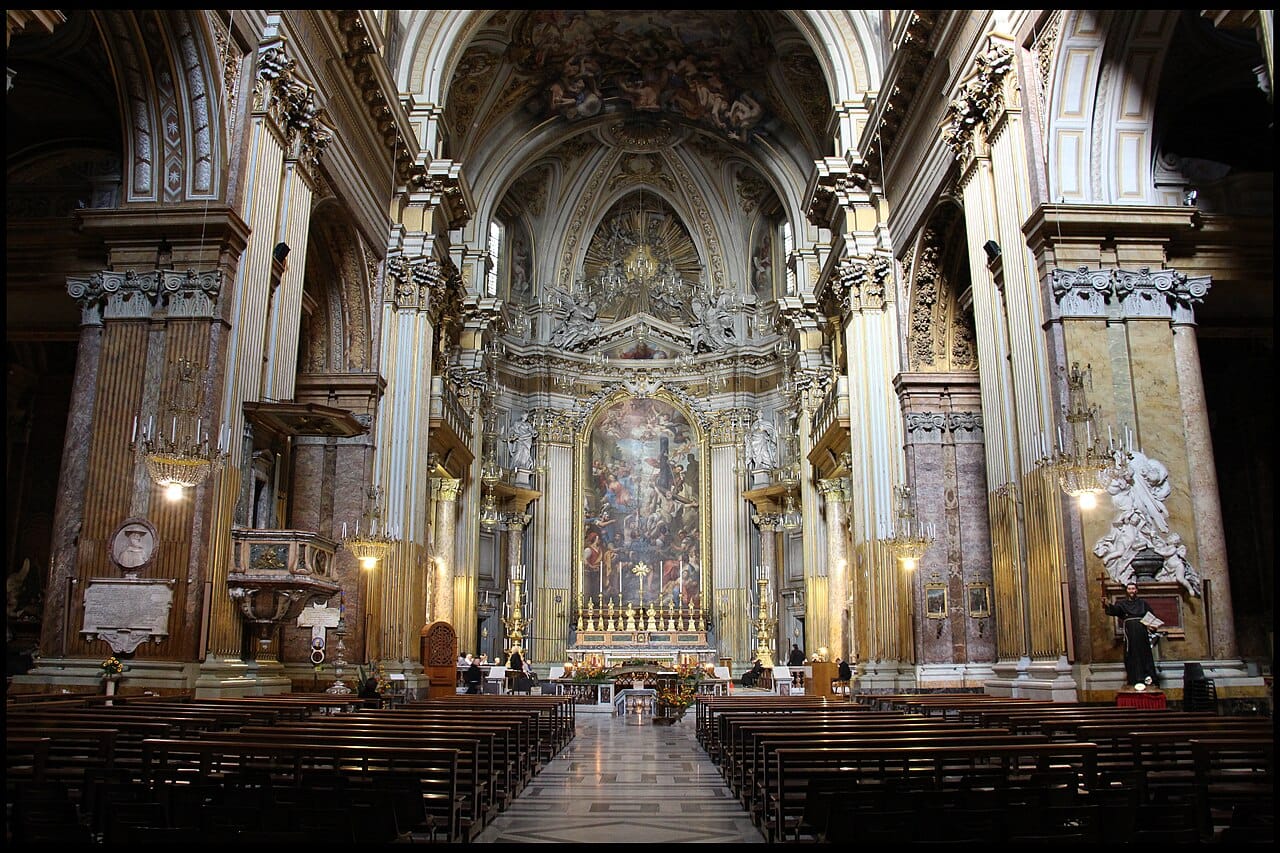
Santi XII Apostoli
A large central basilica that gives the Trevi, Via del Corso, and Piazza Venezia side of Rome a more substantial sacred anchor than many visitors expect.
Finish here when you want the route to end with something more substantial than another quick connector church. Santi XII Apostoli is the stop that makes this guide feel worth doing at all: large enough to matter, central enough to reach easily, and different enough from the smaller Trevi-side pauses that the route grows as it goes. This is where the walk stops feeling like crowd management and starts feeling like a real church choice.
Choose a related route
Use one of these if you want a tighter route or a clearer next step.