
Trastevere
Santa Dorotea
Last updated: June 2026
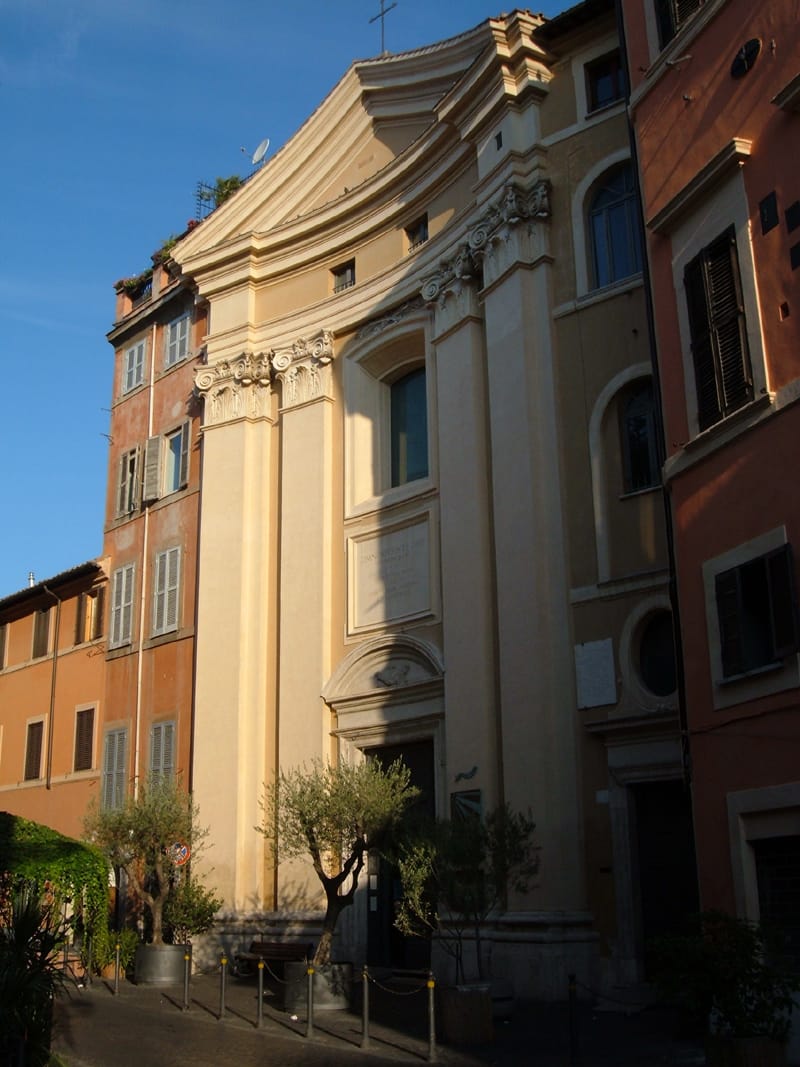
Photo by Croberto68 via Wikimedia Commons, public domain.
Santa Dorotea is the church that makes west Trastevere feel like a real neighborhood rather than an extension of one famous piazza. Come for the concave facade, the parish scale, the relics of Saint Dorothea, and a stop that pulls the district into quieter streets without losing direction.
Quick summary
- Best visit length
- 10-15 minutes quick, 20-30 minutes if the west-Trastevere loop is the point of the walk
- Do not miss
- Concave facade, Saint Dorothea relics, compact parish interior
- Best route use
- Best as a quieter west-side pause after or before the district's larger anchors
- Best next move
- Santa Maria in Trastevere for the district's main basilica, or Santa Cecilia if the walk is continuing deeper through Trastevere
Plan your visit
Approach Santa Dorotea when you want Trastevere to feel broader than the main square and basilica cluster.
Why this church matters
Santa Dorotea matters because it shows how much of Trastevere's church life happened away from the district's most photographed center. The church is first recorded at the beginning of the twelfth century under the title of San Silvestro, and in 1445 the dedication of Santa Dorotea was added under Pope Sixtus IV.
The present building owes much of its look to the eighteenth-century rebuilding associated with Giovanni Battista Nolli and completed by Giovanni Carlo Vipera. Its real importance on a route is parish scale: it helps Trastevere feel lived-in rather than curated.
What to look for
Concave facade
This is the feature most likely to stay in memory. It gives the church a visual shape that works from the street.
Saint Dorothea relics
The relics under the main altar give the church a devotional center stronger than its exterior scale first suggests.
The compact nave and apse
Inside, the single nave with side chapels and the apse altarpiece by Michele Bucci help the church feel more complete than a quick exterior glance would suggest.
Why visit
Choose Santa Dorotea when the day needs one calmer church that still feels rooted in Trastevere rather than detachable from it.
How long to spend
Common mistake: expecting a monument and then moving on too quickly. The church works better when you let it reset the tone of Trastevere rather than compete with the district's biggest stop.
Build your day
Start here for a route that matches the day you actually want. Choose the onward line that fits your direction and attention level.
Best next moves
Nearby & Related Churches
Use these next stops to keep the route coherent on the ground rather than doubling back across Rome for one isolated interior.