
Quick summary
- Best for
- Post-St Peter's decisions, nearby calm, and practical Vatican half days
- Time needed
- 30–90 minutes beyond St Peter's
- Core churches
- 3
- Walking distance
- A short Vatican-side and Borgo-side sequence with no river crossing required
Before you start
Best for visitors building a Vatican half day around St Peter's rather than a second checklist.
Route summary
Choose this guide when the question is simple: what is worth doing after St Peter's if you want to stay near the Vatican and keep the day coherent? Start with the basilica, reset at Santo Spirito in Sassia, continue to Santa Maria in Traspontina if you still want one more substantial stop, then stop or hand off cleanly.
Why choose this route
Many Vatican days go wrong in the same way. St Peter's takes the biggest share of attention, then visitors either stop too abruptly or start adding churches at random simply because they are visible on the map. This route gives a cleaner answer. It keeps the next decision close, useful, and proportionate to the day you have already spent. St Peter's is the unquestioned anchor. Santo Spirito in Sassia is the nearest meaningful change of mood: quieter, smaller, and easier to absorb after the basilica's scale and logistics. Santa Maria in Traspontina gives the Borgo side one stop that still feels substantial without pulling you into a completely different part of the day. Those three are enough because they solve the Vatican-side question fully. That is also why this guide should stay restrained. It does not need San Giovanni dei Fiorentini to prove it can continue west, and it does not need Santa Maria del Popolo to pretend the Vatican answer stretches across the northern center. Once the nearby problem is solved, the route should hand off rather than widen.
How to use this guide
Treat this as the route you choose after St Peter's when you still want one more worthwhile church decision, but not a whole new district commitment.
- If St Peter's has already taken most of your energy, do Santo Spirito only and let the day breathe.
- If the Vatican side still feels manageable, continue to Santa Maria in Traspontina for one larger Borgo-side stop.
- If the day is already turning west or north, use the next-step guidance below instead of quietly stretching this route into something else.
Best 30-90 minute version
St Peter's Basilica -> Santo Spirito in Sassia -> Santa Maria in Traspontina This order works because it begins with the route's unquestioned anchor, then narrows into the nearest calm reset, then ends with one more substantial Borgo-side church before the day has to make a larger directional choice. The walk stays close, believable, and easy to cut short if St Peter's has already taken more time than expected.
- Short version: St Peter's plus Santo Spirito.
- Better version: add Traspontina when you still want one more proper stop without crossing the river.
- Do not add connector churches automatically. The strength of this guide is that it solves the nearby Vatican question without pretending to solve the whole west-side day.
How long to spend
Use these timings to keep the route useful after St Peter's rather than turning it into a second overloaded itinerary.
- Santo Spirito in Sassia: 10-20 minutes
- Santa Maria in Traspontina: 15-25 minutes
- Light version: about 30-45 minutes beyond St Peter's
- Fuller version: about 60-90 minutes beyond St Peter's
What to do next
The route ends once the Vatican-side and Borgo-side decision has been answered. From there, choose one next direction only if the day still has room.
- Continue toward San Giovanni dei Fiorentini only if the walk is genuinely crossing toward the river and a longer corridor route now makes sense.
- Stop here if the Vatican side has done its job. A nearby answer that ends decisively is better than a route that keeps stealing churches from its neighbors.
- Use a broader shortlist guide only if you are no longer solving a Vatican-side question at all.
Stops in this guide
Stop 1
Vatican anchor
St Peter's Basilica
Rome's most important basilica for most visitors, but strongest when treated as a planned sequence: Michelangelo's Pieta, the nave, Bernini's baldachin over the papal altar, the crossing, and the apse with the Chair of St Peter.
Start here because the route exists only as an answer to what comes after it. St Peter's gives you the full weight of Vatican Rome: scale, pilgrimage gravity, Michelangelo, Bernini, and the sense that one church can dominate a whole day. That is precisely why the next decision matters. Once you leave, the route should help the day narrow and recover rather than compete with the basilica's magnitude.
Stop 2
Calm reset
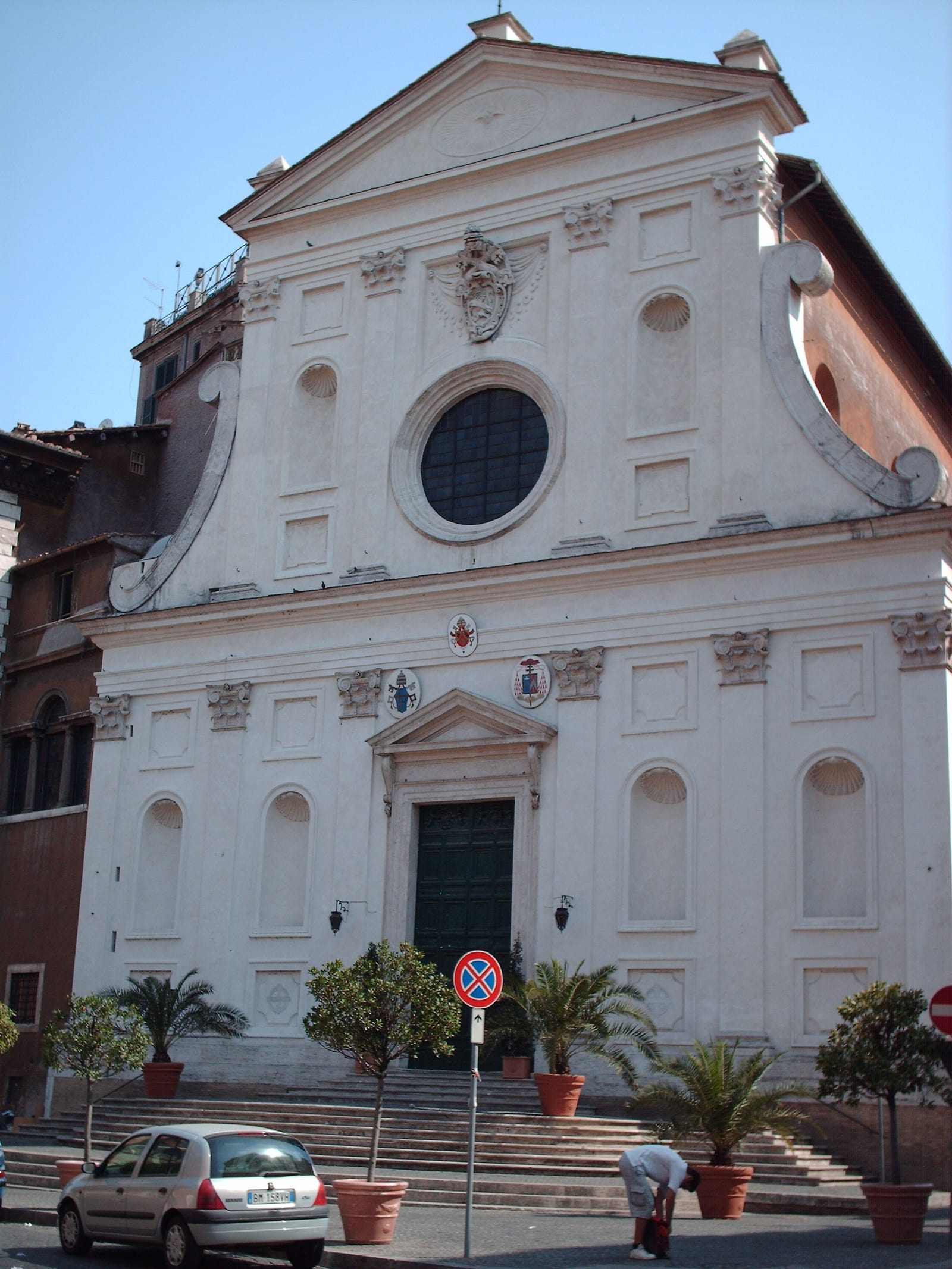
Santo Spirito in Sassia
A Vatican-side church that works especially well as a calmer decompression stop before or after the intensity of St Peter's and the surrounding queues.
Continue here when you want the cleanest nearby reset after St Peter's. The church's value is not theatrical scale but relief: calmer atmosphere, easier looking, and a sense that the Vatican side can still offer real sacred space once the main basilica is behind you. This is often the stop that makes the area feel human again. It works well as the natural second stop after St Peter's because it gives the day a quieter, more manageable second act.
Stop 3
Borgo continuation
Santa Maria in Traspontina
A broad Vatican-side church that works well as a calmer interior near St Peter's, especially when you want the district to feel like more than one queue-heavy destination.
Finish here when you want one more substantial church without committing to a river crossing. Santa Maria in Traspontina gives the Borgo side a fuller interior and helps the neighborhood feel like an actual church district rather than a funnel around St Peter's. If Santo Spirito is the decompression stop, Traspontina is the place where the Vatican-side route becomes complete. It works best here because it completes the Vatican-side walk without dragging you toward a different route.
Choose a related route
Use one of these if you want a tighter route or a clearer next step.