
Quick summary
- Best for
- Flagship-basilica comparison, first-trip planning, and choosing one major anchor wisely
- Time needed
- Half a day for one basilica; fuller day only if combining a sensible pair
- Core basilicas compared
- 3
- Optional contrast
- 1 calmer basilica-form alternative
Before you start
If you only choose three
- St Peter's Basilica - best flagship basilica for Vatican scale, pilgrimage weight, Michelangelo, and Bernini
- Santa Maria Maggiore - best practical major basilica for Termini, Monti, mosaics, and a city-side route
- St John Lateran - best non-Vatican anchor for understanding Rome's wider sacred geography
These three give the strongest major-basilica frame: Vatican scale, city-side practicality, and sacred geography beyond St Peter's.
Route summary
Choose this guide when the question is not 'which church is most famous?' but 'which basilica actually fits the day I want?' St Peter's answers the Vatican question. Santa Maria Maggiore answers the practical major-basilica question. St John Lateran answers the cathedral and sacred-geography question. Santa Sabina answers the quieter contrast question if you want basilica form without another heavy flagship stop.
Why choose this guide
The word 'basilica' can hide too much. Many visitors know St Peter's, recognise Santa Maria Maggiore by reputation, vaguely understand that St John Lateran matters, and then struggle to decide which of those differences is actually meaningful on the ground. This guide exists to make that decision practical.
- St Peter's gives the biggest and most ceremonial experience.
- Santa Maria Maggiore gives a major basilica that still fits a normal city day.
- St John Lateran explains Rome's hierarchy beyond the Vatican.
- Santa Sabina stays here only as a calmer contrast, not as a fourth co-equal flagship.
How to use this guide
Start by deciding what the day most needs.
- Choose St Peter's Basilica if the day is fundamentally about the Vatican, pilgrimage gravity, and monumental experience.
- Choose Santa Maria Maggiore if you want a major basilica that works naturally with Termini, Esquilino, Monti, or a practical central itinerary.
- Choose St John Lateran if you want the cathedral question answered properly and are willing to let the day move south.
- Choose Santa Sabina only when the goal is not another giant basilica but a calmer contrast that still helps you understand basilica form.
- If you combine two, keep the geography logical rather than forcing a collection day.
Best planning versions
The strongest Rome church day usually begins with one clear anchor rather than a basilica sweep.
- Best single-basilica choices: St Peter's for Vatican scale, Santa Maria Maggiore for practical city-side depth, and St John Lateran for cathedral meaning.
- Best sensible pair: Santa Maria Maggiore -> St John Lateran.
- Pair to avoid forcing: St Peter's Basilica -> Santa Maria Maggiore -> St John Lateran as one normal day.
- Use Santa Sabina only when the day needs calm and contrast rather than another flagship.
How long to spend
Most visitors get a better result from one major basilica, or one major basilica plus one sensible continuation, than from trying to collect three or four.
- St Peter's Basilica: 90-150 minutes.
- Santa Maria Maggiore: 45-90 minutes.
- St John Lateran: 60-120 minutes.
- Santa Sabina: 30-60 minutes.
- Three basilicas or more is usually pilgrimage logic, not normal route logic.
What to do next
Use this guide when the real question is which major basilica actually fits the day best. Once that answer is clear, use the local guide that best fits the rest of the day.
- Use the Vatican guide when St Peter's Basilica has already won and you want a believable nearby continuation.
- Use the Termini or Monti guides when Santa Maria Maggiore has already won and you want a practical city-side route.
- Use the south-Rome routes when St John Lateran or Santa Sabina has already won and the day is moving south.
- Use the Best Churches guide when the question is broader than basilicas.
Stops in this guide
Stop 1
Vatican flagship
St Peter's Basilica
Rome's most important basilica for most visitors, but strongest when treated as a planned sequence: Michelangelo's Pieta, the nave, Bernini's baldachin over the papal altar, the crossing, and the apse with the Chair of St Peter.
Choose St Peter's when Vatican scale is the whole point. This is the basilica for visitors who want Michelangelo, Bernini, global pilgrimage weight, ceremonial drama, and the sense that the church itself is the main event. It is the clearest first answer for many first-time visitors, but it is also the least casual option in the set because queues, security flow, and crowd energy change the whole day.
Stop 2
City flagship
Santa Maria Maggiore
One of Rome's essential basilicas, especially useful for travelers based near Termini who want a major church that is both historically rich and practical to reach.
Choose Santa Maria Maggiore when you want major-basilica depth without Vatican friction. It gives scale, Marian importance, mosaics, and a useful Esquilino position near Termini and Monti. What makes it so useful here is not just its importance but its practicality: it often gives the best answer to visitors who want a big church that still leaves room for the rest of Rome.
Stop 3
Cathedral flagship
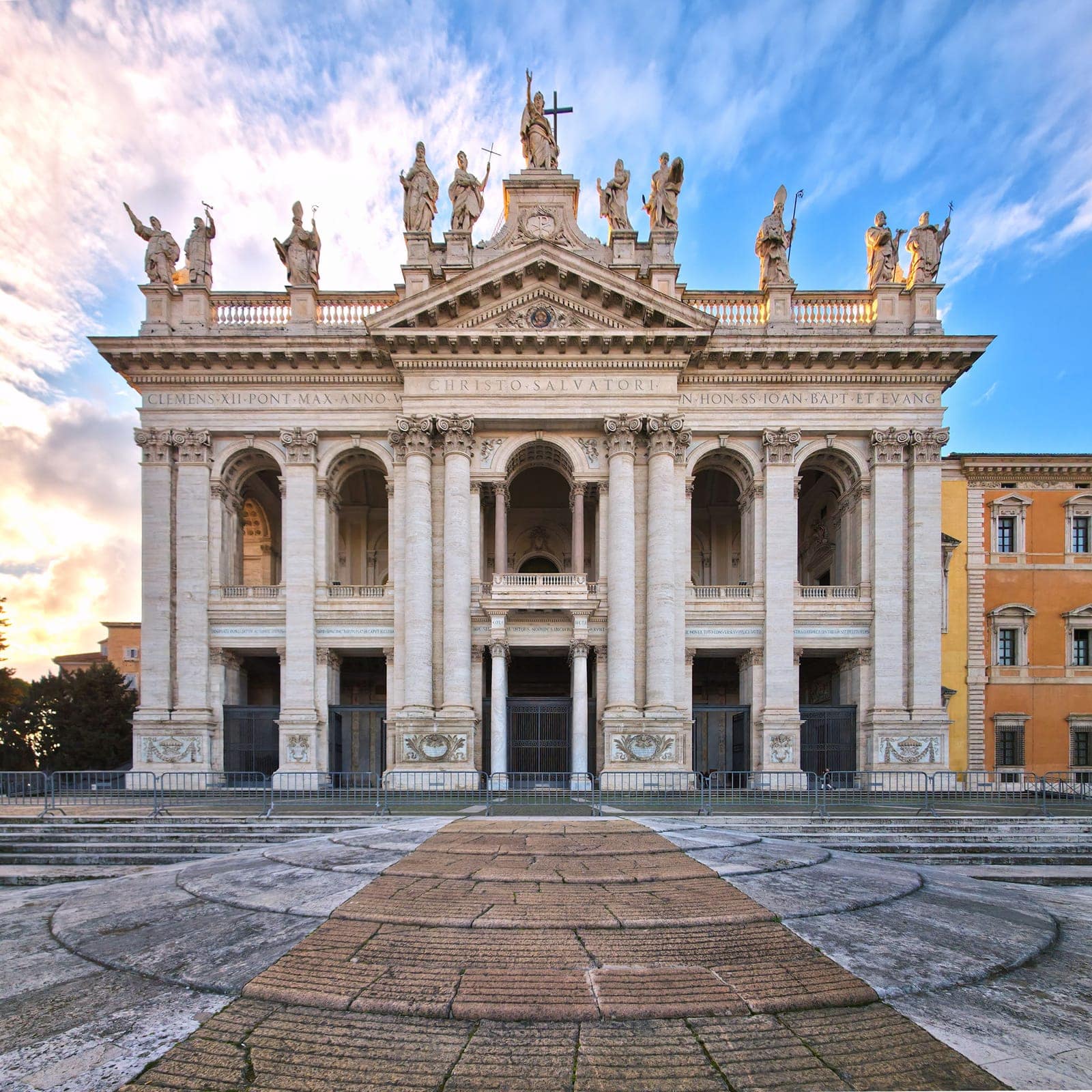
St John Lateran
One of Rome's essential major basilicas and the clearest way to understand the city's ecclesiastical geography beyond the Vatican, with monumental scale, papal history, and a Lateran location that works best as its own focused stop.
Choose St John Lateran when the real question is not scale alone but ecclesiastical meaning. This is the cathedral answer: the church that expands Rome's sacred map beyond St Peter's and explains why Vatican fame is not the only hierarchy that matters. It asks more from the day than Santa Maria Maggiore because the route naturally shifts south and becomes part of a more serious Lateran or Celio plan.
Stop 4
Optional contrast basilica
Santa Sabina
A calm Aventine basilica with early-Christian clarity, famous carved wooden doors, and one of Rome's best contrasts to decorative central churches. It works best for visitors who want aventine routes while keeping the surrounding walk coherent.
Choose Santa Sabina only when the day needs contrast rather than another flagship. It belongs here because it shows what basilica power can look like without scale competition, heavy ceremony, or Vatican-style monumentality. The nave, light, doors, and Aventine setting give you a different kind of confidence in the building, but it should still read as the quieter contrast answer rather than a fourth flagship peer.
Choose a related route
Use one of these if you want a tighter route or a clearer next step.