
Vatican & Prati
Santa Maria in Traspontina
Last updated: June 2026
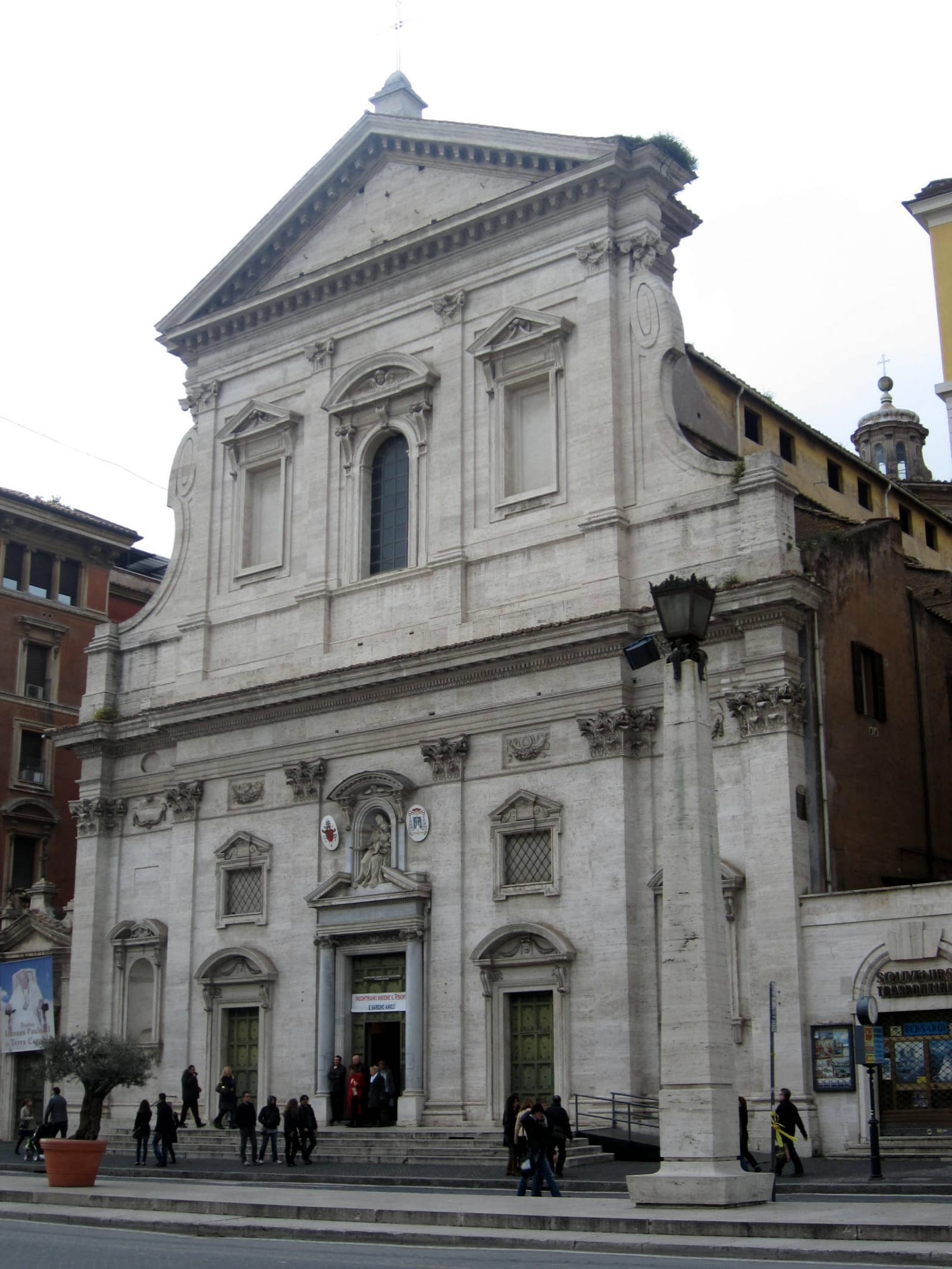
Photo by Luca Aless via Wikimedia Commons, licensed CC BY-SA 3.0.
Santa Maria in Traspontina is the Borgo church to choose when you want the Vatican approach to feel like a church district rather than a straight line to St Peter's. Come for the broad interior, the Carmelite Marian identity, the unusual military history behind its design, and a stop that stays practical on a Vatican day.
Quick summary
- Best visit length
- 10-20 minutes quick, 30-40 minutes if it is part of a slower Borgo route
- Do not miss
- Broad nave, Carmelite setting, church rebuilt around Castel Sant'Angelo's firing lines
- Best route use
- Best before or after St Peter's when you want Borgo to feel like more than transit
- Best next move
- Santo Spirito in Sassia for a quieter devotional pause, or San Giovanni dei Fiorentini if the walk is turning toward the river
Plan your visit
Use Santa Maria in Traspontina when you want one substantial interior without leaving the Vatican side.
Why this church matters
Santa Maria in Traspontina matters because it gives Borgo a real ecclesiastical center beyond St Peter's. The current church was rebuilt in the sixteenth century after the earlier one was demolished because it blocked the defensive fire of Castel Sant'Angelo. That is one of the most memorable reasons any Roman church looks the way it does.
It also carries a longer parish history and a clear Carmelite identity. The high altar and Marian tradition make it more than a practical extra stop, while the Danish connection through the Chapel of Saint Canute adds an unexpected international layer.
What to look for
The artillery-shaped design
This is the detail that most changes the visit. The church's dome and overall form were affected by the military needs of Castel Sant'Angelo, which gives the building a sharper story than many nearby Vatican-side churches.
The broad interior
What surprises many visitors is not a single object but the amount of space. So close to St Peter's, the church still feels roomy enough to become a genuine pause instead of a hurried glance.
The Carmelite Marian focus
The church's devotional identity is part of why it holds together. If you only treat it as a route convenience, you miss the reason it remained important in Borgo life.
The Danish chapel connection
Visitors often miss that the church carries a real Danish Catholic association through the Chapel of Saint Canute. It is a small but memorable reminder that Rome's churches were never only local.
Why visit
Choose Santa Maria in Traspontina when you want a Vatican-side church that is bigger in feeling than Santo Spirito in Sassia but still much easier than St Peter's. It adds architectural story, Marian identity, and district depth without pulling the day off course.
How long to spend
Common mistake: rushing past because St Peter's seems to have already used up the district. This is one of the churches that proves Borgo has its own religious life.
Build your day
Start here for a route that matches the day you actually want. Choose the onward line that fits your direction and attention level.
Best next moves
Nearby & Related Churches
Use these next stops to keep the route coherent on the ground rather than doubling back across Rome for one isolated interior.