
Vatican & Prati
St Peter's Basilica
Last updated: June 2026
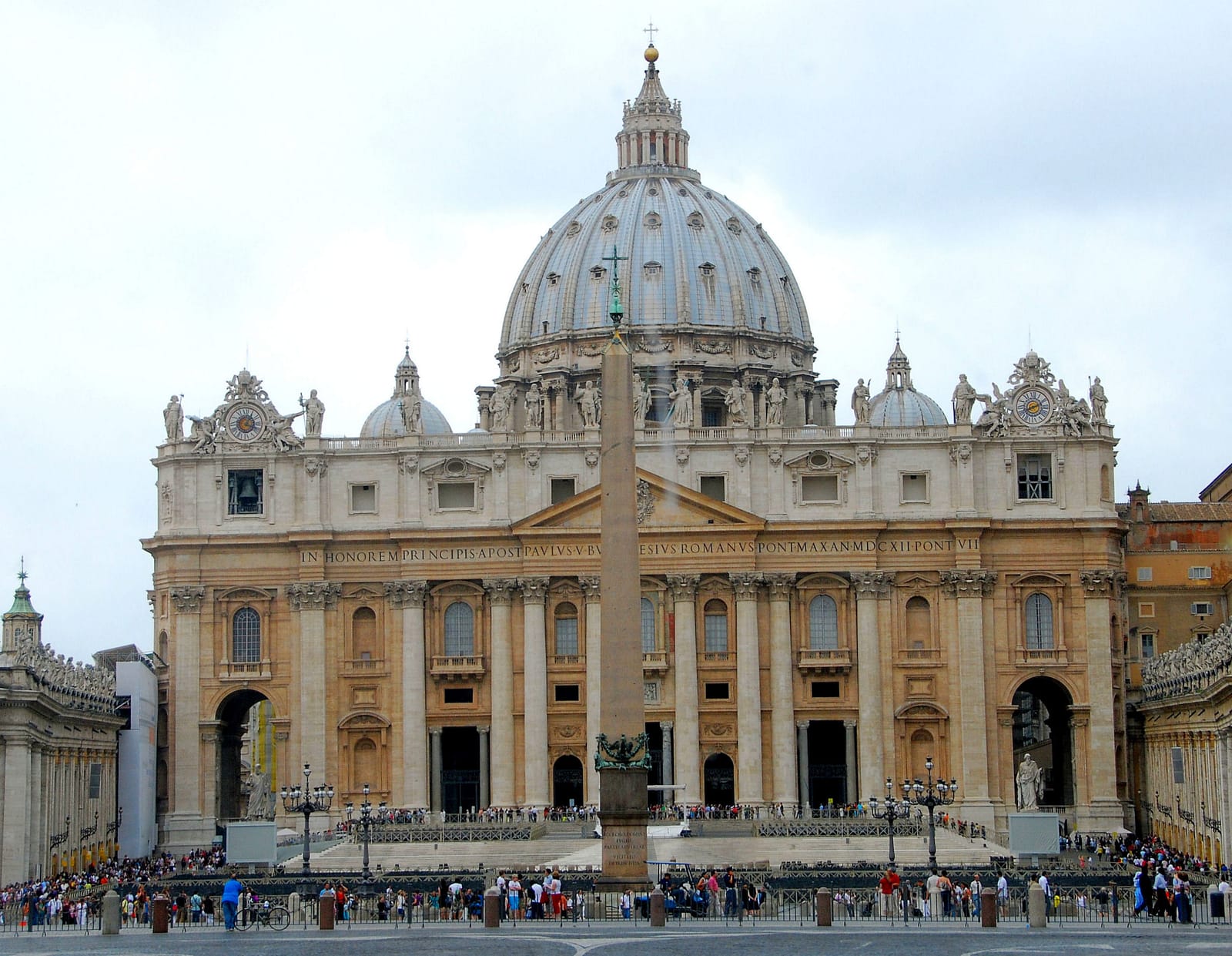
Photo by Mike McBey via Wikimedia Commons, licensed CC BY 2.0.
St Peter's Basilica is the church visitors choose when they want to stand at the shrine traditionally associated with Saint Peter and feel the full scale of papal Rome in one place. Come for Michelangelo's Pieta, Bernini's baldachin, the Cathedra Petri, the high altar over Peter's tomb tradition, and a Vatican visit that deserves more than a hurried pass through a famous interior.
Quick summary
- Best visit length
- 1-2 hours for the basilica, longer if you add the Dome or Vatican Grottoes
- Do not miss
- Michelangelo's Pieta, Bernini's baldachin, Cathedra Petri, the high altar, Peter's shrine tradition
- Best route use
- Main anchor for a Vatican half day or a full day built around St Peter's and the surrounding Vatican area
- Best next move
- Santo Spirito in Sassia for a softer follow-up, or Santa Maria in Traspontina if you want to stay on the Vatican side without another major queue
Plan your visit
St Peter's should normally be the anchor, not the add-on. Build the day so the basilica gets your concentration before fatigue and queues flatten the experience.
Why this church matters
St Peter's Basilica matters because it combines one of Christianity's most important pilgrimage traditions with the public ceremonial language of papal Rome. The church stands over the shrine traditionally associated with Saint Peter, and that single fact changes the meaning of the whole visit. This is not only a large and famous basilica. It is a place built to hold the memory of Peter, the papacy, and the global ambitions of the Roman Church in one sacred space.
The current basilica replaced the earlier Constantinian church and was built between the early 16th and early 17th centuries. That rebuilding matters because it turned the site into one of the defining monuments of Christian art and architecture. Visitors come for scale, but the deeper reason the church stays memorable is that nearly every major feature is doing more than decorating the interior. The baldachin marks the high altar and Peter's shrine below. The Cathedra Petri in the apse turns the end of the church into a statement about Petrine authority. Michelangelo's Pieta gives the visit one of its most intimate emotional moments inside one of its grandest spaces.
St Peter's also matters because it helps visitors understand the difference between fame and function. St John Lateran is Rome's cathedral, but St Peter's is the church that has come to symbolize papal Rome in the global imagination. It is best understood as both pilgrimage destination and public image of the Roman Church.
It also matters because of the way the basilica organizes attention. Visitors often remember only its scale at first, but the church is more compelling when they understand that the scale is disciplined rather than random. The nave pulls the eye toward the high altar. The baldachin marks the sacred center. The apse gathers that movement into the Cathedra Petri. The Grottoes draw the meaning back below ground. In other words, St Peter's is not memorable simply because it is large. It is memorable because nearly everything points back to Peter, the papacy, and continuity.
That makes the basilica one of the clearest places in Rome to connect pilgrimage with visual culture. A traveler interested in sacred history, a Catholic pilgrim, and an art-focused visitor can all stand in the same space and find different reasons for the church to matter. The deeper question is not whether St Peter's is important, but what kind of importance a visitor is actually experiencing.
What to look for
Michelangelo's Pieta
This is the basilica's most concentrated moment of human feeling. Many visitors know the sculpture already, but seeing it here matters because it gives the enormous church one immediate and intimate devotional focus. It also helps set the tone for the rest of the visit. If you begin with the Pieta, you are less likely to experience the basilica as only a triumph of scale. The sculpture reminds you that St Peter's is built for grief, redemption, prayer, and memory as much as for spectacle.
Bernini's Baldachin
The baldachin is not just a famous bronze canopy. It marks the high altar and signals the shrine of Peter below, helping visitors see how the basilica's scale is organized around one sacred center. This is also the feature that stops the nave from feeling empty or overblown. Without it, many first-time visitors struggle to read the interior. With it, the church's huge dimensions begin to make architectural and liturgical sense.
High Altar And Peter's Shrine Tradition
The altar matters because it is the point where pilgrimage tradition, papal liturgy, and the memory of Peter meet. Even visitors who do not follow every detail should remember that the symbolic center of the church is below, not only above. For many visitors, this is the moment when St Peter's stops being interchangeable with any other enormous church. The altar area is where the memory of the apostle becomes spatially real and where the church's ceremonial life still touches the pilgrimage tradition that draws people here.
Cathedra Petri
The great apse composition is one of the strongest reasons to look all the way down the church instead of stopping after the first famous works. The Cathedra Petri is presented as a symbol of Petrine primacy and papal teaching authority, giving the basilica its clearest statement of institutional meaning. It is also one of the best reasons not to think of the church as a bag of disconnected masterpieces. The apse completes the route through the interior. Visitors who stop too early or stay trapped near the entrance often miss the fact that the basilica is trying to say something coherent about Peter, authority, and continuity.
Dome And Vertical Scale
Even if you do not climb it, the dome shapes the whole experience of St Peter's. It is part of what makes the church feel less like a sequence of chapels and more like a single, world-scale sacred interior. If you do choose to add the Dome, that decision changes the day's rhythm. The climb turns the church from an interior experience into a bodily one, and it usually pushes the visit toward a more deliberate Vatican half day rather than a quick basilica stop.
Vatican Grottoes
These matter because they pull the visit back downward toward burial, continuity, and the older sacred geography beneath the monumental basilica above. If you have time, they help balance the grandeur of the nave with a stronger sense of place and memory. They are especially helpful for visitors who otherwise leave remembering only immensity. The Grottoes make the basilica feel historically grounded and allow the visit to end nearer to burial, memory, and succession than to grandeur alone.
Why visit
Visit St Peter's when you want one church that feels unquestionably central to Christian Rome. Many visitors come because it is famous, but the better reason is that it joins pilgrimage meaning, sacred art, papal ceremony, and a deep sense of Christian memory in one space. If you only have energy for one major Vatican-side church, this is the one that justifies the time.
How long to spend
Common mistake: underestimating logistics. The church can be free to enter, but security, scale, and crowd density mean it rarely behaves like a quick free stop. Second common mistake: trying to see St Peter's and "finish the Vatican" in the same tired mental frame. If the basilica is one of the main reasons you came to Rome, let it have its own energy rather than absorbing it into a day already controlled by queues and timed entry.
Build your day
Start here for a route that matches the day you actually want. Choose the onward line that fits your direction and attention level.
Best next moves
Nearby & Related Churches
Use these next stops to keep the route coherent on the ground rather than doubling back across Rome for one isolated interior.