
Vatican & Prati
Santo Spirito in Sassia
Last updated: June 2026
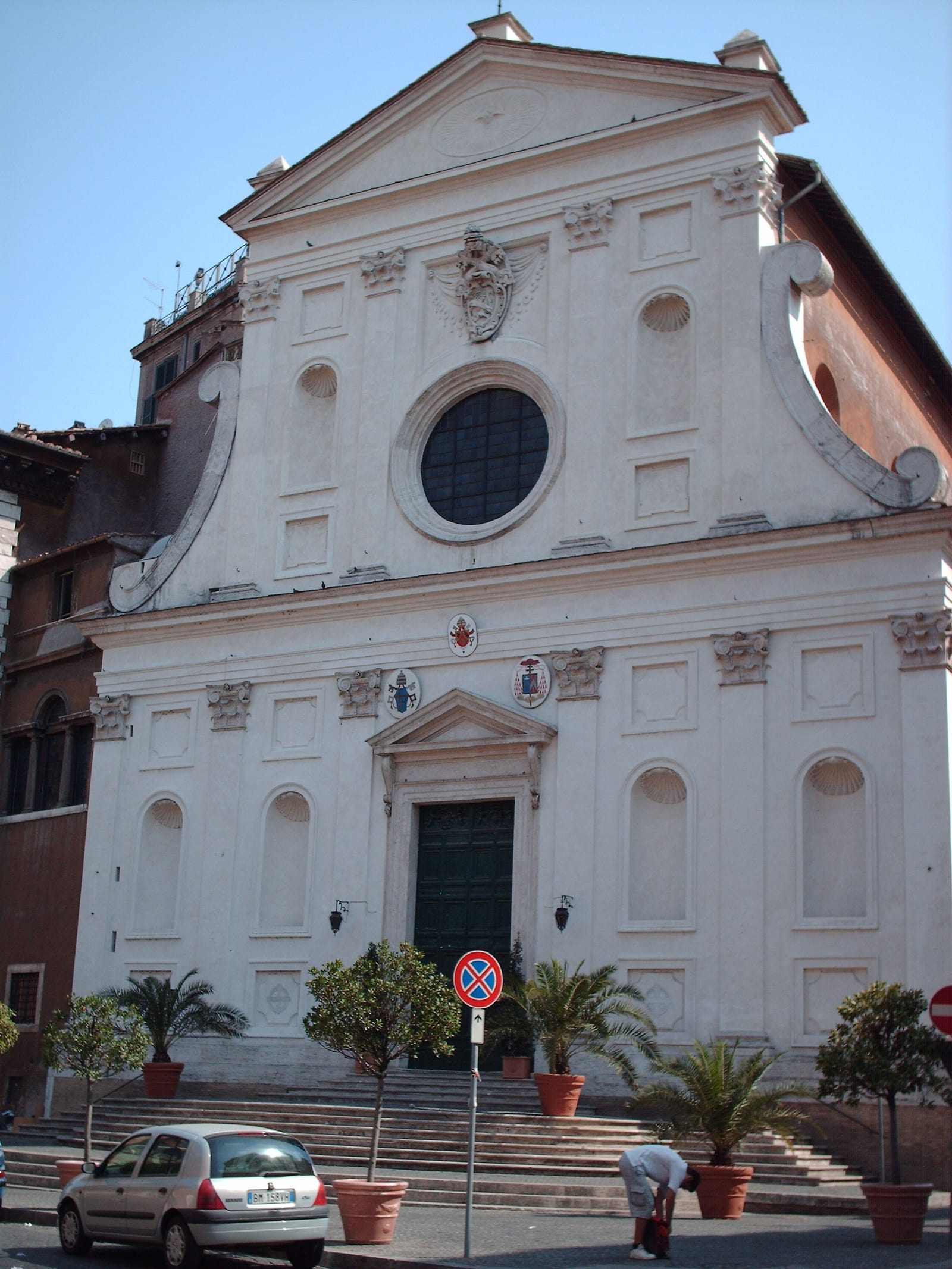
Photo by Riccardov via Wikimedia Commons, released to the public domain.
Santo Spirito in Sassia is the Vatican-side church to choose when you want the Borgo to feel like more than a queue for St Peter's. Come for the old pilgrim-hospital setting, the calmer devotional atmosphere, the Renaissance rebuilding after the Sack of Rome, and a stop that resets the day without sending you across Rome.
Quick summary
- Best visit length
- 10-20 minutes quick, 30-45 minutes if you are slowing the whole Vatican route down
- Do not miss
- Pilgrim-hospital context, Divine Mercy devotion, Sangallo rebuilding
- Best route use
- Best just after St Peter's or before walking out toward the river
- Best next move
- Santa Maria in Traspontina for a broader Borgo church, or San Giovanni dei Fiorentini if you are continuing riverward
Plan your visit
Approach Santo Spirito in Sassia after the Vatican crowds rather than before them. The point is to let the church reset your attention.
Why this church matters
Santo Spirito in Sassia matters because it reveals a side of Vatican Rome that St Peter's alone cannot show. The site began with the Schola Saxonum and a hospice for Saxon pilgrims, so this was a place of care, lodging, and support as much as worship. That older function still changes the way the district reads.
The present church belongs to the sixteenth-century remaking of Borgo after the Sack of Rome, with rebuilding led by Antonio da Sangallo the Younger and the later facade linked to Ottaviano Mascherino. Today it also carries a living Divine Mercy identity, which keeps the church devotional rather than merely historical.
What to look for
The pilgrim-hospital setting
This is the feature many visitors do not notice at first. The church makes more sense when you remember that Borgo served pilgrims, hospitals, and national communities, not just the basilica ahead.
The Renaissance rebuilding
The present building comes from the reshaping of the district after 1527. That gives the church a clear role in the Vatican-side rebuilding of Rome, not just a convenient position near St Peter's.
The Divine Mercy focus
The church's modern devotional life is part of the point. If the basilica outside feels monumental and formal, Santo Spirito in Sassia feels closer to prayer at a human scale.
The interior structure
Inside, the wide nave, side chapels, coffered ceiling, and apse frescoes reward even a short stop. You are not here for a single masterpiece so much as for a church that holds its history together clearly.
Why visit
Choose Santo Spirito in Sassia when St Peter's has already given you scale and ceremony, but not calm. This church earns its place by restoring pace, adding pilgrim and hospital history, and helping the Vatican side feel like a district with more than one spiritual register.
How long to spend
Common mistake: treating it as a consolation prize because St Peter's is crowded. It is better understood as the church that makes the Vatican area feel pastoral again.
Build your day
Start here for a route that matches the day you actually want. Choose the onward line that fits your direction and attention level.
Best next moves
Nearby & Related Churches
Use these next stops to keep the route coherent on the ground rather than doubling back across Rome for one isolated interior.