
Quick summary
- Best for
- Matching one church to one trip type when time is limited
- Time needed
- One strong answer can already solve the question; expand only if the winning choice naturally leads into a route
- Core trip-type answers
- 7
- Narrower alternatives
- 3 secondary answers for more specific trip styles
Open these churches in Google Maps ->
This map follows the core route only. Keep the written guide for optional extensions and stop-by-stop judgment.
Before you start
If you only choose three
- St Peter's Basilica - best answer for a first Vatican-led trip
- San Clemente - best answer for layered history in one church
- Santa Maria in Trastevere - best answer when atmosphere matters more than monumentality
These three show why the page is a chooser: different visitors can leave with different winning answers and stop there confidently.
Route summary
Use this guide when time is limited and the real question is not 'what are the top churches?' but 'which church is right for me first?' St Peter's is the answer for a Vatican-first trip. Santa Maria Maggiore is the answer for a practical major-church day. St John Lateran is the answer for cathedral depth. San Clemente is the answer for layered history. Santa Maria sopra Minerva is the answer for central substance. San Luigi dei Francesi is the answer for one short art stop. Santa Maria in Trastevere is the answer for atmosphere. The narrower alternatives exist only when one of those core answers still does not quite fit the trip.
Why choose this guide
Many visitors search for 'best churches in Rome' when they are really asking a more useful question: what is the right first church for my kind of day? If the page answers that directly, it becomes practical. If it tries to settle which church is objectively number one, it becomes much less helpful.
- A Vatican-first visitor should land on St Peter's.
- A visitor who wants a major church without Vatican friction should land on Santa Maria Maggiore.
- A visitor who wants Rome in layers should land on San Clemente.
- A visitor who wants Trastevere to feel meaningful should land on Santa Maria in Trastevere.
- A visitor who only has time for one central art stop should land on San Luigi dei Francesi.
How to use this guide
Start with the trip type, not the church name.
- If this is your first Vatican-led visit, start with St Peter's Basilica.
- If you want one major church that still fits an ordinary city day, start with Santa Maria Maggiore.
- If you want the cathedral answer and Rome beyond the Vatican, start with St John Lateran.
- If you want the most distinctive layered-history experience, start with San Clemente.
- If you want central substance near the Pantheon, start with Santa Maria sopra Minerva.
- If you want one fast art stop, start with San Luigi dei Francesi.
- If you want atmosphere and neighborhood feeling, start with Santa Maria in Trastevere.
Best planning versions
The page succeeds when one church wins clearly, not when you feel pressured to keep adding more.
- Clearest first answers: St Peter's Basilica for a Vatican-first trip, Santa Maria Maggiore for a practical major-church day, San Clemente for layered history, and Santa Maria in Trastevere for atmosphere.
- If your day is central and short, choose between Santa Maria sopra Minerva for fuller substance and San Luigi dei Francesi for one fast art payoff.
- If the flagship answer feels too obvious, use St John Lateran for cathedral seriousness or Santa Sabina for a quieter south-Rome calm.
- Different visitors should leave with different best answers, and that is the point.
How long to spend
One winning church is often enough. Add a second only when the geography and the trip type still support it.
- One winning church: often enough.
- One winning church plus its natural local route: strongest normal version.
- Two different answers: only if the geography still supports the combination.
- San Luigi dei Francesi is the shortest successful answer in the set; the basilicas are major-anchor choices.
What to do next
Use this guide when the question is which church best fits the trip you are actually having. Choose a different guide when the question becomes more specific.
- Use the Major Basilicas guide when you are comparing the flagship basilicas directly.
- Use the Art Lovers guide when artistic payoff is the real decision.
- Use the One-Day itinerary when a winning church has already emerged and you now want to turn it into a full plan.
- Use the local district guide once your chosen church has made the rest of the day clearer.
Stops in this guide
Stop 1
First big Vatican trip
St Peter's Basilica
Rome's most important basilica for most visitors, but strongest when treated as a planned sequence: Michelangelo's Pieta, the nave, Bernini's baldachin over the papal altar, the crossing, and the apse with the Chair of St Peter.
Choose this when the trip would feel incomplete without Vatican scale, pilgrimage gravity, and the city's largest ceremonial church experience. This is the strongest answer for visitors who want Rome's most globally recognisable church to anchor the day.
Stop 2
Major church that still fits a city day
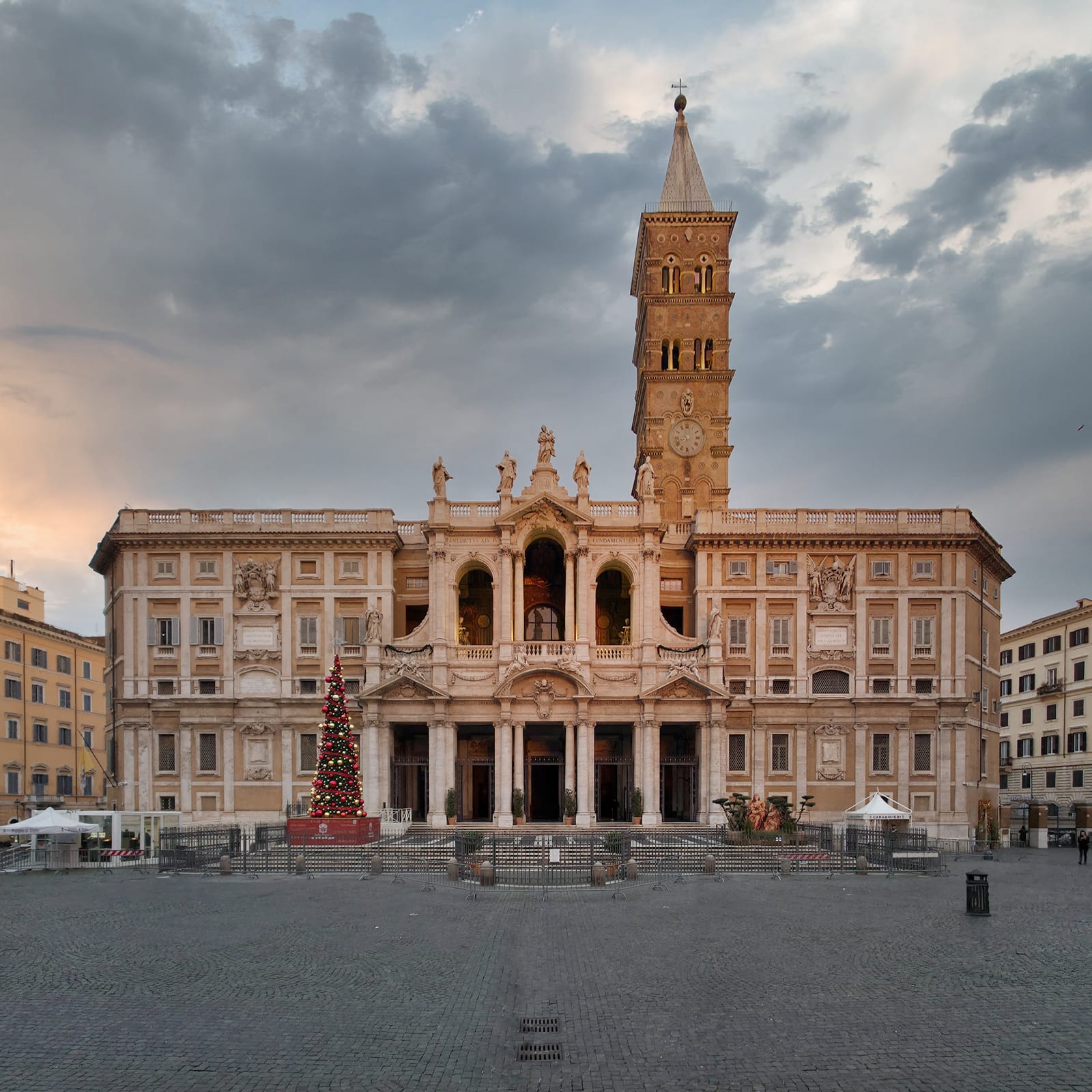
Santa Maria Maggiore
One of Rome's essential basilicas, especially useful for travelers based near Termini who want a major church that is both historically rich and practical to reach.
Choose this when you want major-basilica weight, Marian importance, and a serious church visit that still works naturally with Termini, Esquilino, or Monti. It is the best answer for visitors who want a flagship church without giving the whole day to Vatican logistics.
Stop 3
Cathedral depth and sacred geography
St John Lateran
One of Rome's essential major basilicas and the clearest way to understand the city's ecclesiastical geography beyond the Vatican, with monumental scale, papal history, and a Lateran location that works best as its own focused stop.
Choose this when the trip needs Rome's cathedral rather than its most famous church. It is the strongest answer for visitors who want ecclesiastical significance and are willing to let the day move south into a more serious Lateran or Celio plan.
Stop 4
Rome through layers
San Clemente
The clearest single church in Rome for seeing the city in layers: a 12th-century basilica above a 4th-century church, above Roman buildings and a Mithraeum, all close enough to the Colosseum to transform an ancient-Rome day.
Choose this when one church needs to show centuries of Rome stacked inside a single visit. This is the best answer for visitors who want the day to feel distinctive and memorable through layered history rather than through pure size.
Stop 5
Central substance
Santa Maria sopra Minerva
The strongest Pantheon-side church for visitors who want substance as well as convenience: Gothic bones, Dominican history, Michelangelo's Risen Christ, Filippino Lippi's Carafa Chapel, major tombs, and Bernini's elephant outside.
Choose this when you are near the Pantheon and want one serious church that gives art, history, and atmosphere without becoming a giant destination project. It is the strongest central-depth answer in the set.
Stop 6
Short art stop
San Luigi dei Francesi
A compact but essential church near Piazza Navona, especially for visitors who want one short central stop with very high artistic return.
Choose this when the day only has room for one compact artistic payoff. It is the cleanest answer for visitors who want a church visit to matter even in a short time window.
Stop 7
Atmosphere over monumentality
Santa Maria in Trastevere
The essential Trastevere anchor, rewarding not just for its fame but for the way mosaics, square, and neighborhood atmosphere reinforce one another.
Choose this when the church should shape a neighborhood experience rather than stand alone as a monument. It is the best answer for visitors who want the west bank, piazza life, and atmosphere to be part of the church decision.
Stop 8
Narrower specialist alternative
Santa Maria del Popolo
An art-rich church at the northern gateway to the center, strong for travelers interested in chapels, patronage, and the way art changes the feel of an urban threshold.
Choose this only if the day begins or ends on the north side and a richer art-chapel church suits the trip better than the broader central-depth or short-art answers.
Stop 9
Narrower specialist alternative
Il Gesù
One of the clearest central churches for understanding Roman Baroque theatricality, Jesuit ambition, and why some interiors in Rome feel built to overwhelm rather than simply decorate.
Choose this only if you want a major Baroque interior and Jesuit scale more specifically than the core shortlist provides. It is a narrower style answer, not a default first answer for most trips.
Stop 10
Narrower specialist alternative
Santa Sabina
A calm Aventine basilica with early-Christian clarity, famous carved wooden doors, and one of Rome's best contrasts to decorative central churches. It works best for visitors who want aventine routes while keeping the surrounding walk coherent.
Choose this only if the ideal church experience is quieter, slower, and south-Rome calm rather than central or flagship-led. It is not a near-core prestige answer; it is a more specific mood-and-place answer.
Choose a related route
Use one of these if you want a tighter route or a clearer next step.