
Esquilino & Monti
San Camillo de Lellis
Last updated: June 2026
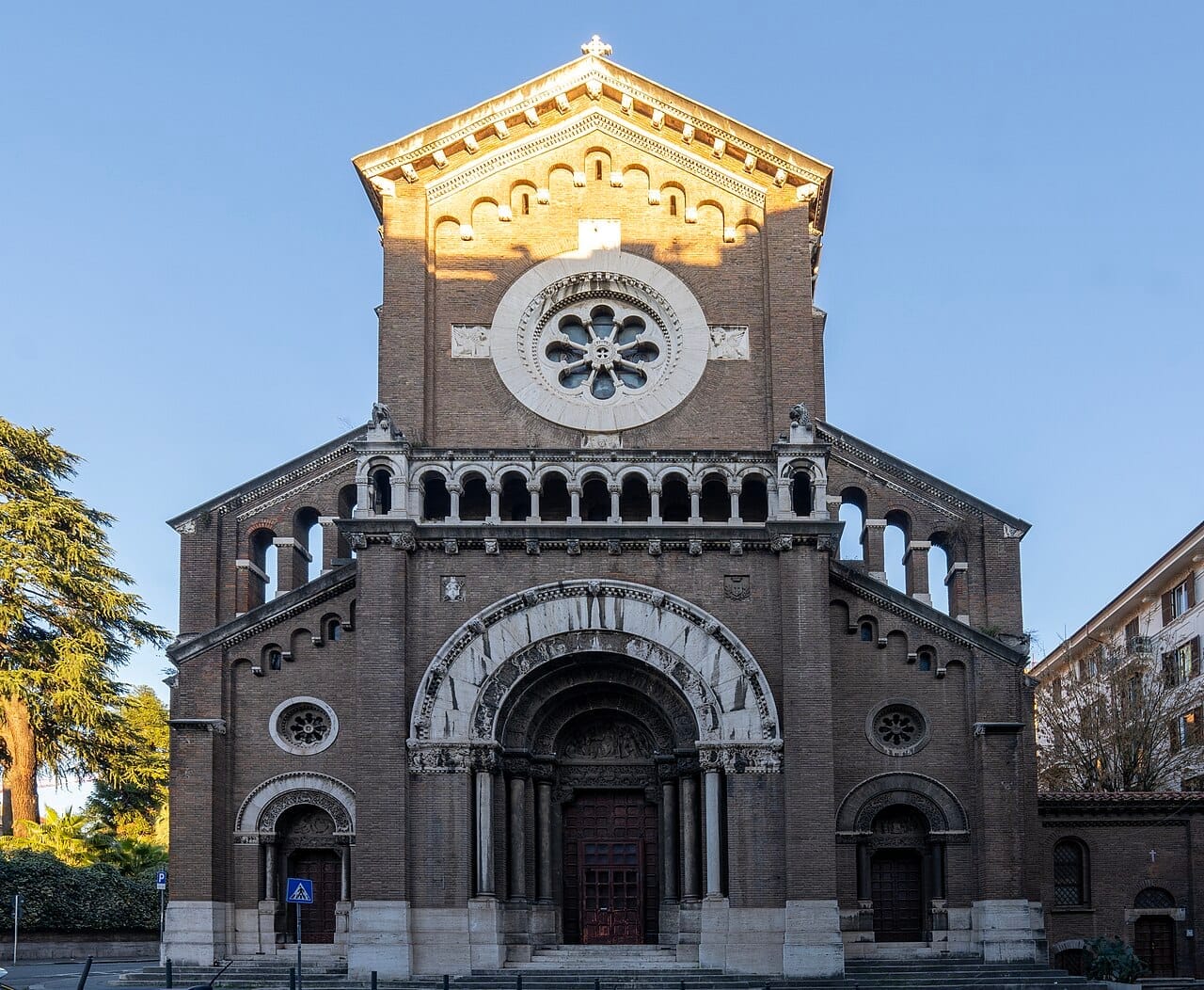
Photo by PubblicUsername via Wikimedia Commons, licensed CC BY 4.0.
San Camillo de Lellis is the church to choose when you want the Via Veneto and upper-Termini side to feel like more than a hotel district. Come for the Camillian care-for-the-sick mission, the red-brick neo-Romanesque identity, and a local basilica that gives later Rome a credible church stop without pretending to be a must-cross-city destination.
Quick summary
- Best visit length
- 10-20 minutes quick, 25-35 minutes if you want the church to carry real local meaning
- Do not miss
- Red-brick facade, rose window, St Camillus statue, Camillian mission, bell tower
- Best route use
- Best as a practical local stop for Via Veneto, Sallustiano, or upper-Termini stays
- Best next move
- Santa Maria della Vittoria for stronger Baroque payoff, or San Bernardo alle Terme for a shorter architecture-led continuation
Plan your visit
Use San Camillo de Lellis when your day already belongs to the Via Veneto, Sallustiano, or Repubblica side and needs one church with a proper identity. The best approach is to read the building as later Rome speaking in its own voice rather than as a lesser version of the older center.
Why this church matters
San Camillo de Lellis matters because it anchors the religious identity of an area many visitors know mostly for hotels, embassies, and broad streets. Built at the behest of Pope Pius X to designs by Tullio Passarelli and entrusted to the Ministers of the Infirm, it ties the district to the mission of Saint Camillus de Lellis: care for the sick, practical charity, and a specifically Roman form of modern church life.
That matters because not every worthwhile church in Rome belongs to the early-Christian or high-Baroque core. This church shows a later chapter of the city, one that still feels purposeful and ecclesial rather than decorative. Its minor-basilica status reinforces that identity, but the real visitor payoff is more immediate: the building gives this side of Rome a church with substance.
What to look for
The red-brick neo-Romanesque exterior
This is what sets the church apart immediately. The materials and style tell you that you are in a different Roman period from the usual basilica circuit.
The facade, portals, and rose window
The front carries much of the memory here. The loggia of arches and broad rose window are more likely to stay with visitors than a list of interior minor details.
The St Camillus focus
Look toward the apse niche above the high altar, where the statue of Saint Camillus by Alberto Galli keeps the church's mission visible. This is the devotional center that stops the building from feeling like style without purpose.
The Good Shepherd relief and bell tower
These are the details that make the church feel more deliberate than a simple local parish stop. If you linger, they help explain the building's care-oriented religious identity.
Why visit
Choose San Camillo de Lellis when your day is already on this side of the city and you want one stop that feels more meaningful than convenience alone. It is especially useful for travelers staying nearby, repeat visitors broadening their map of Rome, or anyone interested in how later church architecture and modern pastoral mission still belong in the city's sacred story.
How long to spend
Common mistake: judging the church by whether it rivals Rome's famous monuments. It works best when you ask a smaller question: does this district deserve one church stop with a real identity? Here, the answer is yes.
Build your day
Start here for a route that matches the day you actually want. Choose the onward line that fits your direction and attention level.
Best next moves
Nearby & Related Churches
Use these next stops to keep the route coherent on the ground rather than doubling back across Rome for one isolated interior.