
Esquilino & Monti
Santa Bibiana
Last updated: June 2026
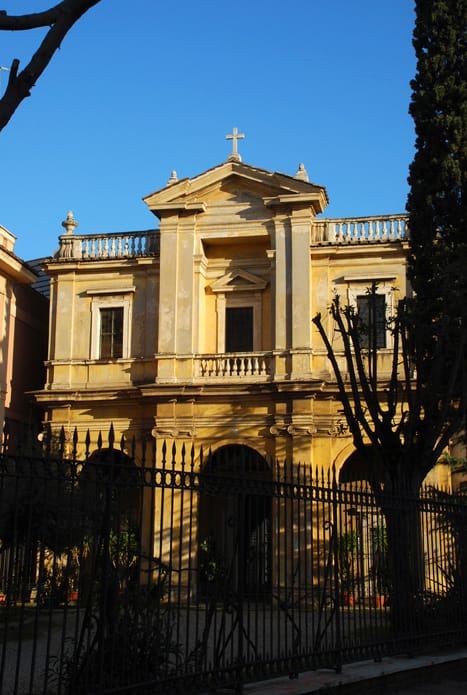
Photo by cyberuly via Wikimedia Commons, licensed CC BY 3.0.
Santa Bibiana is the station-side church to choose when you want the Termini edge to feel like more than transit space. Come for Bernini's first architectural commission, the martyr memory of Saint Bibiana, the column and relic tradition inside, and a compact stop that gives Esquilino a sharper devotional identity.
Quick summary
- Best visit length
- 10-20 minutes quick, 25-35 minutes if you want the Bernini and devotional layers to land properly
- Do not miss
- Bernini facade, Saint Bibiana statue, martyrdom column, relic tradition, station-edge setting
- Best route use
- Best as a compact Termini and eastern-Esquilino stop before or after Santa Maria Maggiore
- Best next move
- Sant'Eusebio all'Esquilino for a quieter historical continuation, or Santa Maria Maggiore for a major-basilica contrast
Plan your visit
Treat Santa Bibiana as a focused stop, not a filler. The church works best when you enter already knowing you are here for two things at once: an early Bernini moment and a martyr-centered devotional interior.
Why this church matters
Santa Bibiana matters because it joins old Roman martyr devotion with one of Bernini's earliest architectural interventions. Turismo Roma presents the church as very ancient in origin and closely associated with the memory of Saint Bibiana, while also identifying Urban VIII's commissioning of Bernini in 1624-25 as the master's first architectural work here.
That combination gives the church a stronger identity than its size suggests. This is not simply a Bernini curiosity near the station, and it is not simply a relic church hidden on a side street. It works because both layers stay visible together: early Christian memory and Baroque reshaping in one compact, practical stop.
What to look for
Bernini's facade and early commission
The facade matters because it gives visitors an early Bernini marker without the scale or crowd pressure of his more famous works.
The white marble Saint Bibiana
Bernini's statue on the high altar gives the church its clearest visual memory inside. It helps the stop feel personal and devotional rather than merely architectural.
The martyrdom column
Just inside the church, the column associated with the saint's martyrdom is often the point where the visit becomes more than a style check. It gives the church its emotional center.
The relic and ancient-column interior
The relic tradition under the main altar and the older columns remind visitors that this is a church of continuity, not just a Baroque makeover near Termini.
Why visit
Choose Santa Bibiana when you want one compact stop near the station that still has a reason to be remembered later. It is especially useful for visitors staying near Termini, for Bernini followers who like smaller works, and for anyone who wants the route to feel more deliberate before the day widens into bigger churches.
How long to spend
Common mistake: treating the church as a minor Bernini footnote. It is more satisfying when you let the devotional memory matter just as much.
Build your day
Start here for a route that matches the day you actually want. Choose the onward line that fits your direction and attention level.
Best next moves
Nearby & Related Churches
Use these next stops to keep the route coherent on the ground rather than doubling back across Rome for one isolated interior.