
Esquilino & Monti
San Bernardo alle Terme
Last updated: June 2026
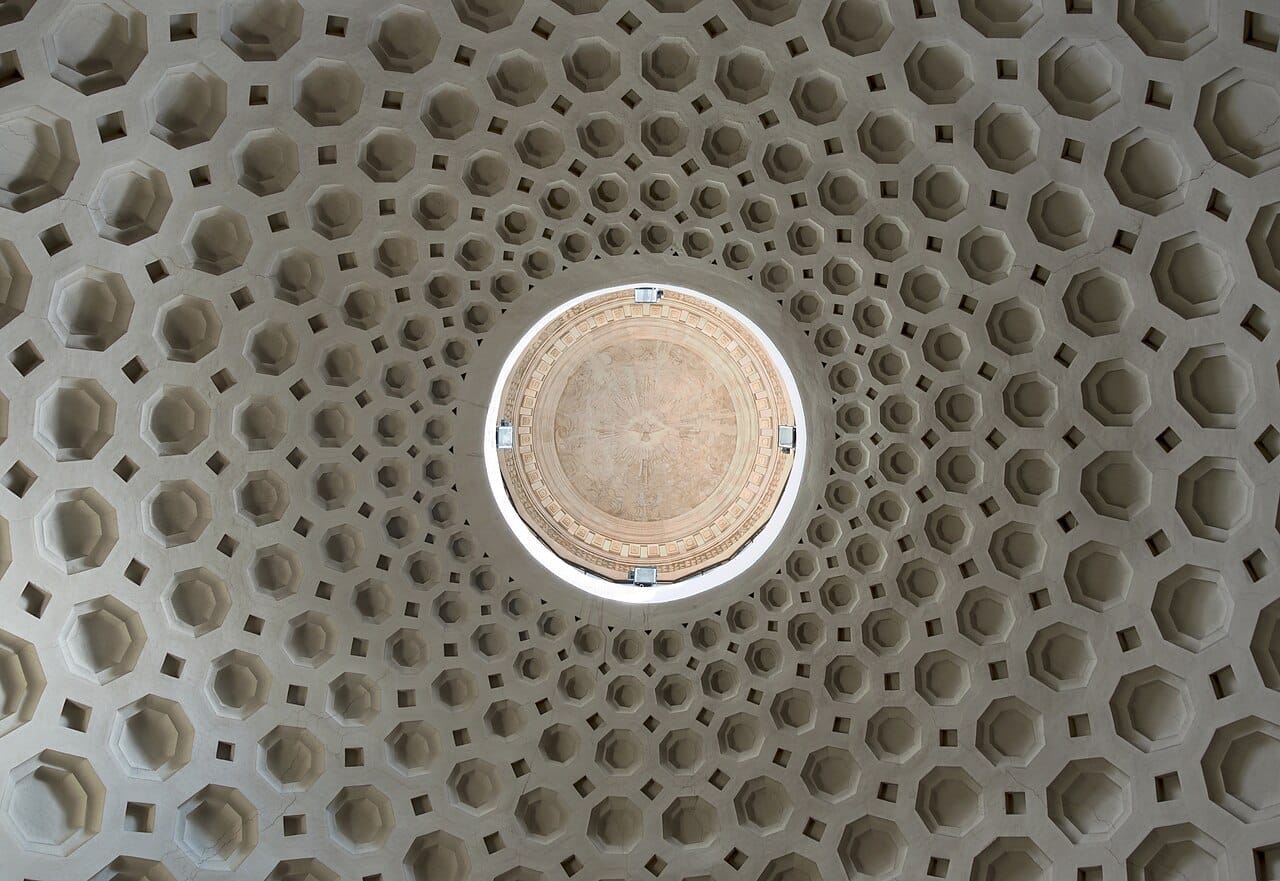
Photo by Livioandronico2013 via Wikimedia Commons, licensed CC BY-SA 4.0.
San Bernardo alle Terme is the church to choose when you want one of Rome's strangest short interior surprises: a former circular hall of the Baths of Diocletian turned into a church that feels almost like a miniature Pantheon. Come for the round geometry, the oculus light, the adaptive reuse, and a compact stop that gives the Repubblica side more character than another traffic-filled walk-through.
Quick summary
- Best visit length
- 10-20 minutes quick, 25-35 minutes if you slow down inside
- Do not miss
- Circular rotunda, oculus-lit dome, Camillo Mariani saints, Baths of Diocletian reuse
- Best route use
- Best as a short architecture stop in a Repubblica, Termini, or Quirinale-side walk
- Best next move
- Santa Maria della Vittoria for a richer Baroque interior, or Sant'Andrea al Quirinale for a more concentrated architecture comparison
Plan your visit
Approach San Bernardo alle Terme as a visual stop rather than an art checklist. The church works best when you enter with enough quiet to notice the shape, the top light, and the fact that this was once part of ancient imperial Rome.
Why this church matters
San Bernardo alle Terme matters because it shows one of the clearest small-scale examples of how Rome kept reusing its ancient city. One of the circular halls flanking the Baths of Diocletian became a church here, and that reuse is not hidden. The whole visit depends on seeing Christian Rome and imperial Rome occupying the same form.
The church's conversion is linked by Turismo Roma to the initiative of Countess Caterina Sforza Cesarini in 1598. Later custodianship by Cistercian communities tied the building to Saint Bernard's world, but what most visitors remember is simpler: the oddness of finding such a pure round church in the middle of the modern hotel-and-traffic belt.
What to look for
The round interior
This is the reason to come. Most churches in Rome guide you forward through a nave. San Bernardo gathers you into a circle instead, which is why the space registers so quickly.
The oculus and coffered dome
The top light is what makes the church feel almost ancient even after its Christian transformation. If you only glance from the doorway, you miss the effect completely.
Camillo Mariani's stucco saints
The eight large figures stop the church feeling like a bare architectural shell. They give the rotunda scale and rhythm, and make the interior feel inhabited rather than merely clever.
Odazzi's altarpieces and Overbeck's tomb
These are the details that reward a slower second look. They do not outweigh the geometry, but they keep the church from being only a shape with no devotional or artistic follow-through.
Why visit
Choose San Bernardo alle Terme when the day needs one stop that is short, specific, and unlike the standard Roman church sequence. It is especially good for visitors staying near Termini or moving through Repubblica who want one architecture memory without committing to a full museum-style visit.
How long to spend
Common mistake: assuming the visit is too short to matter. The point is not duration. The point is how quickly the church gives you something visually distinct.
Build your day
Start here for a route that matches the day you actually want. Choose the onward line that fits your direction and attention level.
Best next moves
Nearby & Related Churches
Use these next stops to keep the route coherent on the ground rather than doubling back across Rome for one isolated interior.