
Esquilino & Monti
San Vitale
Last updated: June 2026
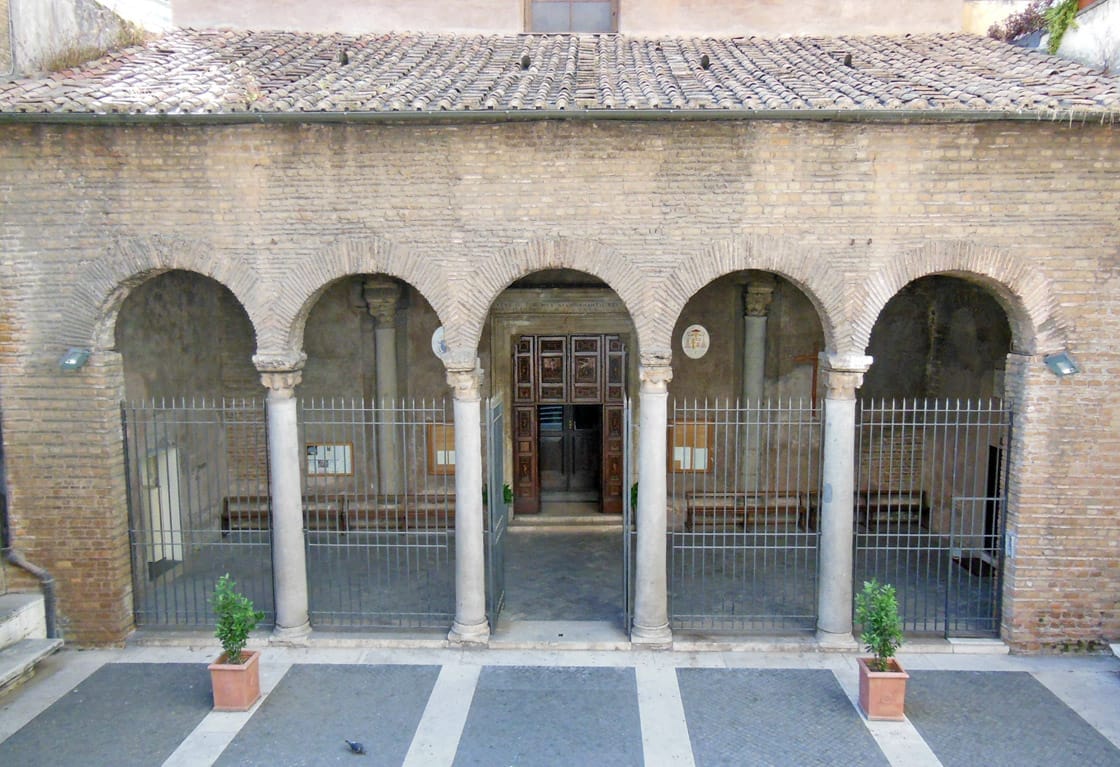
Photo by MM via Wikimedia Commons, licensed CC BY-SA 3.0.
San Vitale catches many visitors off guard because the pavement drops, the traffic falls away, and older Christian Rome suddenly feels close again.
Quick summary
- Best visit length
- A short stop of around 10-20 minutes works well here, especially if you are walking Via Nazionale. / 30-45 minutes if you read the route notes, compare features, and slow down inside.
- Do not miss
- Below-street-level setting, Early Christian basilica identity, Dedication to Saint Vitalis and family martyrs
- Best route use
- Via Nazionale, Quattro Fontane, and Termini-side routes
- Best next move
- Santa Maria Maggiore for the most natural nearby continuation, or San Clemente if the day should bend in a calmer direction
Plan your visit
Use it on a Via Nazionale or Termini-side walk when you want one compact stop that physically shows how the city rose around an older church.
Why this church matters
What people remember is the descent: that small shift below street level that makes modern Rome and older Rome sit almost on top of each other.
The descent from modern traffic into a calmer, older sacred space. The contrast between outside noise and interior age. That is often when visitors slow down and feel the older city under the road.
What to look for
Below-street-level setting
The sense of descending into older Rome. It is the church's clearest lived experience. A quick stop can miss that this physical drop is the whole point of the contrast.
Early Christian basilica identity
The old-foundation feel despite later city growth around it. It gives the church a seriousness beyond being a side-street curiosity. Without framing, some visitors treat it as only a convenient nearby stop.
Dedication to Saint Vitalis and family martyrs
The fuller martyr story behind the short everyday name. This gives devotional specificity. The short label "San Vitale" hides how particular the dedication really is.
Why visit
Choose it when you want one clear, quick reminder that the city outside did not erase the city underneath.
How long to spend
passing it as just another church on a busy road and missing the lowered threshold entirely.
Build your day
Start here for a route that matches the day you actually want. Choose the onward line that fits your direction and attention level.
Best next moves
Nearby & Related Churches
Use these next stops to keep the route coherent on the ground rather than doubling back across Rome for one isolated interior.