
Esquilino & Monti
San Carlo alle Quattro Fontane
Last updated: June 2026
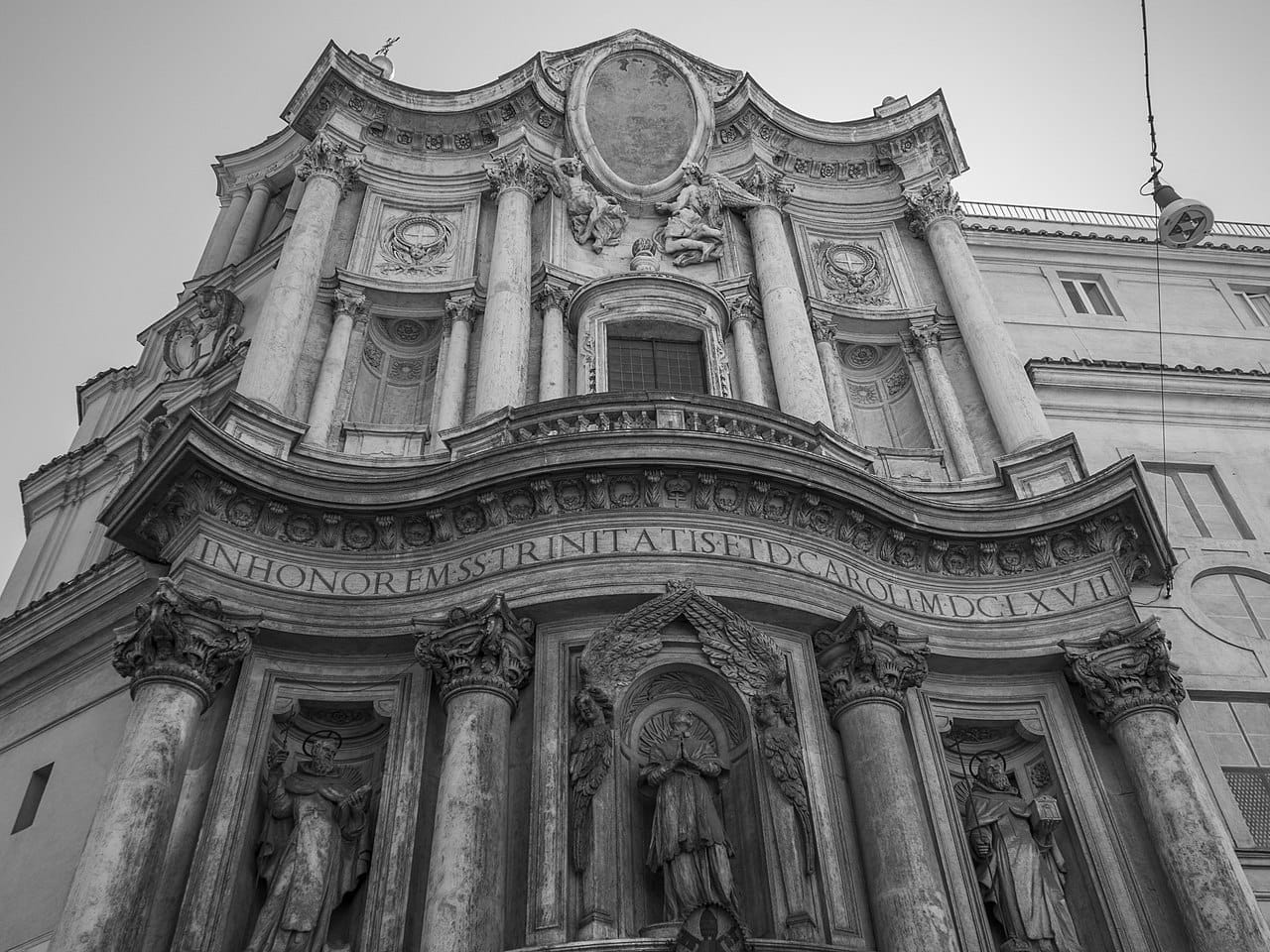
Photo by Nicholas Hartmann via Wikimedia Commons, licensed CC BY-SA 4.0.
San Carlo alle Quattro Fontane feels less like a big church visit and more like stepping inside one precise Borromini idea.
Quick summary
- Best visit length
- A focused 10-20 minutes is often enough, especially if you are here mainly for Borromini's plan and dome. / Allow 25-35 minutes if you want time to read the space properly and compare it with nearby Quirinale churches.
- Do not miss
- Oval interior, Coffered dome, Serpentine facade, Cloister
- Best route use
- Quirinale, Barberini, and architecture-focused walks
- Best next move
- Santa Maria della Vittoria for the most natural nearby continuation, or Sant'Andrea al Quirinale if the day should bend in a calmer direction
Plan your visit
This is strongest on a Quirinale or Barberini architecture walk, when you are ready to notice proportion, movement, and the way a tiny church can feel bigger than it is.
Why this church matters
Six months later, most visitors remember the shock of how much architectural intelligence is packed into such a small footprint.
The surprise of how small the footprint is compared with how sophisticated the space feels. The dome geometry, which works much better in person than in photographs. That is often when visitors realise why this small church matters so much.
What to look for
Oval interior
The way the walls seem to move rather than sit still. It shows Borromini's spatial invention immediately. Visitors can rush through without giving their eyes time to adjust to the plan.
Coffered dome
The optical depth and geometric rhythm overhead. This is the church's most memorable visual effect. It is easy to leave without properly looking up.
Serpentine facade
The undulating front on a tight crossroads. It announces Borromini's style even before entry. Street traffic makes some visitors forget to step back and read the facade.
Cloister
The calm, controlled design behind the street corner chaos. It turns the stop from a quick peek into a fuller architecture visit. Some visitors never enter the cloister and miss half the architectural argument.
Why visit
Choose it when you care more about spatial invention than about scale, relics, or sheer monumentality.
How long to spend
judging it from the doorway and missing that the whole point is what happens once your eyes adjust to the plan.
Build your day
Start here for a route that matches the day you actually want. Choose the onward line that fits your direction and attention level.
Best next moves
Nearby & Related Churches
Use these next stops to keep the route coherent on the ground rather than doubling back across Rome for one isolated interior.