
Esquilino & Monti
Sant'Andrea al Quirinale
Last updated: June 2026
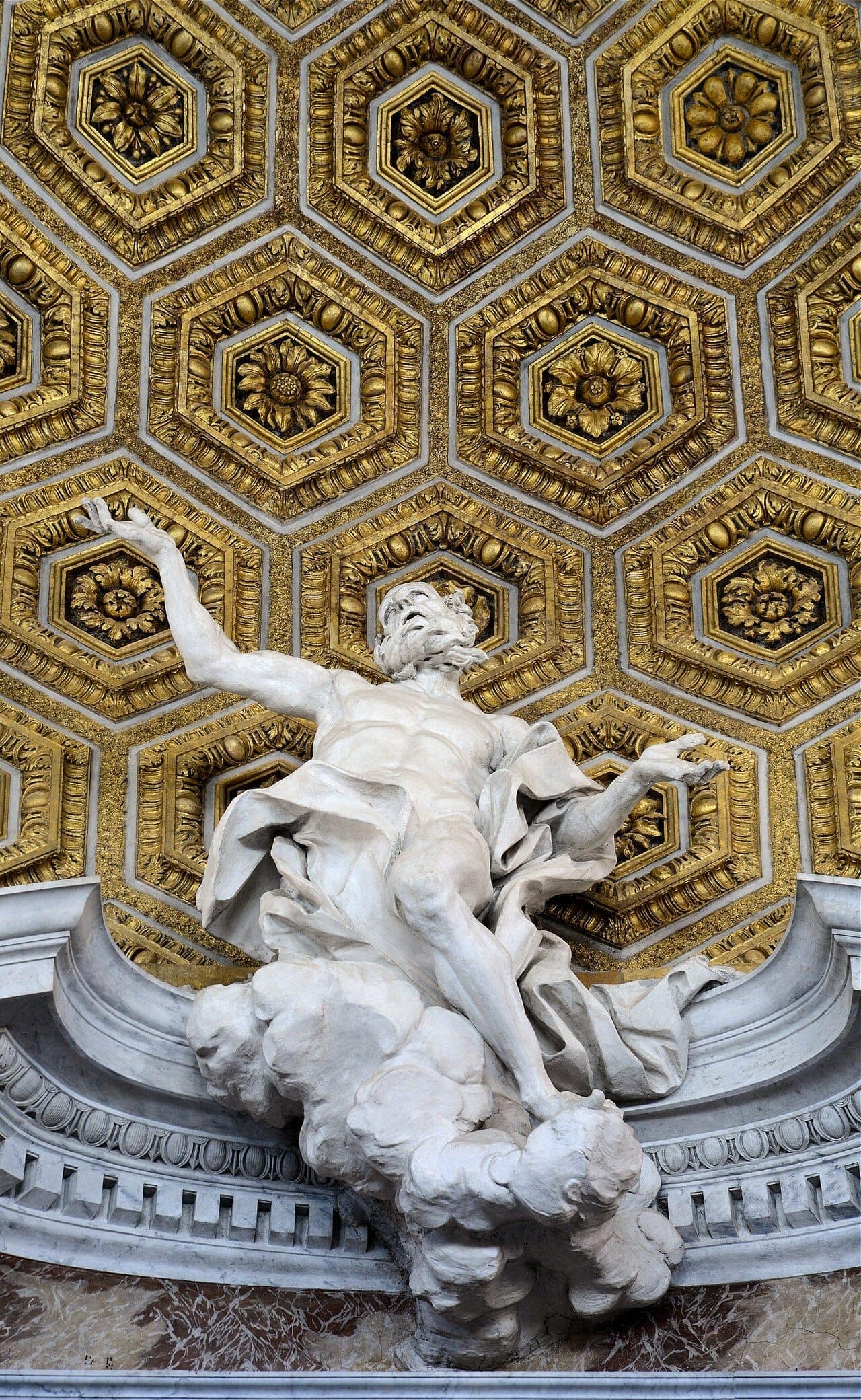
Photo by Alvesgaspar via Wikimedia Commons, licensed CC BY-SA 4.0.
Sant'Andrea al Quirinale is Bernini's compact masterpiece and the church he is said to have considered his finest work. Come for the oval interior, the controlled light, the Jesuit novitiate story, Stanislaus Kostka, and a Quirinale stop that can change how you understand Baroque church design in less than half an hour.
Quick summary
- Best visit length
- 20-30 minutes quick, 35-45 minutes if you are comparing nearby architecture carefully
- Do not miss
- Oval plan, dome light, Bernini altar setting, Jesuit novitiate, Stanislaus Kostka
- Best route use
- Best as a compact Bernini anchor in a Quirinale and Barberini architecture walk
- Best next move
- San Carlo alle Quattro Fontane for the clearest Bernini-Borromini comparison, or Santa Maria della Vittoria for a stronger theatrical Baroque continuation
Plan your visit
Visit Sant'Andrea al Quirinale when you have enough attention left to notice how the whole space is staged. The church works best not as filler between larger landmarks, but as a concentrated design stop where the small scale becomes an advantage.
Why this church matters
Sant'Andrea al Quirinale matters because it brings together architecture, sculpture, painting, and devotion with unusual completeness inside a very small footprint. Turismo Roma presents it as a project Bernini himself considered his best, and that is believable once the whole space begins to register: nothing feels accidental, and almost everything pulls the eye toward the saint's ascent and martyrdom.
It also matters because it was built for the first Jesuit novitiate. That gives the church a spiritual and institutional identity beyond pure Baroque brilliance. The association with Stanislaus Kostka keeps the church tied to lived Jesuit memory, which is why it deserves more than the label of "beautiful small church near the Quirinale."
What to look for
The oval plan and dome light
This is the feature that makes the church famous. The space gathers itself so quickly that many visitors understand the building before they have even moved far from the entrance.
Bernini's total design
The church feels complete because architecture, sculpture, and painting are working toward the same effect. That unity is what separates it from a merely pretty Baroque interior.
The altar and martyrdom focus
At the main chapel, Bernini's setting, Antonio Raggi's sculpture, and Guillaume Courtois's painting of Saint Andrew's martyrdom make the church feel like a single unfolding idea rather than a room full of separate objects.
The Jesuit and Stanislaus Kostka layer
Many visitors remember the design first and the Jesuit meaning second. The church is stronger when its beauty and spiritual purpose stay together.
Why visit
Choose Sant'Andrea al Quirinale when you want one compact church that earns time through precision rather than scale. It is especially strong for visitors who already know Bernini's name, but it also works for anyone who wants to understand how a small Roman church can feel more complete than many larger ones.
How long to spend
Common mistake: assuming the church is too small to need time. In reality, the smaller scale is what makes the design logic readable.
Build your day
Start here for a route that matches the day you actually want. Choose the onward line that fits your direction and attention level.
Best next moves
Nearby & Related Churches
Use these next stops to keep the route coherent on the ground rather than doubling back across Rome for one isolated interior.