
Centro Storico
Il Gesù
Last updated: June 2026
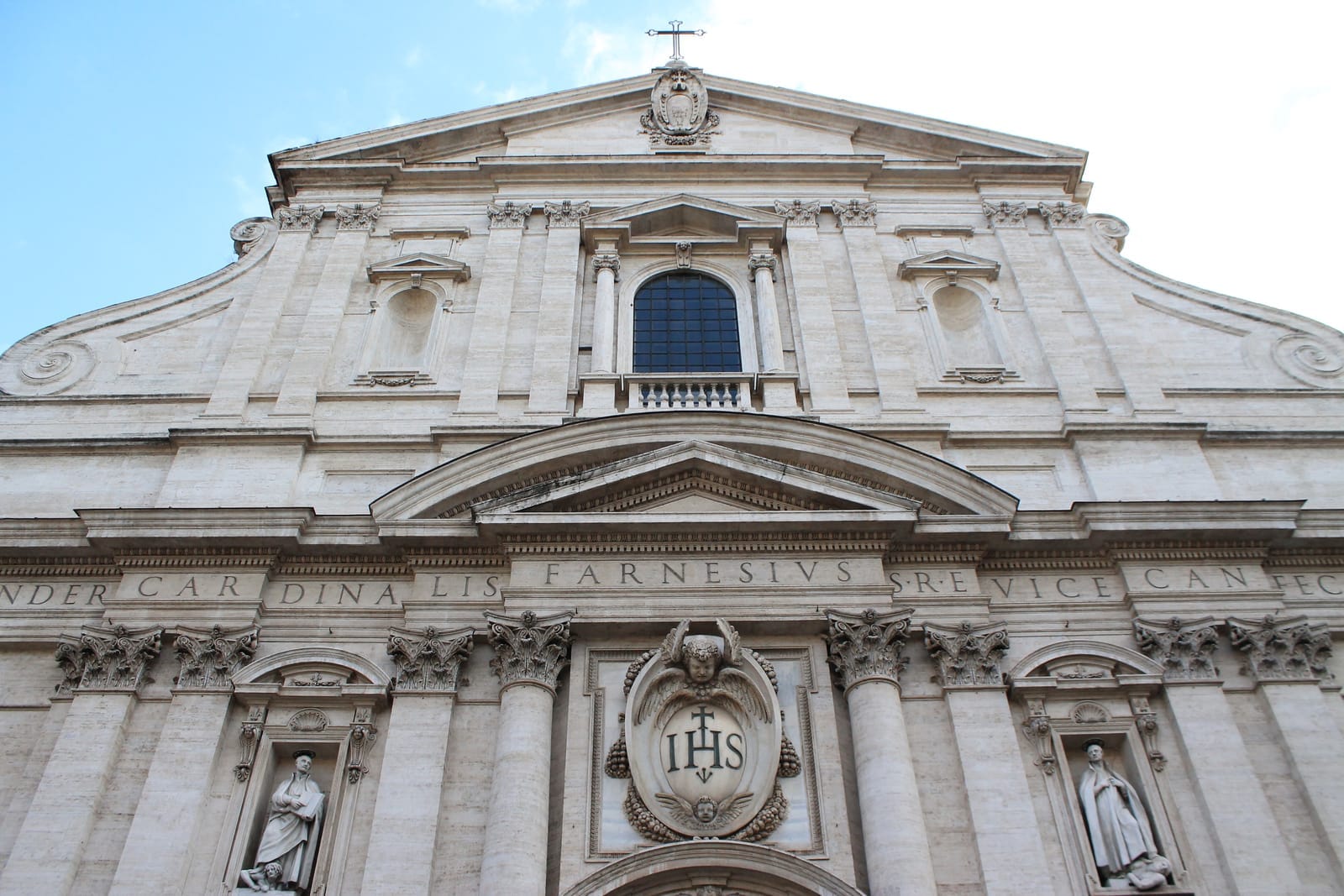
Photo by John Samuel via Wikimedia Commons, licensed CC BY-SA 4.0.
Il Gesù is the church to choose when you want to understand how Jesuit Rome made faith, art, and persuasion visible in one interior. Come for the tomb of Saint Ignatius of Loyola, Gaulli's Triumph of the Name of Jesus, the Chapel of St Ignatius, the Madonna della Strada, and a central route position that gives the church far more than pass-through value.
Quick summary
- Best visit length
- 35-50 minutes focused, or about 1 hour if Jesuit history is part of the reason for visiting
- Do not miss
- Tomb of Saint Ignatius, Gaulli's ceiling, Chapel of St Ignatius, Madonna della Strada, Jesuit mother church identity
- Best route use
- Main Jesuit and central Baroque anchor on a Pantheon-Navona-Campo corridor route
- Best next move
- Sant'Ignazio di Loyola for a sharper visual comparison, or Sant'Andrea della Valle if the route should stay Baroque but widen architecturally
Plan your visit
Il Gesù works best as a central anchor for a Jesuit or Baroque route, especially when the day should stay compact but not thin.
Why this church matters
Il Gesù matters because it is the mother church of the Society of Jesus and one of the defining interiors of Counter-Reformation Rome. That gives it a different kind of importance from a basilica or a cathedral. Visitors are not here to understand church hierarchy or ancient continuity first. They are here to see how the Jesuits expressed mission, devotion, persuasion, and artistic ambition in one church.
The historical arc matters too. Construction began in 1568, and by its dedication in 1584 the church was the largest completely new church built in Rome since the Sack of 1527. That helps explain why Il Gesù became so influential. It was not just another large church. It was a statement about the future shape of Catholic Rome.
The church also matters because the visit holds together around specific devotional and artistic centers: Saint Ignatius, the Chapel of St Ignatius, the Madonna della Strada, and Gaulli's ceiling. Those features keep the church vivid and stop the visit from turning into broad Counter-Reformation theory.
That distinction matters. Il Gesù can easily be made dull by over-explanation because its historical importance is so large. The mother-church identity tells you why the building matters. Saint Ignatius tells you who it is for. Gaulli tells you how it wants to affect the eye. The Madonna della Strada tells you that the church still carries lived devotion, not only institutional history.
Il Gesù is therefore one of the strongest churches in central Rome for visitors who want a church that feels directed. Everything in the building seems to know what it is doing. That sense of purpose is part of why the church remains more memorable than many interiors that are equally ornate.
It is also one of the clearest examples of a church where art, patronage, and spirituality are still easier to understand inside the building than outside it. This is a church that rewards being entered with intent.
What to look for
Tomb Of Saint Ignatius Of Loyola
This is one of the church's most important reasons to matter beyond art. The tomb gives Il Gesù a concrete spiritual center and keeps the visit grounded in Jesuit memory rather than style alone. It is also what keeps the visit from drifting into pure Baroque admiration. Visitors should leave remembering that Il Gesù is not just a church about persuasion. It is a church about a founder, an order, and a spiritual mission.
Gaulli's Triumph Of The Name Of Jesus
The ceiling is one of Rome's great Baroque moments because it changes how the whole nave is felt. It should be remembered as more than spectacle; it is central to the church's persuasive visual language. That persuasive role matters because it turns style into theology. The ceiling is not simply showing technical bravura. It is part of the way the church teaches, moves, and directs attention.
Chapel Of St Ignatius
This chapel is one of the church's strongest named features and one of the clearest reasons to slow down. It brings sculpture, devotion, and Jesuit identity into one focused stop. For many visitors, this is the place where Il Gesù becomes personal rather than institutional. It is where the church's grand historical role narrows into a named human memory.
Madonna Della Strada
This image matters because it carries a devotional tradition especially dear to Saint Ignatius. It prevents the church from becoming only a monumental art destination. That balance is important. The image reminds visitors that Jesuit Rome was built not only through architecture and rhetoric, but also through prayer, devotion, and remembered patronage.
The Mother Church Identity
Visitors should leave remembering not only the ceiling but the fact that this is the mother church of the Jesuits. That is the concept that holds the rest of the visit together. Without that, Il Gesù risks sounding like just one more grand Roman Baroque church. With it, the visit becomes distinct and easier to compare intelligently with Sant'Ignazio or other central interiors.
Why visit
Visit Il Gesù when you want one church that explains Jesuit Rome more clearly than any summary could. It is especially good for visitors who want to connect a major Baroque interior with a named saint, a living devotional tradition, and a strong central route position.
How long to spend
Common mistake: treating Il Gesù as a ceiling stop. It is stronger when the visitor follows the church's devotional structure rather than only its most photogenic surface. Another mistake is stacking too many central Baroque churches together and expecting each to stay distinct. Il Gesù usually deserves to be the main church of that part of the day, not one of five equivalent interiors.
Build your day
Start here for a route that matches the day you actually want. Choose the onward line that fits your direction and attention level.
Best next moves
Nearby & Related Churches
Use these next stops to keep the route coherent on the ground rather than doubling back across Rome for one isolated interior.