
Centro Storico
Sant'Eustachio
Last updated: June 2026
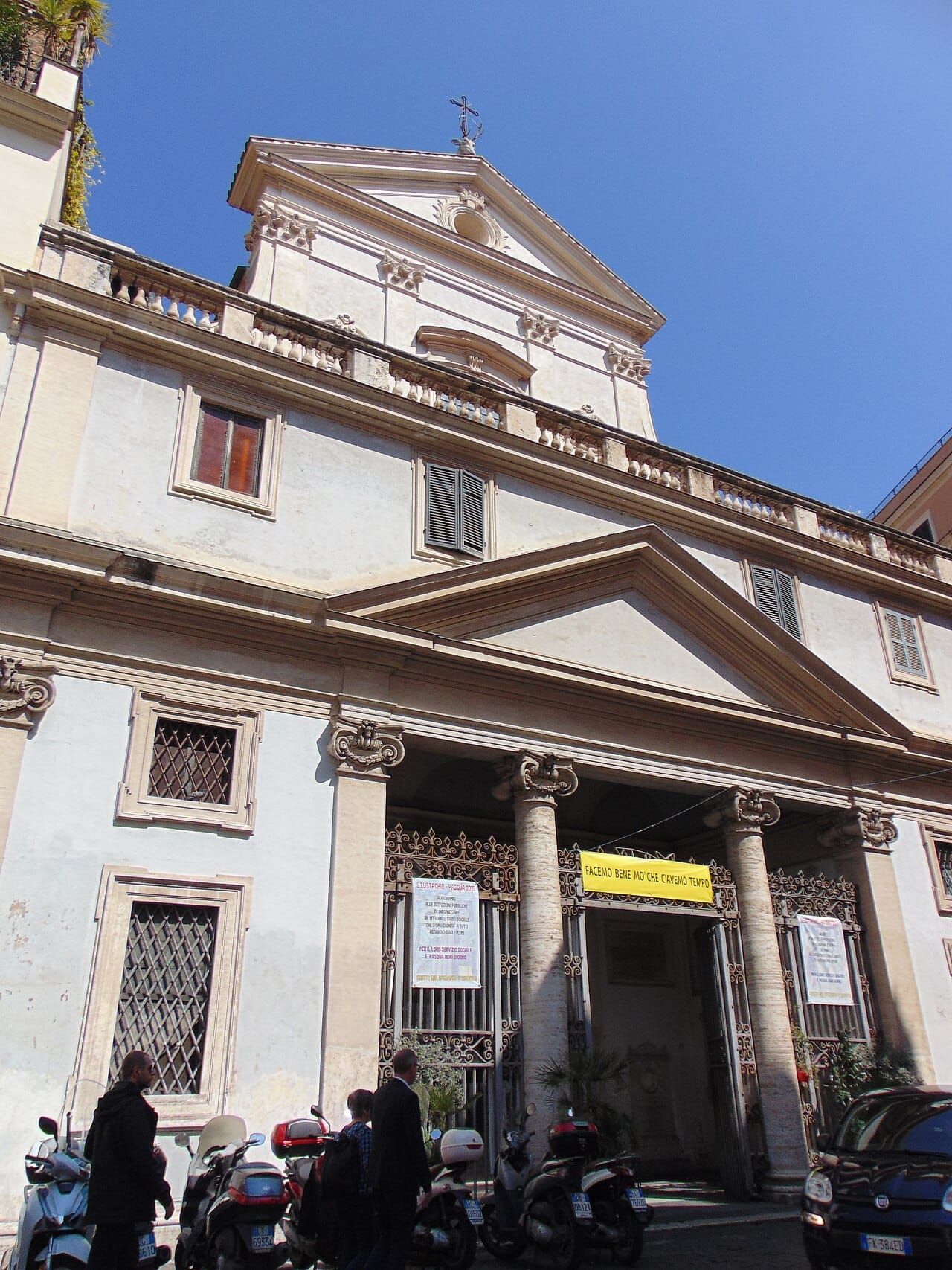
Photo by Nicholas Gemini via Wikimedia Commons, licensed CC BY-SA 4.0.
Sant'Eustachio is one of the central-Rome churches that proves a short stop can still carry a real memory. The stag with the cross, the flood-marked facade, and the church's place between the Pantheon and Piazza Navona give it more character than a simple connector usually has.
Quick summary
- Best visit length
- 10-15 minutes quick, 20-30 minutes if you are reading the church against the district around it
- Do not miss
- Stag symbol, Romanesque bell tower, flood plaque, baths traces
- Best route use
- Best inside a Pantheon-to-Navona walk that needs one compact church with real identity
- Best next move
- Santa Maria Maddalena for contrast, or Santa Maria sopra Minerva for a stronger central anchor
Plan your visit
Sant'Eustachio rewards the kind of stop where you pay attention before you go in. The district, the symbol, and the evidence of floods and older Rome all matter to the visit.
Why this church matters
Sant'Eustachio matters because it stops one of Rome's busiest central corridors from flattening into a sequence of cafes and famous monuments. According to tradition the church stands on the site of Saint Eustace's martyrdom and goes back to Constantine, though the building is only documented from the eighth century. That mixture of legend and documented history suits the place: it feels old in more than one sense.
The present church also carries the marks of the city around it. It stands in the area of the ancient baths, the bell tower comes from the 1196 rebuilding, and the eighteenth-century remodelling responded in part to problems caused by water and Tiber flooding. That layered central-Rome reality is what gives the church its weight.
What to look for
The stag with the cross
This is the detail almost everyone remembers. The deer head on the facade is not just an emblem but the key to the saint's conversion story, and it gives the whole district a symbol instead of leaving it as nameless center-city fabric.
The Romanesque bell tower
If you lift your eyes above the later facade, the tower tells you the church has a much deeper history than its eighteenth-century surface first suggests. It is often missed simply because the surrounding streets are so tight.
The flood plaque and ancient columns
These are the details that make the stop feel grounded in Rome rather than in legend alone. The plaque recording the 1495 flood and the columns from the Baths of Nero and Alexander show how the church has lived with the physical city around it.
The high altar and baldachin
Inside, the polychrome-marble altar by Nicola Salvi and the baldachin by Ferdinando Fuga give the church a more serious interior finish than many visitors expect from a short central stop.
Why visit
Choose Sant'Eustachio when you want the walk between the Pantheon and Navona to gain a church with its own symbol and personality. It is especially useful if you already know the larger central names and want one smaller stop that still feels rooted in old Rome.
How long to spend
Common mistake: using the church only as a navigation point between bigger stops. It usually becomes more memorable once you notice how much of Rome is compressed into one facade and one small block.
Build your day
Start here for a route that matches the day you actually want. Choose the onward line that fits your direction and attention level.
Best next moves
Nearby & Related Churches
Use these next stops to keep the route coherent on the ground rather than doubling back across Rome for one isolated interior.