
Centro Storico
San Luigi dei Francesi
Last updated: June 2026
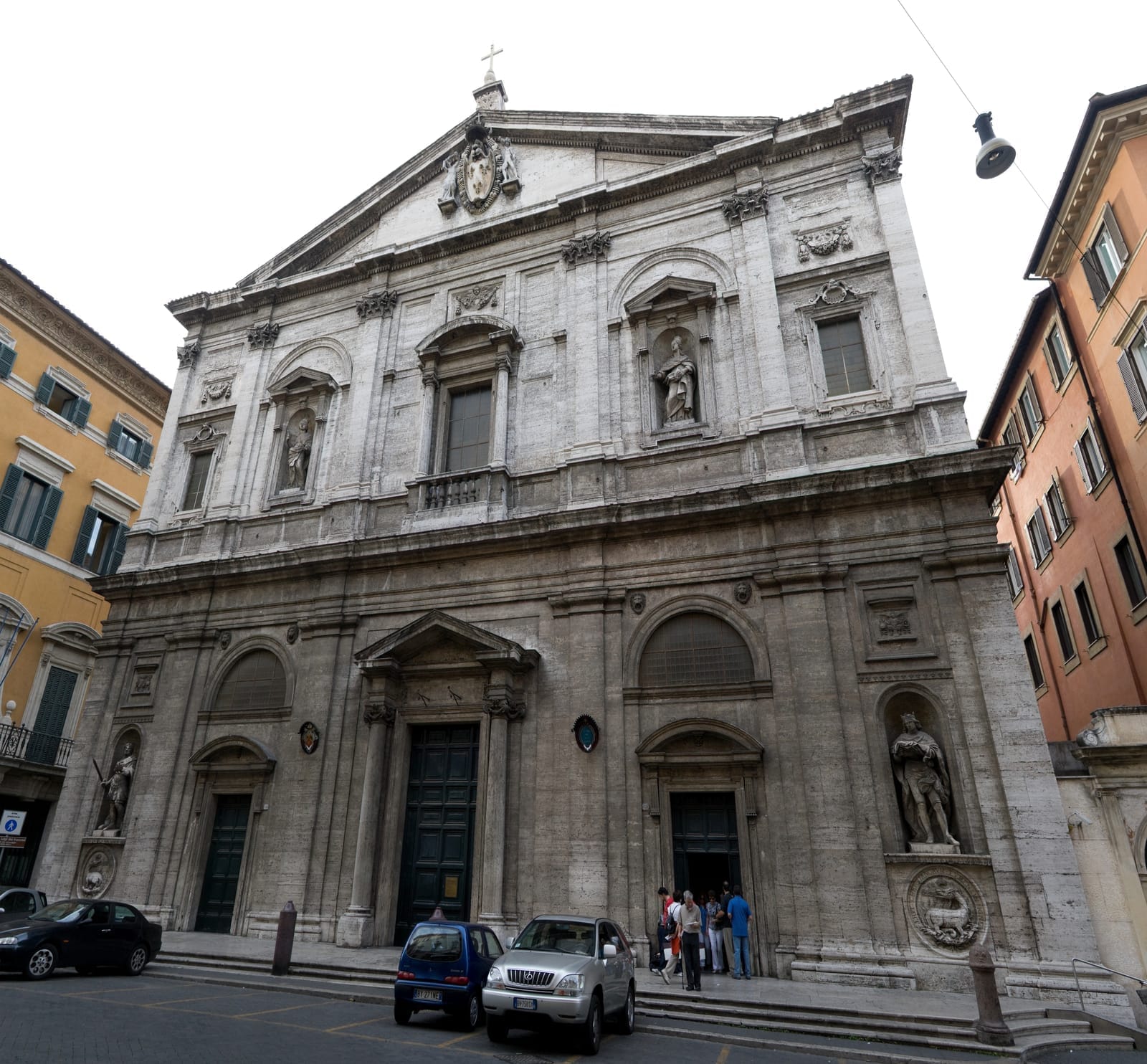
Photo by Maros Mraz via Wikimedia Commons, licensed CC BY 2.5.
San Luigi dei Francesi is the church to choose when you want the strongest Caravaggio stop in central Rome without losing the sense that you are still inside a real national church rather than a gallery. Come for the Contarelli Chapel, the Saint Matthew cycle, the French identity of the building, and a route position that fits naturally between Piazza Navona and the Pantheon.
Quick summary
- Best visit length
- 20-35 minutes focused, or longer if Caravaggio is a main purpose of the day
- Do not miss
- Contarelli Chapel, Caravaggio's Saint Matthew cycle, French facade saints, the national church identity
- Best route use
- High-priority short stop on a central art route between Navona and the Pantheon
- Best next move
- Santa Maria sopra Minerva for a broader church follow-up, or Sant'Ignazio di Loyola if the route should stay compact and visually memorable
Plan your visit
San Luigi works best as a short but high-priority central church stop, especially when the route is already art-led.
Why this church matters
San Luigi dei Francesi matters because it is one of the clearest examples of a church whose identity and visitor value can be understood quickly without becoming shallow. It is the French National Church in Rome, and that alone gives it more historical and civic meaning than a generic central church interior. But the real reason it rises so high in central Rome is the Contarelli Chapel and Caravaggio's three Saint Matthew paintings.
Those paintings make the church one of the defining church-art encounters in Rome. Visitors do not come here for vague artistic quality. They come for a specific experience: to stand in a working church and see Caravaggio's Saint Matthew cycle in the setting for which it was made. That gives the visit more force than seeing one more famous canvas in a museum room.
The rest of the church should support that core story, not dilute it. The facade saints, the late-Renaissance setting, and the central district location help the visit feel complete without pretending San Luigi is trying to compete with the bigger basilicas nearby.
San Luigi deserves real depth, but not because it needs endless layers of explanation. It deserves depth because its central claim is strong enough to support a precise, memorable visit. The challenge is not to make the church bigger than it is. The challenge is to make the visit smarter, more specific, and less generic than "see the Caravaggio church."
Its setting between Piazza Navona and the Pantheon also matters more than it first seems. Many central churches are good in theory but weak in real route use because they demand too much time. San Luigi does the opposite. It gives central Rome a stop with extremely high memory value in a relatively compact format, which is one reason it belongs in serious shortlists.
What to look for
Contarelli Chapel
This is the reason most people come. The chapel turns the church into a destination rather than a background church on a central walk. It also gives the visit a useful discipline. Instead of trying to absorb the whole church equally, visitors can let the chapel provide the gravitational center and then read the rest of the interior around it.
Caravaggio's Saint Matthew Cycle
The three paintings are the defining memory of the church. They matter because they let visitors encounter Caravaggio in a sacred setting where drama, light, and calling all become part of a lived devotional space. That sacred setting is the key difference from museum viewing. San Luigi is strongest when visitors see not only "three famous paintings" but a chapel sequence built to carry a saint's story and a church's liturgical life.
French National Church Identity
Remembering that this is the French National Church in Rome helps the building feel more specific and less like a container for one famous artist. It also helps visitors notice why the facade, patronage, and institutional memory matter. The church is not only a Caravaggio delivery system. It belongs to a distinct Roman and French story.
Facade Saints
The statues of Charlemagne, Louis IX, Saint Clotilde, and Saint Joan of Valois help announce the church's French identity before you enter. These are useful because they frame the stop from the street. Even a short visit becomes richer when the church starts communicating its identity before the Contarelli Chapel takes over.
Late-Renaissance Interior
The interior should not be ignored once Caravaggio has landed. It gives the church enough visual coherence that the visit feels complete rather than chapel-only. That coherence is important for memory. Visitors should leave remembering San Luigi as a church with a strong center, not a single famous room floating inside an otherwise invisible building.
Why visit
Visit San Luigi dei Francesi when you want one central church that delivers a precise, memorable reason to enter. It is especially strong for first-time visitors building a shortlist and for art-focused itineraries that still want sacred context rather than museum-only masterpieces.
How long to spend
Common mistake: walking in, glancing at the chapel, and leaving without letting the church's French identity or sacred setting register at all. Another mistake is trying to visit too many central art churches at the same pace. San Luigi is more rewarding when the stop is short but attentive rather than mechanically efficient.
Build your day
Start here for a route that matches the day you actually want. Choose the onward line that fits your direction and attention level.
Best next moves
Nearby & Related Churches
Use these next stops to keep the route coherent on the ground rather than doubling back across Rome for one isolated interior.