
Centro Storico
Sant'Ignazio di Loyola
Last updated: June 2026
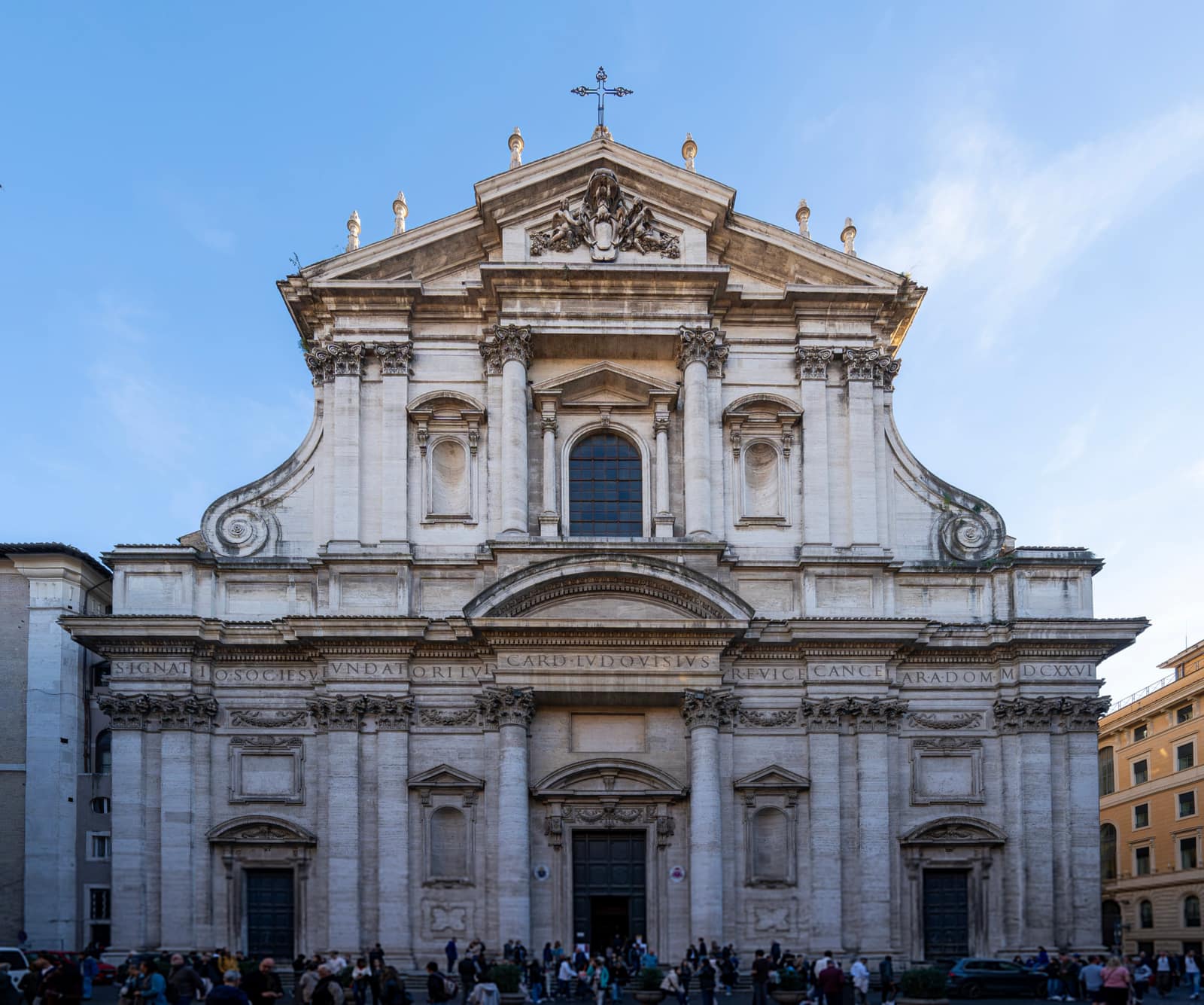
Photo by Fiat 500e via Wikimedia Commons, licensed CC BY 4.0.
Sant'Ignazio di Loyola is the church to choose when you want one Roman church visit that changes the way space itself behaves around you. Come for Andrea Pozzo's ceiling, the famous false dome, the monument to Gregory XV, the statue of St Ignatius, and a central route role that makes this one of the most memorable short church stops in Rome.
Quick summary
- Best visit length
- 20-35 minutes focused, or longer if you want the illusion experience to settle properly
- Do not miss
- Pozzo ceiling, false dome, statue of St Ignatius, monument to Gregory XV, Piazza Sant'Ignazio
- Best route use
- High-impact short stop on a central church route between the Pantheon side and the Jesuit core
- Best next move
- Il Gesù for the fuller Jesuit counterpart, or Santa Maria sopra Minerva if the route should keep strong interior identity without repeating the same visual trick
Plan your visit
Sant'Ignazio works best as a high-impact short stop on a central church route, especially when paired intelligently rather than surrounded by too many similar interiors.
Why this church matters
Sant'Ignazio matters because it turns perspective itself into a spiritual and artistic experience. The church was built with serious Jesuit patronage and central-Rome ambition, but its defining strength lies in what Andrea Pozzo made it do. The ceiling and false dome are not side attractions. They are the reason the church has become one of the most instantly memorable sacred interiors in Rome.
That matters because this church should not feel interchangeable with other Baroque churches. Visitors are not coming here primarily for broad historical weight, relic tradition, or multiple layers of devotion. They are coming for an experience of seeing: a church that makes them look twice, move around, and realize that architecture, painting, and persuasion have fused into one event.
The church also gains force from its Jesuit context and from Piazza Sant'Ignazio outside. Together they give the visit enough surrounding identity that it feels like a full stop, not just a ceiling anecdote.
Sant'Ignazio is more than a visual trick, but it still needs the visual experience to stay at the center. Illusion is the church's proper subject, supported by Jesuit context, patronage, sculpture, and urban setting.
It is also one of the best examples of a church whose route value depends on difference. Sant'Ignazio works because almost nothing else in a central Rome sequence does the same job. When routes are getting repetitive, this church can restore sharpness.
That makes it especially valuable on crowded central itineraries. Even a short stop here can reset attention because the church does not ask the visitor to absorb another long list of chapels. It asks them to notice one extraordinary visual argument and then understand the rest of the building around it.
What to look for
Andrea Pozzo's Ceiling
This is the feature that gives the church its identity. The ceiling matters because it dissolves the normal limits of the nave and makes the church feel larger, more open, and more theatrical than it physically is. It also teaches the visitor how to look at the church. Once the ceiling has landed, the rest of the building begins to read as an orchestrated experience rather than a simple decorative container.
The False Dome
The false dome is the church's best "I did not expect that" moment. It is the reason visitors should move to the intended viewing point rather than glance up casually from wherever they happen to stand. This is also the feature that most clearly separates Sant'Ignazio from other short church stops in the center. It creates a memory not only of what the visitor saw, but of how their seeing had to change.
Monument To Gregory XV
This feature helps thicken the visit beyond illusion alone. It ties the church back to papal and patronage history in a visible way. Without details like this, Sant'Ignazio could feel visually brilliant but historically thin. The monument helps anchor the church in Roman institutional history as well.
Statue Of St Ignatius
The giant statue gives the church a more concrete devotional center and stops the visit from becoming only about optical surprise. That matters because the church should still feel sacred rather than merely clever. St Ignatius himself must remain visible inside the experience named for him.
Piazza Sant'Ignazio
The piazza should be remembered as part of the visit, not just the space outside. It extends the church's theatrical character into the urban setting. The route implication is useful too. Sant'Ignazio works well when it gives the central city a memorable pause rather than being swallowed by the surrounding streets.
Why visit
Visit Sant'Ignazio when you want one church that you will almost certainly describe later in detail. It is especially good for visitors whose central Rome day needs a stop with immediate impact and for people who want a sacred interior that feels more distinctive than a generic list of painters and chapels.
How long to spend
Common mistake: treating Sant'Ignazio as a novelty stop and leaving before the church's Jesuit identity and urban setting have registered at all. Another mistake is rushing through while central-Rome fatigue is already high. The church rewards attention more than endurance, so it often works better as a precision stop than as one more item late in the day.
Build your day
Start here for a route that matches the day you actually want. Choose the onward line that fits your direction and attention level.
Best next moves
Nearby & Related Churches
Use these next stops to keep the route coherent on the ground rather than doubling back across Rome for one isolated interior.