
Centro Storico
Santa Maria Maddalena
Last updated: June 2026
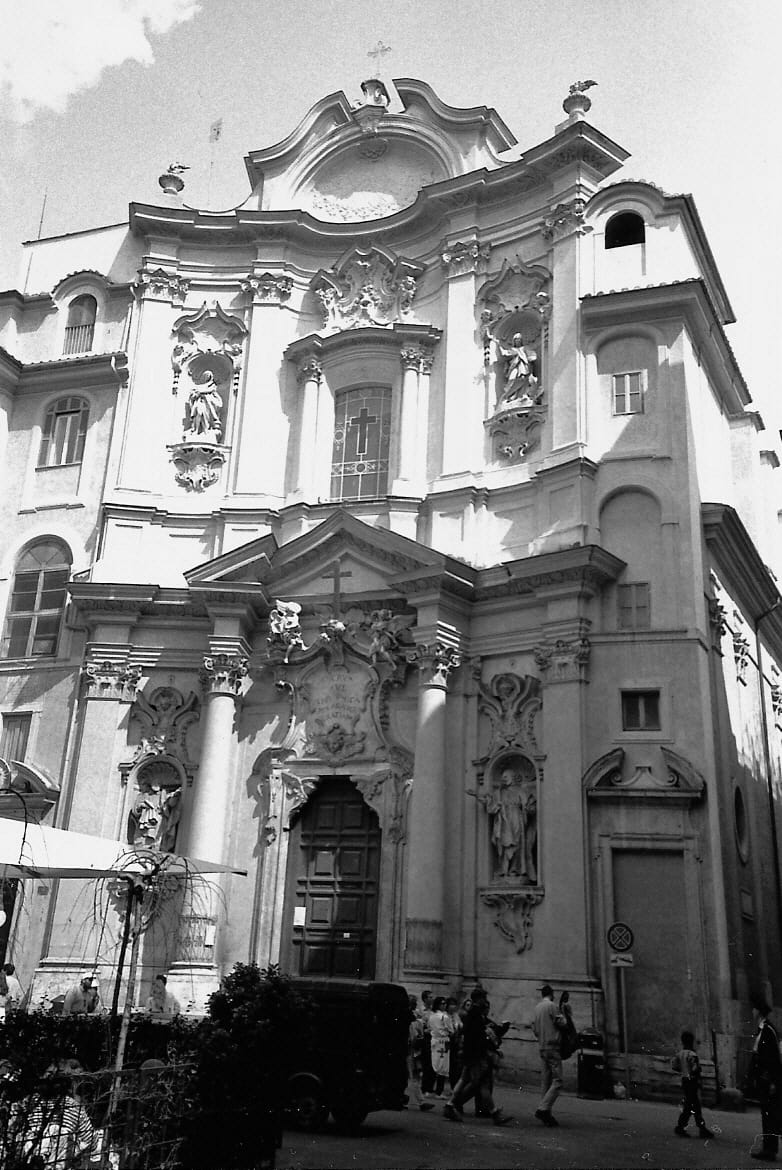
Photo by Torvindus via Wikimedia Commons, licensed CC BY-SA 3.0.
Santa Maria Maddalena is the Pantheon-side church to choose when the center of Rome is starting to feel too heavy, too similar, or too crowded. Its Rococo atmosphere, Camillian identity, and link to Saint Camillus de Lellis give the route an emotional change of tone that nearby churches do not offer.
Quick summary
- Best visit length
- 10-20 minutes quick, 25-35 minutes if you want the Camillian story as well as the interior mood
- Do not miss
- Chapel of Saint Camillus, Rococo atmosphere, dome and nave frescoes, sacristy
- Best route use
- Best as a contrast stop inside a Pantheon-area church walk
- Best next move
- Sant'Eustachio for denser district texture, or Sant'Ignazio di Loyola if the route now wants a larger visual payoff
Plan your visit
Let Santa Maria Maddalena act as a mood change inside the center. The stop becomes clearer when you read the church as both a Camillian house and one of Rome's few genuinely Rococo-feeling sacred interiors.
Why this church matters
Santa Maria Maddalena matters because it ties a very Roman central location to a much more personal religious story. The site began from a fourteenth-century chapel, became the regional church for people from Abruzzo, and in 1586 was entrusted to Saint Camillus de Lellis as the seat of the order he founded. That means the church belongs not only to the Pantheon district but to the history of care, illness, and the Camillian mission.
Its visual identity deepens that difference. The Camillians describe the church as their General House and as one of Rome's Rococo landmarks, with the sacristy and the interior decoration marking a shift away from the heavier Baroque atmosphere that dominates much of central Rome.
What to look for
The Chapel of Saint Camillus
This is the heart of the visit. Renovated in the 1740s for the translation of the saint's remains, it gives the church a devotional center that keeps the stop from becoming merely decorative.
The dome and nave frescoes
The frescoes by Stefano Parrocel help the church feel lifted and mobile rather than solemn. They are part of the reason the interior stays in memory even when the church is visited quickly.
The sacristy
Many visitors miss this layer entirely. The Camillians present it as a unique Roman Baroque space moving toward Rococo, and it often explains the church better than the facade alone.
The museum and relic presence
The attached museum preserves relics and everyday objects linked to Saint Camillus. That quieter material deepens the church's identity and gives it a human scale that nearby grander churches often do not have.
Why visit
Choose Santa Maria Maddalena when you want the Pantheon side to gain variety in devotion, style, and mood. It is especially rewarding for visitors who do not need every central stop to compete for grandeur.
How long to spend
Common mistake: treating the church as a pretty facade near the Pantheon. It becomes more memorable once you realise the softer atmosphere comes from a real religious identity, not from decoration alone.
Build your day
Start here for a route that matches the day you actually want. Choose the onward line that fits your direction and attention level.
Best next moves
Nearby & Related Churches
Use these next stops to keep the route coherent on the ground rather than doubling back across Rome for one isolated interior.