
Centro Storico
Santa Maria sopra Minerva
Last updated: June 2026
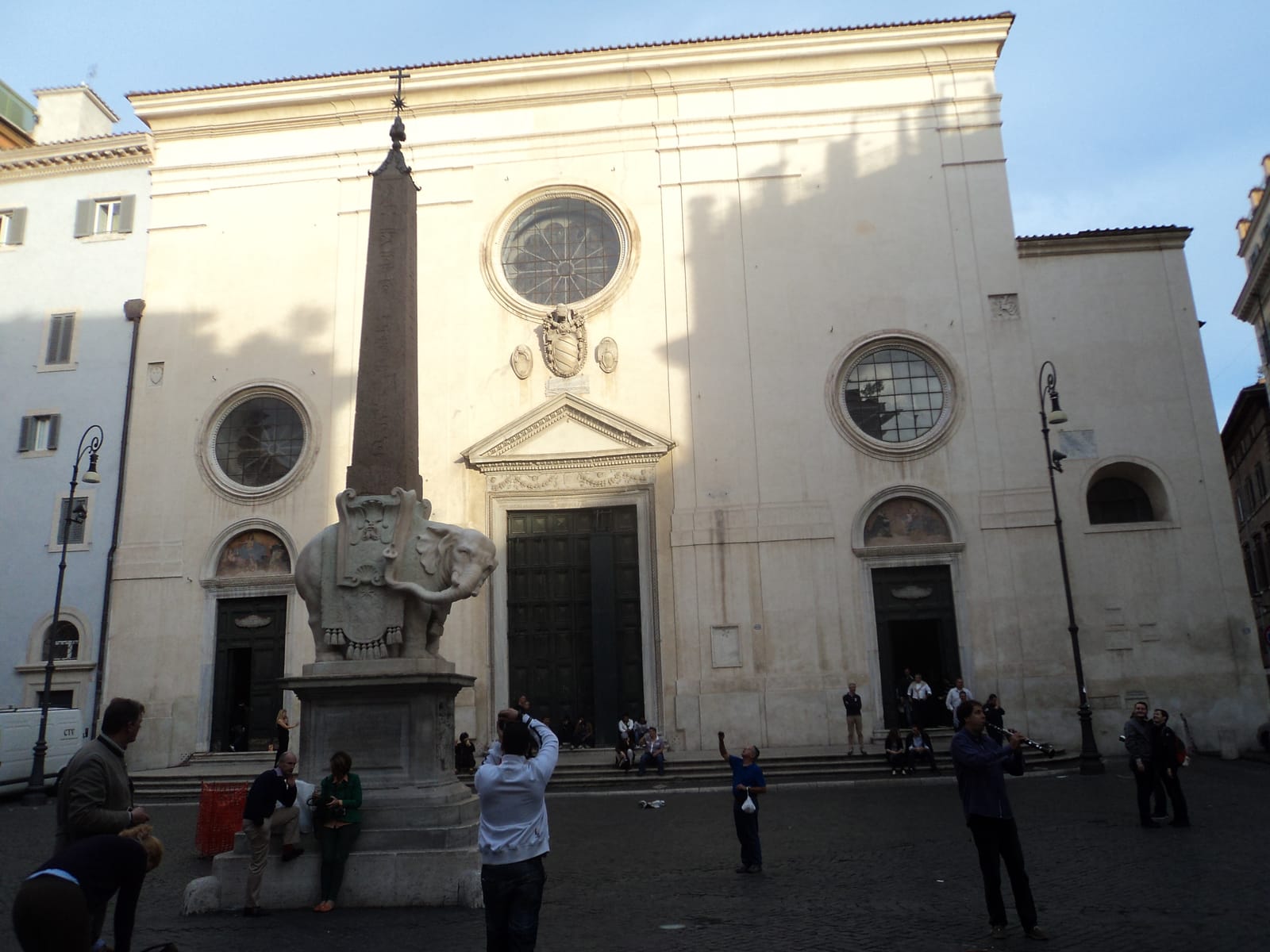
Photo by Nicholas Gemini via Wikimedia Commons, licensed CC BY-SA 3.0.
Santa Maria sopra Minerva is the church to choose when you want one central Rome stop with Gothic rarity, major tombs, and named Renaissance art rather than another interchangeable Baroque interior. Come for the Gothic nave, the Carafa Chapel, Michelangelo's Christ the Redeemer, Saint Catherine of Siena, Fra Angelico, and a route position that works naturally from the Pantheon side.
Quick summary
- Best visit length
- 40-60 minutes focused, or longer if you want the church as a central art stop rather than a quick add-on
- Do not miss
- Gothic nave, Carafa Chapel, Michelangelo's Christ the Redeemer, Saint Catherine of Siena, Fra Angelico, Piazza della Minerva
- Best route use
- Main church anchor for a Pantheon-side central route that needs art, tombs, and stronger church identity
- Best next move
- San Luigi dei Francesi for a tighter art continuation, or Sant'Ignazio di Loyola if you want the route to stay central but become more theatrical
Plan your visit
Santa Maria sopra Minerva works best as the main church anchor of a Pantheon-side route, especially if the day needs one stop with real interior weight.
Why this church matters
Santa Maria sopra Minerva matters because it is one of the rare Gothic church interiors in Rome and one of the strongest central churches for named works, tombs, and Dominican significance. That combination is unusual in the city. Many central churches are important because of one chapel or one painter. Minerva matters because several different reasons to visit all hold together.
The church's history also gives the visit shape. Founded in the 7th century over remains probably linked to a temple of Minerva and rebuilt in Gothic form in the 13th century, it gives visitors a church that immediately looks and feels different from most Roman interiors. That architectural distinctiveness is one of the best reasons to prioritize it if you are trying to choose between central Rome church stops.
Its tomb and devotional significance matter as much as the art. Saint Catherine of Siena and Fra Angelico are buried here, which stops the church from becoming a purely aesthetic visit. It is a place where architecture, art, sanctity, and central location reinforce one another.
That combination is what gives the church its unusual strength. Santa Maria sopra Minerva is not simply the Gothic church of central Rome. It is the church where several kinds of value stack without crowding each other out. Visitors can come for architecture, arrive through the piazza because of Bernini's elephant, stay for Michelangelo and Filippino Lippi, and leave remembering that saints and artists are buried here. Few central churches do that with the same balance.
It is also one of the best antidotes to central-Rome sameness. When travelers see too many churches in one day, memory often collapses. Minerva cuts through that because its shape, palette, and named features are easier to differentiate than those of many nearby interiors.
That memorability has practical value. Santa Maria sopra Minerva is one of the easiest central churches to justify because it offers clear difference, strong named features, and real devotional gravity in a manageable visit.
What to look for
Gothic Nave
This is the first reason the church stays in memory. The interior immediately feels different from most Roman churches, and that change in architectural mood is part of the visit's value. It is also what helps the rest of the features cohere. Without the Gothic body of the church, visitors might remember only isolated names. The nave gives the church a strong overall identity before the details arrive.
Carafa Chapel
The chapel's Filippino Lippi frescoes are one of the church's strongest named features. If you only remember one art stop inside beyond the general space, make it this one. The chapel also proves that Minerva is not simply important for who is buried there. It is a church where the painted spaces themselves deserve destination-level attention.
Michelangelo's Christ the Redeemer
This work gives the church a direct Michelangelo connection in a sacred interior rather than a museum frame. It helps the visit land for visitors who want a single unforgettable sculpture. For many travelers, that difference matters. Seeing Michelangelo here keeps the church visit from dissolving into "things I should see near the Pantheon" and gives Minerva one truly headline feature.
Saint Catherine Of Siena And Fra Angelico
These burials matter because they give the church devotional and historical gravity beyond art tourism. They are part of why Minerva feels like a serious sacred destination, not just an elegant central stop. They also help the visit stay balanced. Minerva is not only a place to admire works. It is also a place shaped by memory, sanctity, and continuing Christian meaning.
Piazza Della Minerva And The Elephant
Bernini's elephant and obelisk are not the reason to skip the church. They are the useful threshold feature that helps the church claim the piazza rather than disappear behind it. Used properly, the piazza gives the church a memorable arrival without overpowering it. Visitors should come away remembering that the elephant introduces Minerva; it does not replace it. That distinction is important because central Rome is full of places where the exterior and the square overwhelm the church. Minerva is stronger than that, and the visit should keep pulling you back inside.
Why visit
Visit Santa Maria sopra Minerva when you want a central church that feels distinctive immediately. It is especially useful for visitors who are tired of broad claims about "another beautiful Roman church" and want a stop with concrete memory points: Gothic space, Michelangelo, Filippino Lippi, Saint Catherine of Siena, and the elephant outside.
How long to spend
Common mistake: treating Santa Maria sopra Minerva as an easy extra near the Pantheon. It is stronger when it gets real attention within the centre rather than leftover time. Another mistake is overloading the same route with too many art churches and expecting them all to stay distinct. Minerva often works best when it is the one central church that gets real attention and the surrounding stops are lighter.
Build your day
Start here for a route that matches the day you actually want. Choose the onward line that fits your direction and attention level.
Best next moves
Nearby & Related Churches
Use these next stops to keep the route coherent on the ground rather than doubling back across Rome for one isolated interior.