
Vatican & Prati
Santa Maria dei Miracoli
Last updated: June 2026
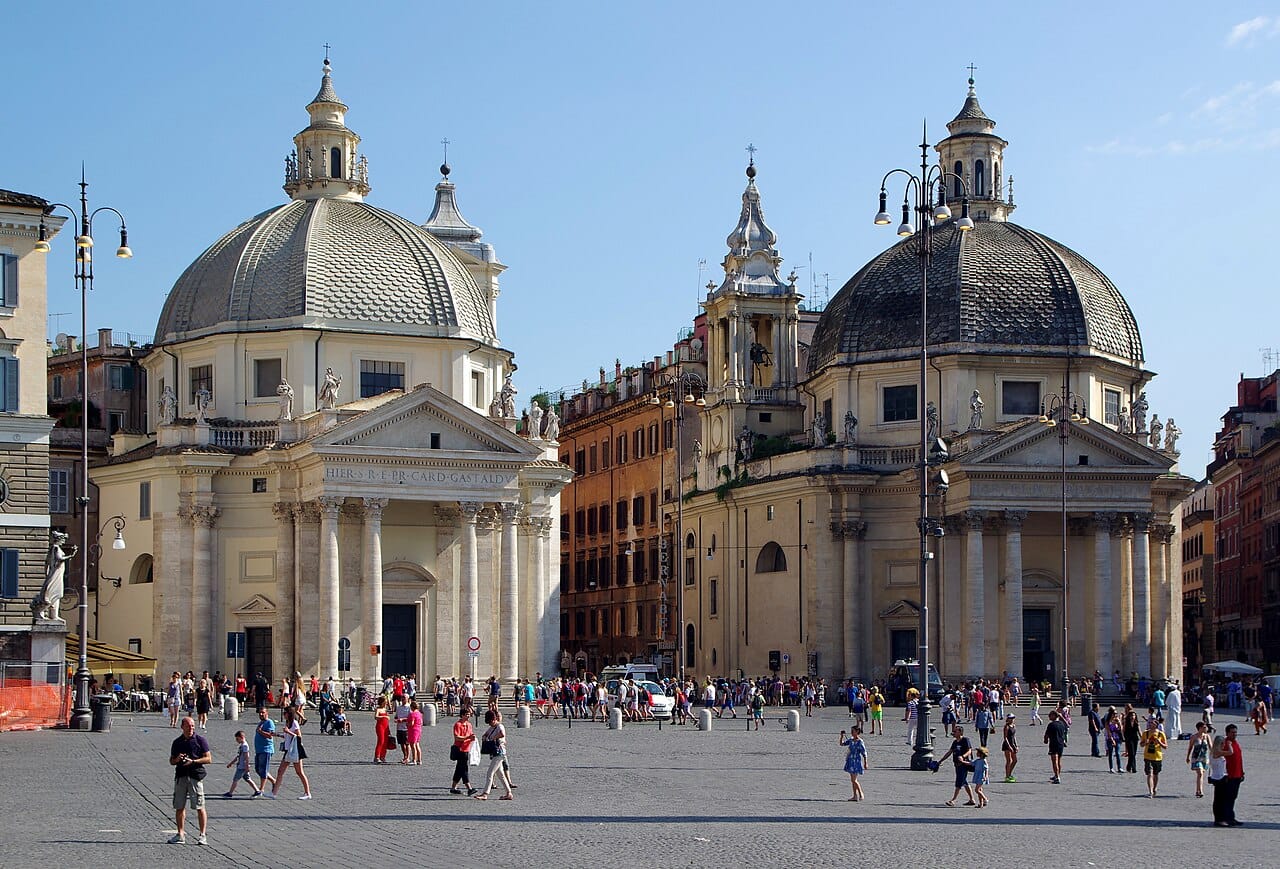
Photo by Jakub Halun via Wikimedia Commons, licensed CC BY-SA 4.0.
Santa Maria dei Miracoli is worth visiting when you want Piazza del Popolo to feel like the start of a church day rather than just a handsome square. Its payoff is not a long interior visit but the way the church helps frame Rome's northern gateway, especially once you compare it with its twin across the piazza.
Quick summary
- Best visit length
- 10-15 minutes quick, 20-30 minutes if you are comparing the Piazza del Popolo pair carefully
- Do not miss
- Twin-church setting, circular plan, northern gateway role
- Best route use
- Best at the start of a Piazza del Popolo sequence before heading south into the center
- Best next move
- Santa Maria in Montesanto for the twin comparison, or Santa Maria del Popolo for the stronger art-and-history anchor
Plan your visit
Approach Santa Maria dei Miracoli as part of the square, not as an isolated destination. The church becomes clearer once you stand back long enough to see how it works with the obelisk, the roads of the Trident, and Santa Maria in Montesanto opposite.
Why this church matters
Santa Maria dei Miracoli matters because it helps explain how Baroque Rome controlled arrival, movement, and first impressions. Together with Santa Maria in Montesanto it turns Piazza del Popolo into a ceremonial threshold rather than an empty opening in the city. Pope Alexander VII backed the broader idea, Carlo Rainaldi designed the twin-church project, and Bernini with Carlo Fontana helped bring this church to completion.
That means the church earns its place less through one famous chapel than through where it sits and what it does. It shows how sacred architecture could organize the beginning of a route into central Rome, especially for anyone coming in through the old northern entrance.
What to look for
The twin-church composition
This is the main reason to stop. From the square, Santa Maria dei Miracoli and Santa Maria in Montesanto look like a matched pair designed to balance the entrance to the city. What visitors often miss is that the churches were meant to choreograph the whole piazza, not simply decorate it.
The circular interior
Inside, the plan is the clearest difference from Montesanto. Santa Maria dei Miracoli feels compact and centered, while the other church stretches into a more elliptical shape. That moment of comparison is often what makes the stop memorable.
The Baroque gateway effect
Stand outside again after the visit and look south. The church is part of the point where the city opens into Via del Corso and the other roads of the Trident. The payoff is visual and urban before it is devotional.
Why visit
Choose Santa Maria dei Miracoli when you are already beginning at Piazza del Popolo and want the square to become part of the church route. It adds meaning to the northern entry and makes the move into the center feel planned.
How long to spend
Common mistake: treating the twin churches as scenery and walking straight past them. Even a short pause usually makes the first part of the route feel more coherent.
Build your day
Start here for a route that matches the day you actually want. Choose the onward line that fits your direction and attention level.
Best next moves
Nearby & Related Churches
Use these next stops to keep the route coherent on the ground rather than doubling back across Rome for one isolated interior.