
Vatican & Prati
Santa Maria del Popolo
Last updated: June 2026
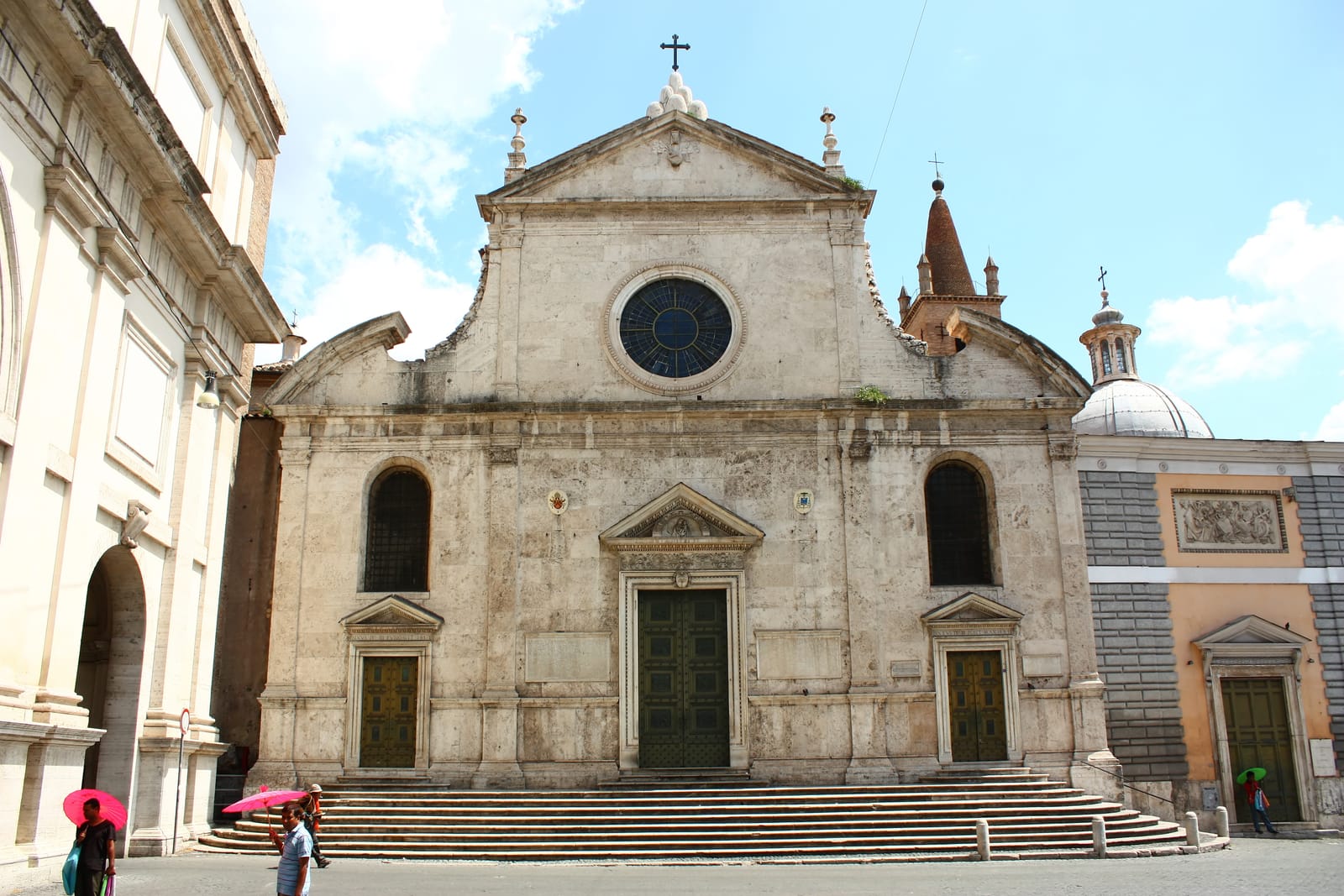
Photo by M0tty via Wikimedia Commons, licensed CC BY-SA 3.0.
Santa Maria del Popolo is the church to choose when you want one Roman church that turns a short visit into a concentrated encounter with Renaissance and Baroque chapel art. Come for the Chigi Chapel, the Cerasi Chapel with Caravaggio and Carracci, the Della Rovere Chapel, and a Piazza del Popolo setting that makes this one of the city's strongest gateway churches.
Quick summary
- Best visit length
- 30-45 minutes focused, or about 1 hour if chapel-by-chapel looking is the purpose
- Do not miss
- Chigi Chapel, Cerasi Chapel, Caravaggio, Carracci, Della Rovere Chapel, Piazza del Popolo
- Best route use
- Main church anchor at the Piazza del Popolo side of a north-centro route
- Best next move
- Santa Maria del Miracoli / Montesanto for piazza context, or Santa Maria sopra Minerva if the day should stay art-heavy but move inward
Plan your visit
Santa Maria del Popolo works best as the church anchor of a Piazza del Popolo route or an art-led day moving toward the centre.
Why this church matters
Santa Maria del Popolo matters because it condenses an extraordinary amount of major Roman art history into one church that still feels readable to visitors with limited time. It is one of the most significant buildings of the Roman Renaissance, but its real strength is concentration. Raphael, Bernini, Caravaggio, Carracci, and Pinturicchio all matter here, and yet the visit can still feel manageable if visitors know where to focus.
The church also matters because of where it stands. Piazza del Popolo is one of the great thresholds of Rome, and Santa Maria del Popolo gives that threshold sacred weight. This is not simply a church with famous chapels tucked off to the side of a monumental square. It is a building that turns arrival and departure into part of the experience.
The Nero burial tradition connected with the site can enrich the church's atmosphere, but it should remain clearly framed as tradition rather than hard fact. The focus should stay on what visitors can actually see and remember.
Santa Maria del Popolo is not important because of broad sacred hierarchy or living pilgrimage scale. Its strength is precision. Visitors can see an unusual concentration of major artists and chapel programs without needing half a day, and the church's position at Piazza del Popolo makes that concentration easy to integrate into a real route.
It also gives visitors a useful lesson in Roman church art: that some churches are best understood not by their nave alone but by the way their side chapels become a sequence of patronage, taste, and rivalry. Santa Maria del Popolo is one of the clearest examples of that in Rome, which is why the visit keeps returning to chapel logic rather than dissolving into generic praise.
What to look for
Chigi Chapel
This is the clearest example of the church's ability to bring several major artistic hands into one focused setting. Raphael's design, later completed with Bernini's intervention, gives the visit one of its strongest named anchors. It is also the feature that most clearly proves Santa Maria del Popolo is more than a Caravaggio stop. The chapel broadens the church's significance from one artist to a larger story of Roman patronage and invention.
Cerasi Chapel
The Cerasi Chapel is the church's most immediately famous stop because it concentrates Caravaggio and Carracci into one small space. It is the place most likely to stay in memory if time is short. Because the chapel is so concentrated, it rewards focused looking more than movement. Visitors should stay long enough to feel the dialogue between the paintings instead of treating them as a quick pair of celebrity works.
Caravaggio's Two Paintings
The Crucifixion of St Peter and Conversion of St Paul matter because they show how much emotional and visual intensity a chapel visit can hold inside a working church. They are especially effective in this church because they are not isolated from the sacred setting. The paintings retain their church logic, which is part of why Santa Maria del Popolo works so well for visitors comparing museum Caravaggio with church Caravaggio.
Della Rovere Chapel
The chapel helps round out the visit by bringing Pinturicchio's world into the church's story. It stops the experience from becoming only a Caravaggio stop. It also reminds visitors that Santa Maria del Popolo rewards breadth as well as intensity. The church is strongest when people leave remembering more than one artistic language inside it.
Piazza Del Popolo Setting
Remembering how the church sits in relation to the piazza helps explain why it feels like a threshold church rather than an isolated art container. That threshold role is useful in real route planning. Santa Maria del Popolo can open a day, close a day, or act as the hinge between monumental city space and a more concentrated church sequence.
Why visit
Visit Santa Maria del Popolo when you want an art church that does not feel scattered. It is ideal for visitors who want one compact but serious stop with several major names and who would rather have one dense visit than three thinner ones.
How long to spend
Common mistake: chasing every famous name equally. The church becomes more memorable when the visitor clearly remembers two or three chapel experiences rather than ten half-seen details. Another mistake is arriving late in a long art day and assuming the church will still feel crisp. Santa Maria del Popolo is more rewarding when attention is fresh enough for comparison rather than only recognition.
Build your day
Start here for a route that matches the day you actually want. Choose the onward line that fits your direction and attention level.
Best next moves
Nearby & Related Churches
Use these next stops to keep the route coherent on the ground rather than doubling back across Rome for one isolated interior.