
Quick summary
- Best for
- First serious church days, high-value one-day planning, and visitors who want a clear route without Vatican-scale logistics
- Time needed
- 3-5 hours for the strong core; 5-7 hours only if the atmospheric finish still feels earned
- Core churches
- 4
- Optional additions
- 3
- Walking effort
- Moderate through the center, high only if the day continues west to Trastevere
This map follows the core route only. Keep the written guide for optional extensions and stop-by-stop judgment.
Before you start
If you only choose three
- Santa Maria Maggiore - best opening anchor for scale, mosaics, and a practical east-side start
- Santa Maria sopra Minerva - best central depth answer when the day needs one serious historic-center church
- Santa Maria in Trastevere - best atmospheric finish when the route still wants a westward neighborhood landing
These three show the strongest arc: major anchor, central depth, and an earned neighborhood finish if the day still wants one.
Route summary
Choose this guide when you want one memorable church day that feels substantial without becoming a forced all-city sweep. Start with Santa Maria Maggiore, use Santa Pudenziana to deepen the tone, let the center of gravity shift toward Minerva and San Luigi, then decide whether the day should end there or widen for atmosphere.
Why choose this route
Rome makes it easy to confuse access with quality. A visitor staying near Termini can reach several important churches in one day, but that does not mean they should try to compress all the major names into one continuous march. The better question is what kind of day one serious church route should create. It should begin with a church that feels worth getting out for. That is why Santa Maria Maggiore belongs first. It should then change the tone early enough that the day does not become monument fatigue. That is what Santa Pudenziana is doing here. It should then give the center of Rome one real church cluster that feels undeniably stronger than drifting between squares and hoping a stop looks worthwhile from the outside. That is where Minerva and San Luigi earn their place.
- Everything after that is optional judgment.
- Santi XII Apostoli can help the middle breathe, but it is the first church to remove when the route needs tightening.
- Santa Maria in Trastevere is a reward finish, not part of the main success condition.
- Santa Maria dei Miracoli only belongs when the day genuinely begins at Piazza del Popolo.
How to use this guide
Treat this page as a planner with permission to stop.
- Build the strongest version around Santa Maria Maggiore, one deepening move, and the central payoff.
- If the morning already feels full after Maggiore and Pudenziana, skip Santi XII Apostoli and go straight to Minerva.
- If the center has already delivered enough, stop.
- Use Santa Maria in Trastevere only when the westward finish still feels earned.
Best route versions
The strong core is the main success path. The longer version exists only if the day still feels open after the center.
- Strong core version: Santa Maria Maggiore -> Santa Pudenziana -> Santa Maria sopra Minerva -> optional San Luigi dei Francesi.
- Stop here if this version already feels complete.
- Longer atmospheric finish version: Santa Maria Maggiore -> Santa Pudenziana -> optional Santi XII Apostoli -> Santa Maria sopra Minerva -> San Luigi dei Francesi -> optional Santa Maria in Trastevere.
- Conditional northern start variation: Santa Maria dei Miracoli only when the day genuinely begins at Piazza del Popolo.
How long to spend
Keep the day realistic by protecting the strong core first and only widening once the central section has clearly earned it.
- Santa Maria Maggiore: 30-45 minutes.
- Santa Pudenziana: 15-25 minutes.
- Santi XII Apostoli: 10-15 minutes if used.
- Santa Maria sopra Minerva: 25-40 minutes.
- San Luigi dei Francesi: 10-20 minutes.
- Santa Maria in Trastevere: 20-35 minutes if used.
- Strong core: about 3-5 hours. Longer atmospheric finish: about 5-7 hours.
What to do next
Use one of these if you want the central cluster, the westward finish, or the next major-church decision handled more tightly on another day.
- Use Churches near the Pantheon when Minerva and San Luigi feel like the beginning of a stronger center-focused day.
- Use Churches in Trastevere when Santa Maria in Trastevere makes you want a proper district walk rather than a one-day add-on finish.
- Use Rome's major basilicas when the next decision is no longer one-day pacing but which large church deserves time first.
- If you need to tighten the day even further, remove Santi XII Apostoli first and keep the strong core.
Core route and optional additions
Stop 1
Major opening anchor
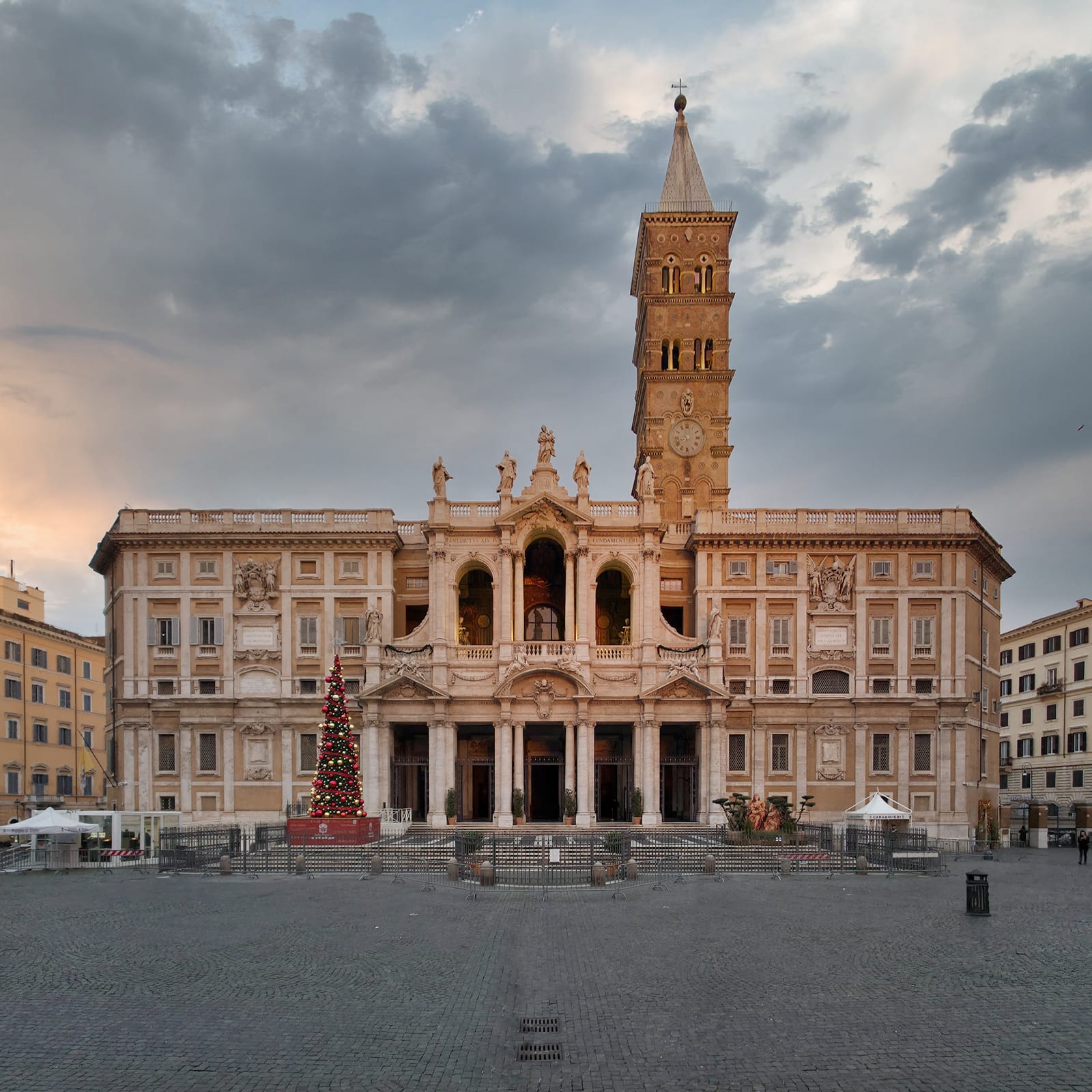
Santa Maria Maggiore
One of Rome's essential basilicas, especially useful for travelers based near Termini who want a major church that is both historically rich and practical to reach.
Start here because it gives the day immediate seriousness. This is the church that turns the route from a practical hotel-base plan into a genuine Rome church day. It works especially well as an opening anchor because it delivers major-basilica scale without demanding Vatican-level logistics.
Stop 2
Quiet deepening stop
Santa Pudenziana
A compact early-Christian church near Santa Maria Maggiore, best for visitors who want one of Rome's most rewarding older mosaic stops without the major-basilica crowds.
Continue here when you want the morning to deepen rather than just expand. Santa Pudenziana is smaller, older-feeling, and quieter, which is exactly why it belongs after Maggiore. It gives the day its first tonal change and keeps the route from becoming only about scale.
Stop 3
Pacing option
Santi XII Apostoli
A large central basilica that gives the Trevi, Via del Corso, and Piazza Venezia side of Rome a more substantial sacred anchor than many visitors expect.
Use this only if the route still wants a breathing space between the eastern start and the tighter central payoff. Its job is pacing, not destination weight. If the day needs tightening, this is the first church to cut.
Stop 4
Conditional northern start
Santa Maria dei Miracoli
A compact Piazza del Popolo church that helps the northern entry into the center feel architecturally deliberate rather than simply scenic. It works best for visitors who want piazza del popolo planning while keeping the surrounding walk coherent.
This is not part of the normal day shape. Use it only as a conditional northern start when the day truly begins at Piazza del Popolo and you want the route to enter the center from that side. Do not bend the whole one-day structure north just to include it.
Stop 5
Central depth answer
Santa Maria sopra Minerva
The strongest Pantheon-side church for visitors who want substance as well as convenience: Gothic bones, Dominican history, Michelangelo's Risen Christ, Filippino Lippi's Carafa Chapel, major tombs, and Bernini's elephant outside.
This is the central depth answer. If the day can only carry one serious historic-center church, Minerva is the one that earns the time through substance: Gothic rarity, tombs, Dominican identity, Michelangelo, and a location that makes the center feel spiritually and artistically dense instead of merely crowded.
Stop 6
Optional art finish
San Luigi dei Francesi
A compact but essential church near Piazza Navona, especially for visitors who want one short central stop with very high artistic return.
Add this when you want one compact, concentrated art payoff that sharpens the day rather than slowing it. San Luigi works because it gives the route a clear Caravaggio reward without demanding another long visit.
Stop 7
Earned neighborhood finish
Santa Maria in Trastevere
The essential Trastevere anchor, rewarding not just for its fame but for the way mosaics, square, and neighborhood atmosphere reinforce one another.
Use this only as an earned finish. It makes sense when the central section has gone well and the day still wants a neighborhood landing where church, piazza, and evening atmosphere can work together. It should never be treated as proof that the route was only successful if it reached the west bank.
Choose a related route
Use one of these if you want a tighter route or a clearer next step.