
Centro Storico
Santa Maria in Campitelli
Last updated: June 2026
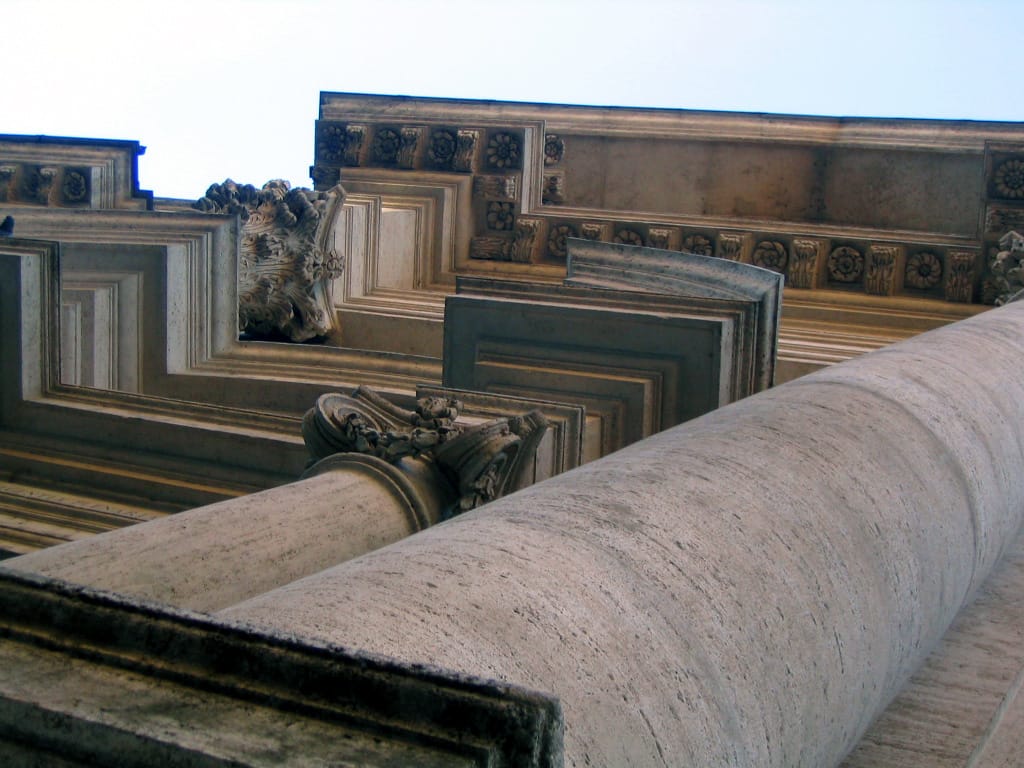
Photo by Anthony Majanlahti via Wikimedia Commons, licensed CC BY 2.0.
Santa Maria in Campitelli makes most sense once you realise the church is built around one Roman Marian memory rather than around general Baroque grandeur.
Quick summary
- Best visit length
- Allow around 20-30 minutes if you want the Baroque scale and Campitelli setting to register. / 30-45 minutes if you read the route notes, compare features, and slow down inside.
- Do not miss
- Madonna in Portico, Plague-history connection, Rainaldi architecture
- Best route use
- Campitelli, Capitoline, Theatre of Marcellus, and Ghetto-edge routes
- Best next move
- Santa Maria in Aracoeli for the most natural nearby continuation, or Il Gesù if you want the walk to turn west toward Largo Argentina
Plan your visit
Use it when the Capitoline and Theatre of Marcellus side needs a church with real devotional focus, not just architectural scale.
Why this church matters
People tend to remember the altar focus and the city-memory behind it more than the route itself.
The altar focus on the revered image rather than a diffuse interior experience. The sense that this is a church with a real Roman memory attached to it. That is often where the church starts to feel rooted in Roman memory rather than just the route.
What to look for
Madonna in Portico
The concentrated attention around the revered image. It is the church's devotional heart. Without explanation, visitors can miss why this image matters more than many other Marian paintings in Rome.
Plague-history connection
That the church is tied to how Rome understood protection and intercession in crisis. It gives the church a real Roman civic memory. The plague story is not visually obvious from the interior alone.
Rainaldi architecture
A large, confident interior around a very focused Marian center. It turns the church from devotional stop into a stronger Baroque destination. Some visitors remember only the image and not the architectural setting built around it.
Why visit
Choose it when you want one church that ties Roman devotion, plague memory, and place together.
How long to spend
treating this side of the center as ancient or civic space only.
Build your day
Start here for a route that matches the day you actually want. Choose the onward line that fits your direction and attention level.
Best next moves
Nearby & Related Churches
Use these next stops to keep the route coherent on the ground rather than doubling back across Rome for one isolated interior.