
Centro Storico
Santa Maria in Aracoeli
Last updated: June 2026
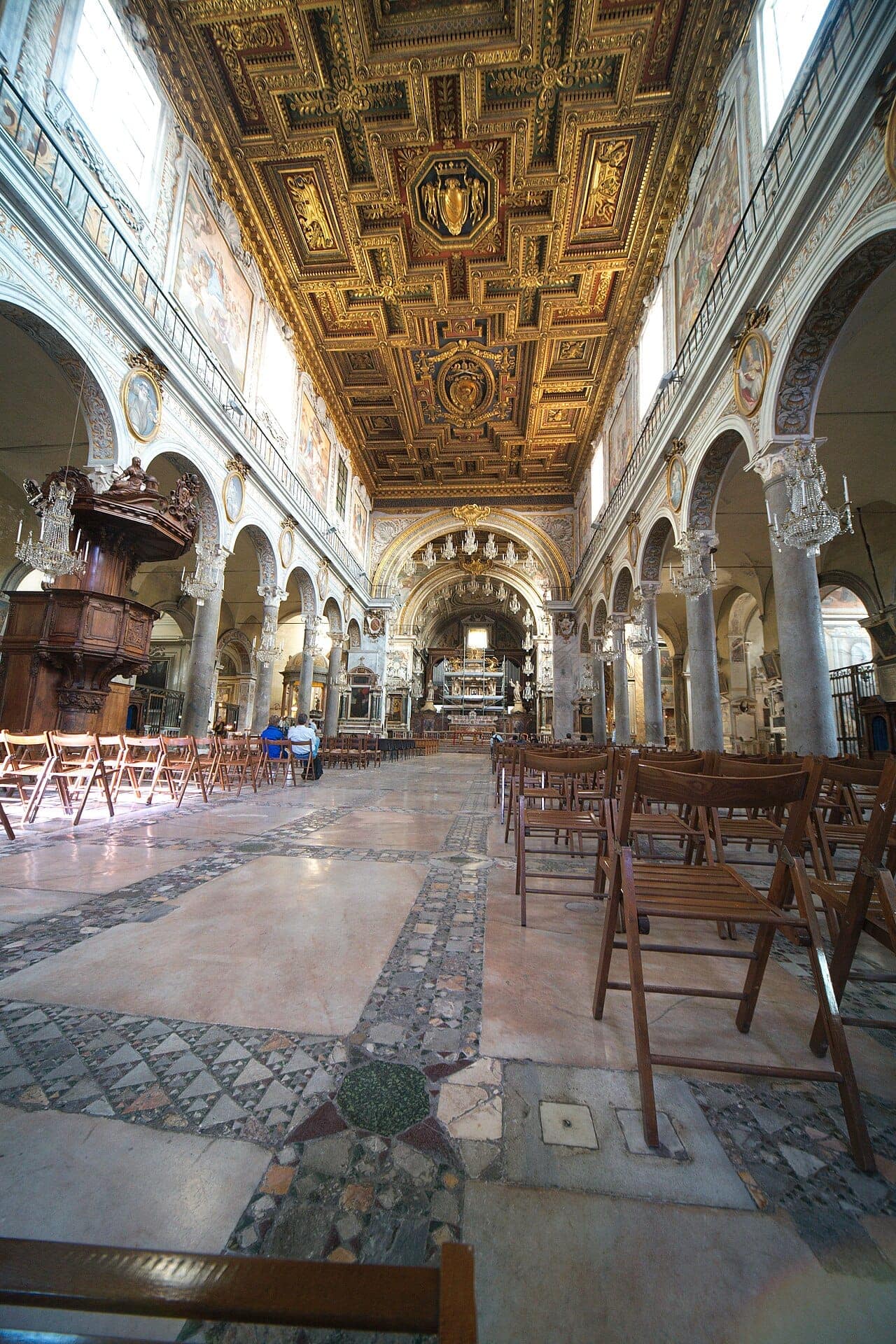
Photo by MatthiasKabel via Wikimedia Commons, licensed CC BY-SA 3.0.
Santa Maria in Aracoeli is the church to choose when you want one Roman visit where sacred legend, medieval civic memory, and a dramatic physical approach all matter at once. Come for the Capitoline setting, the great staircase, the Holy Child tradition, the Cosmatesque floor, the Bufalini Chapel, and a church identity that feels different from both Forum monuments below and the more obvious major basilicas elsewhere.
Quick summary
- Best visit length
- 35-50 minutes focused, or about 1 hour if you want the church and staircase to read as one experience
- Do not miss
- Ara Coeli steps, Holy Child tradition, Cosmatesque floor, Bufalini Chapel, Capitoline summit setting
- Best route use
- Main sacred anchor on a Capitoline / Forum-facing route
- Best next move
- Santa Maria in Campitelli for a deeper Marian continuation, or San Pietro in Vincoli if the day should keep strong history without staying on the hilltop
Plan your visit
Aracoeli works best on a route that deliberately crosses between ancient and Christian Rome rather than keeping the church isolated from its setting.
Why this church matters
Santa Maria in Aracoeli matters because few churches in Rome combine sacred meaning, civic memory, and dramatic approach as powerfully as this one. Built on the highest summit of the Capitoline Hill, over the ruins of the Temple of Juno Moneta, it occupies one of the most charged sites in the city. That alone gives the church more presence than many interiors of equal artistic quality.
Its medieval civic role makes it even more distinctive. City leaders met here, Cola di Rienzo spoke here, and Petrarch was crowned poet laureate here. Those associations mean Aracoeli is not simply a devotional church or a hillside church with a staircase. It is one of the places where Roman public memory and Christian sacred identity visibly overlap.
The devotional and legendary layers matter too. The Ara Coeli name is tied to medieval legend, and the Holy Child tradition remains one of the church's best-known features. These should be handled carefully, but not stripped out. They are part of what makes the church memorable to pilgrims and repeat visitors alike.
That mixture of legend, devotion, and civic memory is exactly what makes Aracoeli difficult to summarize and easy to flatten. This is not simply a medieval church with some famous stories attached. Nor is it just a scenic church above the Capitoline. It is a place where Rome's sacred imagination and public memory have overlapped for centuries, and that overlap is visible in the route, the climb, and the way the church still feels set apart from the city below.
Aracoeli also helps correct a common imbalance in Rome itineraries. Visitors often give all symbolic weight to the Forum, the Colosseum, and the papal basilicas. Santa Maria in Aracoeli shows that one of the city's strongest symbolic sites is a church that belongs to both civic and sacred history at once.
That is a strong reason to keep the civic material visible. Many churches gain importance from saints, relics, or art. Aracoeli gains part of its force from how the city itself once used and remembered it. That makes the church feel specifically Roman in a way that few other interiors can match.
What to look for
The Ara Coeli Steps
The staircase is not just access. It is part of the church's identity and should be remembered as a vow-linked approach that prepares the visitor for a different kind of stop than the ruins below. The steps also slow the route in a useful way. They create a physical break between the civic and archaeological world below and the sacred space above, which is part of why Aracoeli lands so strongly for many visitors.
The Holy Child Tradition
The Holy Child of Aracoeli is one of the church's best-known devotional associations. Even though the original image was stolen, the tradition still matters because it tells you what the church meant to generations of Romans. Handled carefully, this tradition gives the visit warmth without forcing certainty. It is one of the clearest examples of how remembered devotion can shape a church's identity long after a specific object has been lost.
Cosmatesque Floor
This is one of the strongest interior features because it helps the church feel medieval and ceremonially grounded rather than merely atmospheric. It also anchors the visit visually. The floor gives the church a sense of order that balances the heaviness of the site, the stairs, and the legends surrounding it.
Bufalini Chapel
The chapel gives the church a concentrated art-history stop and keeps the visit from becoming only about site and legend. Aracoeli is not only a church of setting and tradition. It also rewards close looking once you are inside.
Capitoline Summit Setting
Remembering where the church stands changes how the interior reads. Santa Maria in Aracoeli is stronger when seen as the Christian claim on a profoundly Roman hilltop. That setting is one of the strongest reasons to choose the church if the day already includes ancient Rome. Aracoeli gives the route a sacred answer to the political and monumental history surrounding it. It also explains why the church can feel more powerful than visitors expect from the interior alone. Some of its force lives in the union between site and church, not in one single artwork.
Why visit
Visit Santa Maria in Aracoeli when you want one church that feels unmistakably Roman in both setting and story. It is especially rewarding for visitors who want to bridge the ancient city below with Christian and medieval Rome above, and for anyone who wants a church where arrival is part of the meaning.
How long to spend
Common mistake: treating Santa Maria in Aracoeli as a side chapel above the Capitoline. It is much stronger when approached as the main sacred destination on the hill. Another mistake is trying to separate the church completely from the climb and the surrounding hilltop. Aracoeli is one of those places where approach, site, legend, and interior all form one visit.
Build your day
Start here for a route that matches the day you actually want. Choose the onward line that fits your direction and attention level.
Best next moves
Nearby & Related Churches
Use these next stops to keep the route coherent on the ground rather than doubling back across Rome for one isolated interior.