
Quick summary
- Best for
- Visitors who want one worthwhile church near the Colosseum without turning the reset into a second full route
- Time needed
- 30-60 minutes for one reset; longer only if you intentionally continue outward
- Core churches
- 2
- Optional additions
- 2
- Walking distance
- Branch-led choices from the ancient core rather than one fixed march through multiple stops
Before you start
Use this page when the day needs one calmer church decision near ancient Rome. Do not use it as a checklist. If you choose one reset well and then stop, the guide has done its job.
Route summary
This route works best as a chooser, not a sequence. San Clemente gives the strongest Colosseum-side reset when you want depth close at hand. Santa Maria in Aracoeli gives the better answer when the route is already bending toward the Forum, Piazza Venezia, or the Capitoline. If you still want to continue, Santi Giovanni e Paolo can open a quieter Celio branch and St John Lateran can widen the day into a much larger south-Rome extension. But the guide succeeds long before that. One good choice is enough.
Why choose this route
Ancient Rome often creates the wrong kind of momentum. Visitors keep walking because the next ruin or viewpoint is obvious, not because the day still has shape. This guide interrupts that pattern. Its value is not in offering nearby churches in the abstract. Its value is in giving you a real reset that fits your direction. San Clemente is the right answer when you are still close to the Colosseum and want the deepest reward nearby. Aracoeli is the right answer when the walk is already drifting toward the Forum edge and Capitoline side. Those are different choices, and the route becomes more useful once it says so plainly. That is why this page must stay branch-led. The visitor should feel relief, not pressure.
Best 30-60 minute version
Choose one of these and let that single decision count as a successful outcome.
- Closest deeper reset: San Clemente when you want the strongest nearby church after the Colosseum itself.
- Capitoline-side reset: Santa Maria in Aracoeli when the route is already on the Forum or Piazza Venezia side.
- Everything beyond this is optional continuation, not the point of the page.
How to use this guide
The cleanest way to use it is to choose the reset that matches your direction, then continue only if the next movement is still clear.
- Pick San Clemente if you want the strongest nearby depth.
- Pick Santa Maria in Aracoeli if your route is already turning toward the Capitoline side.
- Continue only if the day still has a clear outward direction.
What to do next
Use one of these only when the reset has already worked and the day is now clearly widening outward.
- Use Churches in Monti, Rome when San Clemente becomes the start of a Monti-side continuation.
- Use the Aventine and Celio church walk when the quieter branch has turned into a real south-Rome plan.
- Use Churches near Circus Maximus when the day is now deliberately shifting toward the Aventine side.
Core route and optional additions
Stop 1
Closest deeper stop
San Clemente
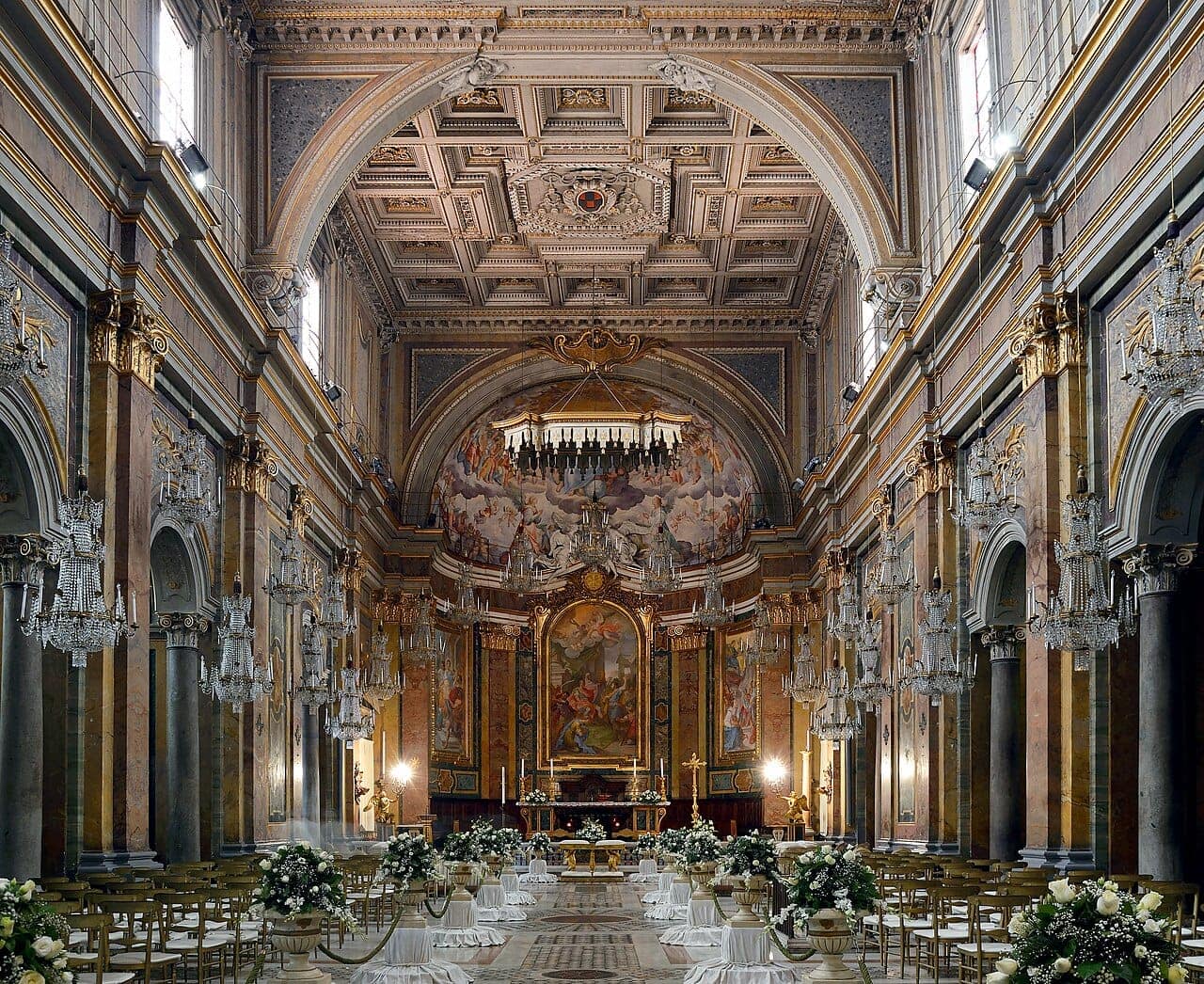
The clearest single church in Rome for seeing the city in layers: a 12th-century basilica above a 4th-century church, above Roman buildings and a Mithraeum, all close enough to the Colosseum to transform an ancient-Rome day.
San Clemente is the strongest answer when the visitor wants one nearby church that feels genuinely worth the time. It does not simply provide shelter from the crowds. It changes the kind of Rome you are seeing. After the Colosseum side, the layered descent through basilica, lower church, Roman buildings, and Mithraeum often feels like the first moment the day becomes properly dimensional again. Use this when depth matters more than redirection.
Stop 2
Capitoline-side reset
Santa Maria in Aracoeli
A church that gives the Capitoline a sacred counterweight to the surrounding civic and ancient-Rome landmarks, especially useful when the area risks becoming all archaeology and viewpoint.
Aracoeli is the better choice when the route is already shifting west or uphill. It does not solve the same problem as San Clemente. It rebalances the day from the Forum and Capitoline side instead, giving the civic and archaeological landscape a sacred counterweight. Use this when the route is already pulling toward Piazza Venezia or the Capitoline.
Stop 3
Quieter Celio branch
Basilica dei Santi Giovanni e Paolo
A Celio basilica with Romanesque exterior strength, a high bell tower, Cosmatesque portal, and access nearby to one of Rome's best preserved ancient residential complexes.
Add this only if the reset should turn into a quieter Celio continuation. It is a defensible next move because it leads outward in a believable way, but it is not part of the base reset choice.
Stop 4
Major south-Rome extension
St John Lateran
One of Rome's essential major basilicas and the clearest way to understand the city's ecclesiastical geography beyond the Vatican, with monumental scale, papal history, and a Lateran location that works best as its own focused stop.
Add this only if you are deliberately widening the day. Lateran should never read like a routine extra after a Colosseum reset. It is a serious extension, not the expected end of the page.
Choose a related route
Use one of these if you want a tighter route or a clearer next step.