
Centro Storico
San Carlo ai Catinari
Last updated: June 2026
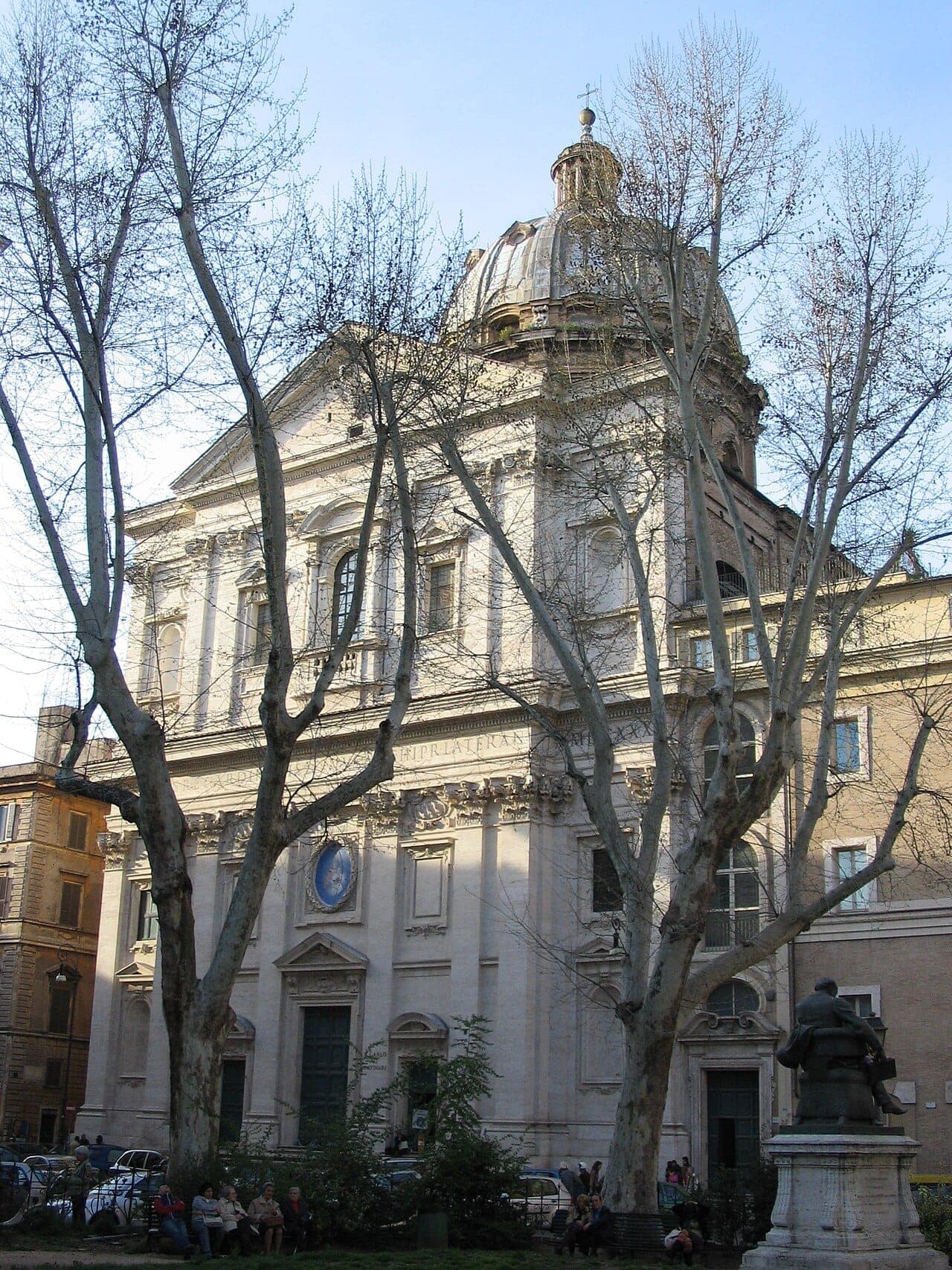
Photo by Sixtus via Wikimedia Commons, licensed CC BY-SA 3.0.
San Carlo ai Catinari is the church to step into when central Rome needs one strong dome interior rather than another facade.
Quick summary
- Best visit length
- Allow 20-30 minutes if you want its scale to balance a Campo de' Fiori or Largo Argentina walk. / 30-45 minutes if you read the route notes, compare features, and slow down inside.
- Do not miss
- Rosati dome, Soria facade, Barnabite identity and dedication to Saint Charles
- Best route use
- Campo de' Fiori, Largo Argentina, and west-central Baroque walks
- Best next move
- Sant'Andrea della Valle for the most natural nearby continuation, or Il Gesù if you want the route to tighten around the Jesuit-Baroque core
Plan your visit
Use it to thicken a Campo or Largo Argentina walk with one early-Baroque stop that feels larger than the street outside suggests.
Why this church matters
What stays with visitors is the moment the dome takes over and the route stops feeling like pure streetscape.
Looking up and realizing the dome is the payoff. The sense of entering a church that feels larger than the street context outside suggests. That is often the point where the stop earns its place in the walk.
What to look for
Rosati dome
The dome's scale and the way it pulls the eye upward quickly. It is the main visual reason the stop matters. Visitors who do a facade-only pass miss the church's best feature entirely.
Soria facade
The strong travertine face in a busy central setting. It gives the church real street authority before the interior takes over. People often remember only the inside and not how well the facade announces the church.
Barnabite identity and dedication to Saint Charles
The dedication and order history shaping the church's seriousness. This keeps the church from reading as generic Counter-Reformation architecture. Without explanation, Saint Charles Borromeo can feel like just another name on the sign.
Why visit
Choose it when you want one substantial Baroque interior without making the whole day about a single destination church.
How long to spend
assuming the bigger-name landmarks nearby have already given this district all the church scale it needs.
Build your day
Start here for a route that matches the day you actually want. Choose the onward line that fits your direction and attention level.
Best next moves
Nearby & Related Churches
Use these next stops to keep the route coherent on the ground rather than doubling back across Rome for one isolated interior.