
Quick summary
- Best for
- Visitors moving out of the Forum or Circus Maximus side who want a practical next church route
- Time needed
- 45-75 minutes for the core route; longer only if you continue south-east
- Core churches
- 2
- Optional additions
- 2
- Walking distance
- A short transition route with one real climb and one optional widening of the day
This map follows the core route only. Keep the written guide for optional extensions and stop-by-stop judgment.
Before you start
Use this guide when the question is not "What are all the churches in south Rome?" but "What actually makes sense from here?" It works best once the archaeological side is already done and you want one church-led direction that feels deliberate rather than improvised.
Route summary
This is the cleanest church route from the Circus Maximus edge into the Aventine. Start with Santa Anastasia to shift the day out of ruins-and-views mode, climb to Santa Sabina for the real payoff, then decide whether the walk should stop there, bend toward the Celio, or extend farther to the Lateran. The route is strongest when it stays honest about that choice. It should feel like a transition that sharpens the day, not a master route trying to own every church nearby.
Why choose this route
Circus Maximus can feel strangely under-explained. Visitors often pass through it on the way somewhere else, which means the churches nearby get treated either as random add-ons or as the start of a route that becomes too large too quickly. This guide is useful because it does neither. It gives the area one clear shape. Santa Anastasia makes sense because it is exactly where the archaeological zone begins to loosen its grip. Santa Sabina then gives you a reason to climb the Aventine instead of only admiring it from below. After that, the route becomes a real decision: stop with a strong two-church sequence, continue toward the quieter Celio side, or widen the day into a serious Lateran extension. That discipline is the point. If the route tried to absorb the whole south-Rome family, it would become blurrier, not stronger.
Best 45-75 minute version
Take the route in its cleanest form, and let it end confidently once the Aventine payoff is done.
- Santa Anastasia al Palatino: use this as the hinge between the archaeological edge and the church route.
- Santa Sabina: use this as the real destination. The Aventine climb earns its place here because the church gives the hill a purpose rather than just a viewpoint.
- If these two stops are all you do, the route has still succeeded.
How to use this guide
The cleanest way to use this page is to keep the core short and believable, then widen it only if the day still has direction and energy.
- Choose the two-stop core if you want a short, believable route.
- Add Basilica dei Santi Giovanni e Paolo only if the walk is turning quieter toward the Celio.
- Add St John Lateran only if the day is still expanding and you want a serious south-east finish.
What to do next
Use one of these only when the core transition has done its job and the day still wants a stronger next step.
- Use the Aventine and Celio church walk when the quieter south-Rome route has become the main plan rather than a continuation.
- Use Quiet churches near the Colosseum when you are still deciding how to reset the day from the ancient core.
- Use Early Christian churches in Rome when the next decision is thematic rather than geographic.
Core route and optional additions
Stop 1
Palatine hinge
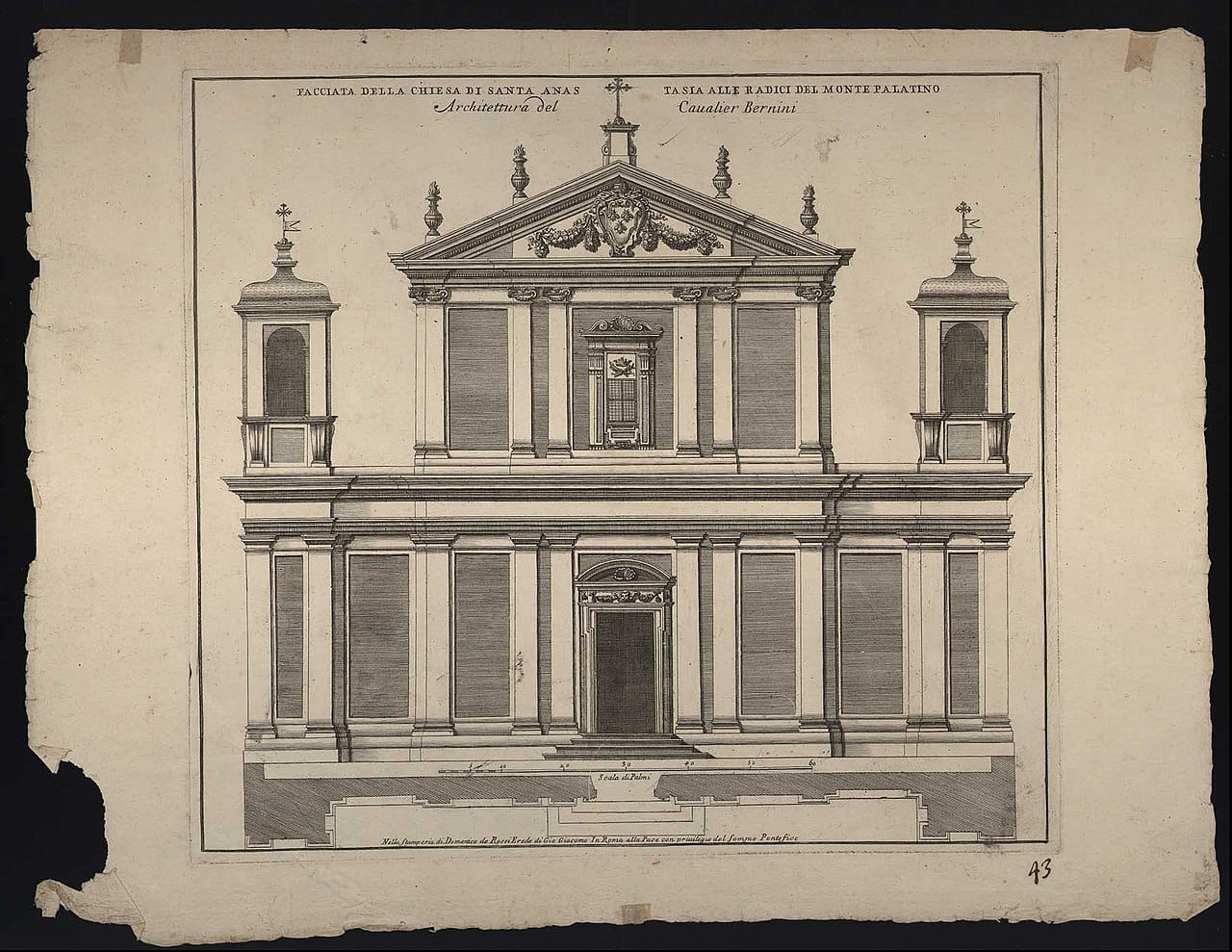
Santa Anastasia al Palatino
A broad church at the Palatine and Circus Maximus edge, useful for visitors who want the ancient-Rome side of the city to include a serious sacred stop as well as archaeological sites.
This is the right opening because it sits exactly where the day needs a new identity. Visitors coming from the Forum, Palatine, or Circus Maximus often need one church that says: stop thinking in ruins, start thinking in route choices. Santa Anastasia does that job better than a bigger basilica farther away because it belongs to this edge of Rome. What matters here is not monumentality. It is usefulness. The church helps the route turn from an archaeological corridor into a church walk with intention behind it.
Stop 2
Aventine payoff
Santa Sabina
A calm Aventine basilica with early-Christian clarity, famous carved wooden doors, and one of Rome's best contrasts to decorative central churches. It works best for visitors who want aventine routes while keeping the surrounding walk coherent.
Santa Sabina is why the route is worth doing rather than just passing through. The Aventine can easily become a place people admire from below and then skip. This stop corrects that. The hill climb has a reason, the route gains calm, and the day finally stops feeling transitional. What visitors remember here is the clarity. After the archaeological side of Rome, Santa Sabina feels unusually stripped back and settled. That difference is exactly why it works as the payoff.
Stop 3
Shared continuation
Basilica dei Santi Giovanni e Paolo
A Celio basilica with Romanesque exterior strength, a high bell tower, Cosmatesque portal, and access nearby to one of Rome's best preserved ancient residential complexes.
Add this only if you want the route to bend toward the Celio and become quieter rather than grander. It is a defensible next move because it changes the tone of the walk without pretending that Circus Maximus now owns the whole district. Choose it when you want one more residential, less exposed stop after Santa Sabina. Skip it when the Aventine already feels like a complete finish.
Stop 4
Larger extension
St John Lateran
One of Rome's essential major basilicas and the clearest way to understand the city's ecclesiastical geography beyond the Vatican, with monumental scale, papal history, and a Lateran location that works best as its own focused stop.
Use this only when the day still has real space for a major continuation. St John Lateran should not appear as an automatic final stop. It is too large and too self-contained for that. But if you deliberately want the route to widen into a serious south-east finish, it is the strongest extension available. The key is honesty: once Lateran enters, the route is no longer just a Circus Maximus transition. It becomes a larger south-Rome choice.
Choose a related route
Use one of these if you want a tighter route or a clearer next step.