
Aventine & South Rome
Santa Sabina
Last updated: June 2026
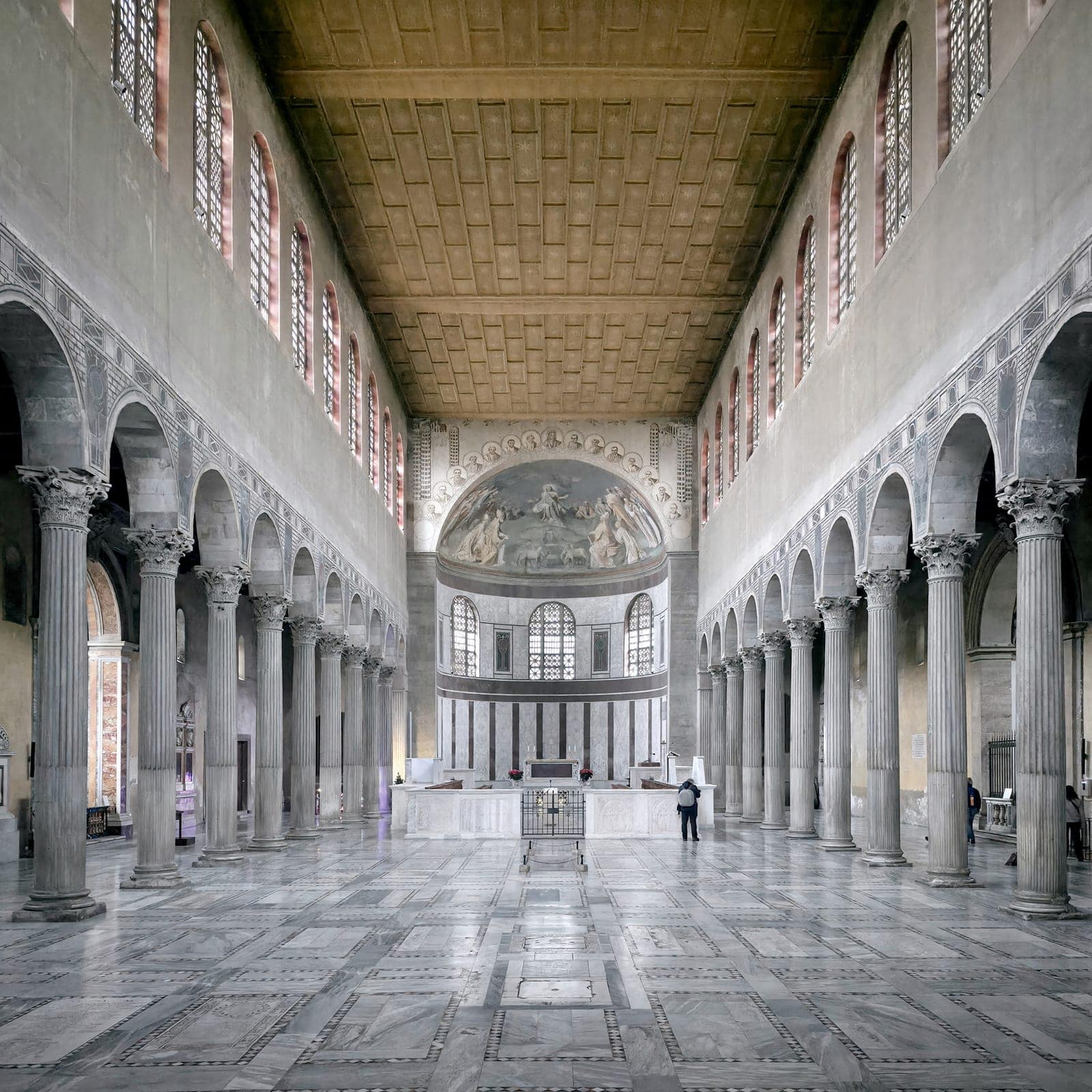
Photo by NateBergin via Wikimedia Commons, licensed CC BY 4.0.
Santa Sabina is one of the clearest places in Rome to understand what an early Christian basilica could feel like before later centuries crowded the space with visual noise. Come for the 5th-century basilica character, the famous cypress-wood doors, Dominican continuity, St Dominic tradition, and an Aventine setting that works best when the day needs calm seriousness rather than another overloaded centre-city stop.
Quick summary
- Best visit length
- 35-50 minutes focused, or about 1 hour if you want to pair it slowly with the Aventine
- Do not miss
- Cypress-wood doors, basilica interior, Dominican context, St Dominic tradition, Aventine setting
- Best route use
- Main sacred anchor for an Aventine half day built around Santa Sabina, the Orange Garden, and quieter south-Rome walking
- Best next move
- San Gregorio al Celio for a more monastic-feeling continuation, or Santa Maria in Cosmedin if you want the route to descend back toward the city edge
Plan your visit
Santa Sabina works best as the sacred anchor of an Aventine route. It can start the half day or give it its deepest stop before the route turns outward again.
Why this church matters
Santa Sabina matters because it preserves the solemn character of a 5th-century basilica more clearly than most churches in Rome. That makes it far more than a peaceful church on a beautiful hill. It is one of the strongest surviving witnesses to early Christian architectural order in the city, and visitors who know what they are seeing often remember it precisely because it refuses to compete by excess.
The church also matters because of its Dominican life. By the early 13th century it had been entrusted to the Order of Preachers and remains a Dominican house and church. That continuity gives Santa Sabina a devotional and institutional identity that deepens the basilica visit. It is not merely a preserved shell. It remains tied to a real religious tradition that still shapes the place.
The third layer is the Aventine itself. Santa Sabina stands where topography, basilica history, and a calmer sacred rhythm come together. It helps visitors experience a version of Rome that is less about accumulation and more about proportion, survival, and seriousness.
That is why Santa Sabina matters despite having fewer famous single features than some other churches. It is not an art-heavy chapel church or a great papal basilica. Its strength is clarity. It lets visitors understand what an early Christian basilica is, why Dominican continuity matters, and how a church can feel monumental through order rather than display.
It is also one of the best correctives to lazy church-writing. Santa Sabina is often described in vague language about peace, beauty, or atmosphere. Those things are true but weak. The stronger truth is that the church matters because the basilica form remains legible, the doors are historically important, and the Dominican connection gives the place continuing identity.
What to look for
Cypress-Wood Doors
These doors are one of the church's most memorable features because they make the early basilica feel materially close, not abstractly old. Their carved biblical scenes reward slow looking and give Santa Sabina one of its clearest visitor anchors. They also help explain why Santa Sabina should not be summarized as only an empty, noble space. The church has detail, but it is concentrated in the places where it matters most. The doors are one of the best examples of that concentration.
The Basilica Interior
The interior matters because of what it does not do. Instead of overwhelming the visitor with later layers, it lets the basilica form read clearly. This is the feature to remember if you want to understand why Santa Sabina is so important. Columns, rhythm, light, and the directness of the space all matter here. Visitors who slow down will notice that the church feels ordered rather than bare. That difference is part of what makes Santa Sabina so valuable as a teaching church for first-time visitors.
Dominican Continuity
The church's Dominican identity is not side context. It helps explain why Santa Sabina still feels disciplined and coherent rather than merely preserved. Keep that in mind while moving through the space. This is also why the church belongs in pilgrim and religious-history itineraries, not only architecture itineraries. The Dominican story gives the basilica a living institutional thread that many visually stronger churches cannot match.
St Dominic Tradition
According to Dominican tradition, the convent preserves the cell of St Dominic and the place where he met St Francis. Even if you frame that carefully as tradition, it adds real pilgrim and institutional meaning to the visit. Santa Sabina is more than a legend or a story. It carries remembered religious lives as well as architectural form. For the right visitor, that is a major reason to choose it.
Aventine Position
The setting matters because Santa Sabina works as part of a hilltop experience without becoming dependent on scenery. Its route value should strengthen the visit, not replace the reason for entering. This makes Santa Sabina one of the best churches for a half day that should feel slower, more elevated, and less checklist-driven than the centre. It is ideal when the church itself needs to hold the route together.
Why visit
Visit Santa Sabina when you want a church that feels important without needing spectacle. It rewards visitors who care about early Christian space, religious continuity, and the Aventine's more reflective side. If you are deciding between several southern or hilltop churches, Santa Sabina is the one most likely to make you feel that Rome's earliest public Christian architecture is still present rather than merely described.
How long to spend
Common mistake: using Santa Sabina only as a scenic checkpoint near the Orange Garden. The church is stronger when it is treated as the main reason to be on the hill. Another mistake is expecting a fast emotional payoff of the kind you get from famous paintings or relic chapels. Santa Sabina usually grows in value as the visitor spends slightly longer with it.
Build your day
Start here for a route that matches the day you actually want. Choose the onward line that fits your direction and attention level.
Best next moves
Nearby & Related Churches
Use these next stops to keep the route coherent on the ground rather than doubling back across Rome for one isolated interior.