
Aventine & South Rome
Santi Giovanni e Paolo
Last updated: June 2026
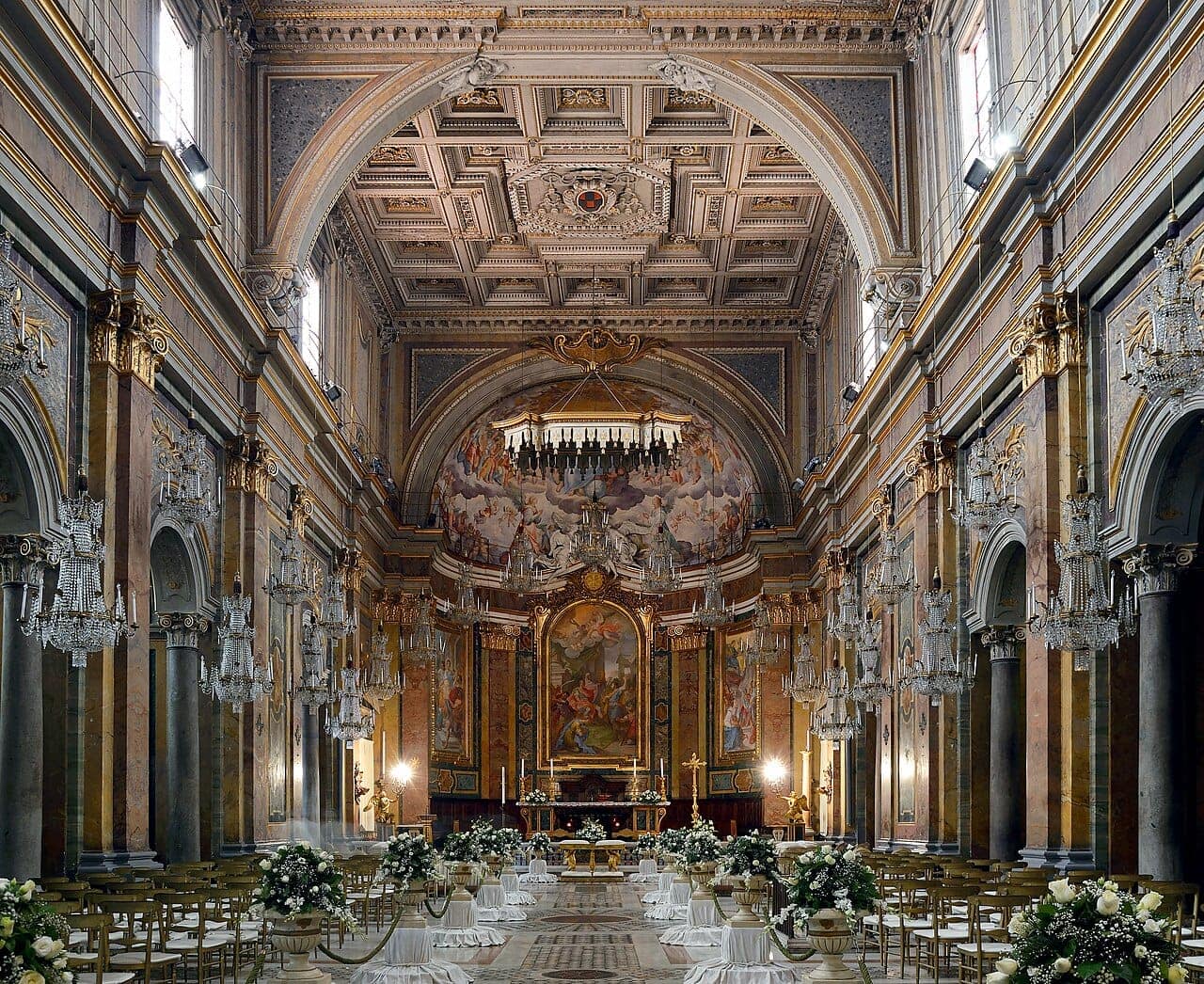
Photo by Livioandronico2013 via Wikimedia Commons, licensed CC BY-SA 4.0.
Basilica dei Santi Giovanni e Paolo gives the Caelian Hill the kind of church stop that makes the whole hill feel intentional.
Quick summary
- Best visit length
- 20–30 minutes for the exterior, nave, and route context. / 45–75 minutes if adding the Case Romane del Celio nearby.
- Do not miss
- Romanesque exterior and campanile, Cosmatesque portal, Case Romane del Celio, Martyr tradition of Saints John and Paul
- Best route use
- Colosseum, Celio, and Lateran-facing church days
- Best next move
- San Clemente for the most natural nearby continuation, or St John Lateran if the day should bend in a calmer direction
Plan your visit
Use it when you want the Celio to feel like its own sacred district instead of a quiet slope behind the Colosseum.
Why this church matters
What stays in memory is often the hilltop basilica feeling: the brick facade, the campanile, and the sense that the area finally has a center.
The long brick facade and campanile appearing almost suddenly on the Caelian Hill. The sense that this is a real hilltop basilica district, not just one more central-church interior. That is often when the Celio starts to feel like a destination in its own right.
What to look for
Romanesque exterior and campanile
The brick mass, porch, and bell tower read as a real landmark before you even enter. They establish the basilica as one of the strongest historic presences on the Caelian Hill. Visitors rushing uphill from the Colosseum often treat it as backdrop instead of part of the church experience.
Cosmatesque portal
The decorative entrance work breaking up the otherwise austere front. It gives the facade a precise medieval detail that rewards a slower look. Most people look only at the overall facade and not the entry detail.
Case Romane del Celio
The chance to connect the church with domestic and ancient layers beside it. This is what makes the stop more than a normal basilica visit. Some visitors never realize the adjacent archaeological complex is one of the main reasons to choose this church.
Martyr tradition of Saints John and Paul
The dedication and long continuity of devotion attached to the site. It gives the church a distinct identity beyond architecture. The names can blur together unless the tradition is explained clearly.
Why visit
Choose it when you want the Colosseum side to open into a fuller church route rather than closing immediately after the monuments.
How long to spend
treating the Celio as somewhere you merely pass through after the Colosseum.
Build your day
Start here for a route that matches the day you actually want. Choose the onward line that fits your direction and attention level.
Best next moves
Nearby & Related Churches
Use these next stops to keep the route coherent on the ground rather than doubling back across Rome for one isolated interior.