
Quick summary
- Best for
- Theme-led church choices, repeat visits, older-Christian priorities, and cluster-based planning
- Time needed
- 30-60 minutes for one chosen cluster; longer only if the day is deliberately built around more than one area
- Core churches
- 5
- Best use
- Choose one strongest cluster first rather than trying to cover all five in sequence
Before you start
Best for visitors who care more about older Christian layers, mosaics, and basilica atmosphere than about keeping to one district.
If you only choose three
- San Clemente - Best when you want the clearest layered early-Christian experience, with a basilica above much older Rome.
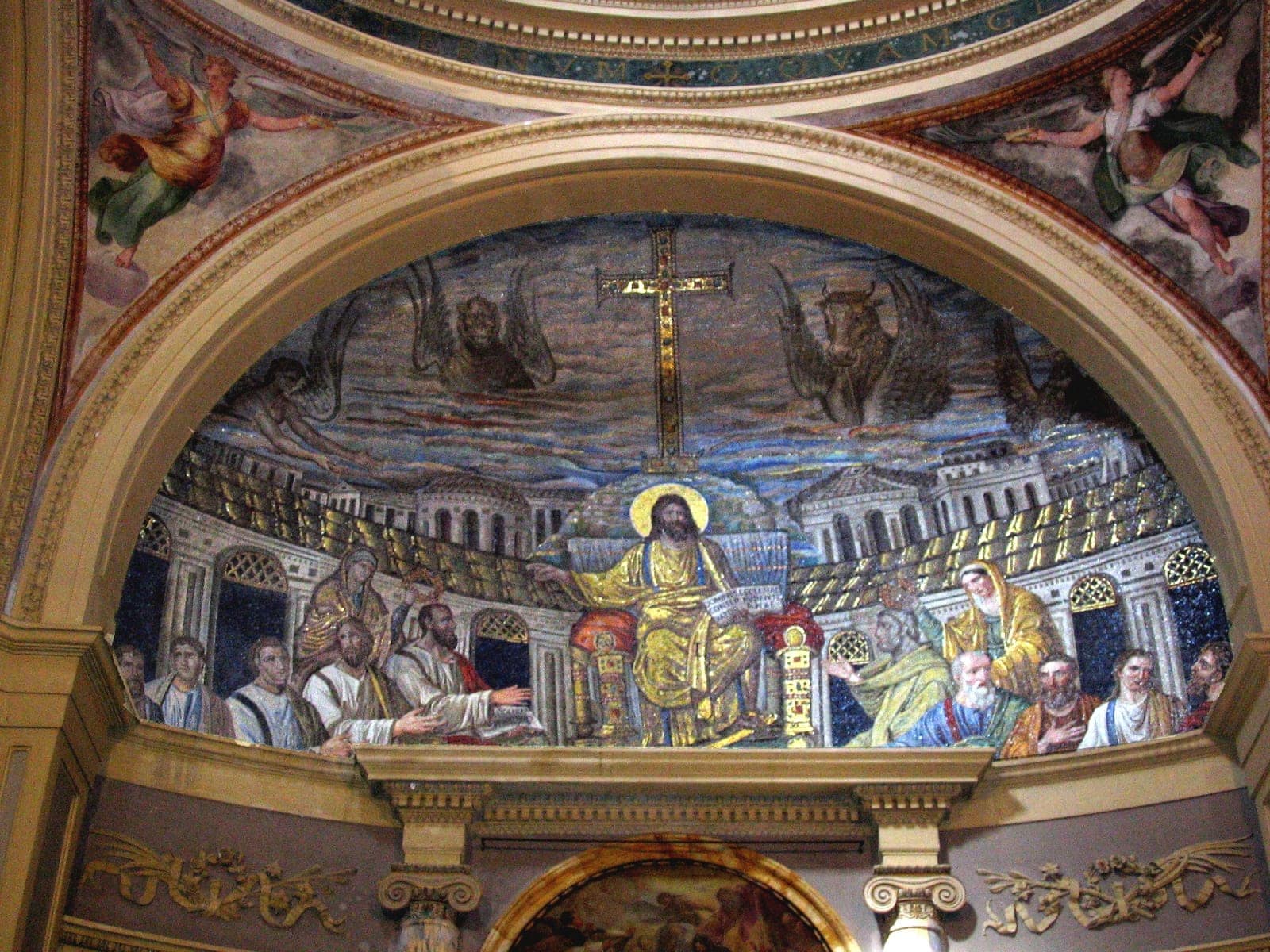
- Santa Pudenziana - Best for visitors who want a quieter early-Christian stop with one of the city's most important apse mosaics.
- Santa Sabina - Best when you want early-Christian basilica space to feel architectural, calm, and immediately legible.
Route summary
Choose this guide when the real question is not where should I walk first, but which early-Christian experience matters most to me. Use San Clemente for layers, Santa Pudenziana for a compact mosaic answer, Santa Cecilia for quieter west-bank history, Santa Sabina for basilica calm, and Santi Giovanni e Paolo for the Celio context. Then pick the cluster that best fits the day instead of trying to collect all five.
Why choose this route
Early-Christian Rome is easy to admire vaguely and harder to choose properly. Many pages solve that by turning older churches into a checklist. This page should do the opposite. Its value lies in helping visitors understand that early-Christian interest can mean very different things: archaeology, mosaics, quieter devotional atmosphere, basilica form, or south-Rome context.
- San Clemente is the strongest layered-history answer.
- Santa Pudenziana is the sharper compact mosaic choice near Santa Maria Maggiore.
- Santa Cecilia gives the west-bank devotional and historical answer.
- Santa Sabina gives the clearest basilica calm.
- Santi Giovanni e Paolo adds the Celio and Roman-house context that the others do not provide.
How to use this guide
Use this page in three steps: decide what kind of early-Christian experience matters most, choose the cluster that best delivers it, then move into the practical local route that fits that choice.
- Choose archaeology and layered descent if the older city beneath the church is the main draw.
- Choose mosaics if you want a shorter and more concentrated early-Christian answer.
- Choose Trastevere, Aventine, or Celio only after deciding which atmosphere or context you actually want from the day.
Cluster choices
The strongest outcome is choosing the early-Christian experience that matches your interests rather than trying to collect all five churches in one plan.
- Layered-history choice: San Clemente.
- Compact mosaic choice: Santa Pudenziana.
- Trastevere early-Christian choice: Santa Cecilia in Trastevere.
- South-Rome basilica calm choice: Santa Sabina.
- Celio and Roman-house context choice: Basilica dei Santi Giovanni e Paolo.
How long to spend
Use these timings to keep the page practical rather than ambitious for its own sake.
- San Clemente: 30-45 minutes.
- Santa Pudenziana: 15-25 minutes.
- Santa Cecilia in Trastevere: 20-30 minutes.
- Santa Sabina: 20-30 minutes.
- Basilica dei Santi Giovanni e Paolo: 20-30 minutes.
- One chosen cluster: about 30-60 minutes.
- Two clusters only if the day is deliberately structured around them.
What to do next
This page succeeds once it helps you choose the right cluster. From there, move into the local route that gives that choice its strongest practical setting.
- Use Churches in Monti, Rome when San Clemente or Santa Pudenziana becomes the east-side answer.
- Use Quiet churches near the Colosseum when San Clemente is really solving the calmer ancient-core question.
- Use Trastevere churches walk when Santa Cecilia is the route-defining answer.
- Use Aventine and Celio church walk or Churches near Circus Maximus when Santa Sabina or Santi Giovanni e Paolo becomes the south-Rome answer.
- Stop here once you know your cluster. The page has done its job if it leaves you knowing which early-Christian experience you actually want.
Stops in this guide
Stop 1
Layered-history choice
San Clemente
The clearest single church in Rome for seeing the city in layers: a 12th-century basilica above a 4th-century church, above Roman buildings and a Mithraeum, all close enough to the Colosseum to transform an ancient-Rome day.
Choose this when you want the strongest descent through layers: upper basilica, lower church, Roman structures, and Mithraeum. This is the best answer when archaeology and continuity matter more than scale alone.
Stop 2
Compact mosaic choice
Santa Pudenziana
A compact early-Christian church near Santa Maria Maggiore, best for visitors who want one of Rome's most rewarding older mosaic stops without the major-basilica crowds.
Choose this when you want the sharper, smaller early-Christian answer near Santa Maria Maggiore. The apse mosaic is the reason to come, and the stop works especially well when you want real depth without a long cross-city commitment.
Stop 3
Trastevere continuity choice
Santa Cecilia in Trastevere
A Trastevere church that offers quieter sacred atmosphere than the district's main square, especially useful once you want the neighborhood to feel deeper than its postcard image.
Choose this when you want older Christian continuity inside a quieter Trastevere setting. This is the strongest west-bank answer when devotional atmosphere matters as much as historical age.
Stop 4
Basilica calm choice
Santa Sabina
A calm Aventine basilica with early-Christian clarity, famous carved wooden doors, and one of Rome's best contrasts to decorative central churches. It works best for visitors who want aventine routes while keeping the surrounding walk coherent.
Choose this when you want the clearest basilica-space experience rather than a layered archaeological one. The calm and clarity of the church are the point.
Stop 5
Celio context choice
Basilica dei Santi Giovanni e Paolo
A Celio basilica with Romanesque exterior strength, a high bell tower, Cosmatesque portal, and access nearby to one of Rome's best preserved ancient residential complexes.
Choose this when you want the early-Christian story to include the Celio and the Roman-house layer beneath the church. It is the strongest way to make that part of Rome feel historically richer without defaulting to the busiest nearby stops.
Choose a related route
Use one of these if you want a tighter route or a clearer next step.