
Esquilino & Monti
Sant'Eusebio all'Esquilino
Last updated: June 2026
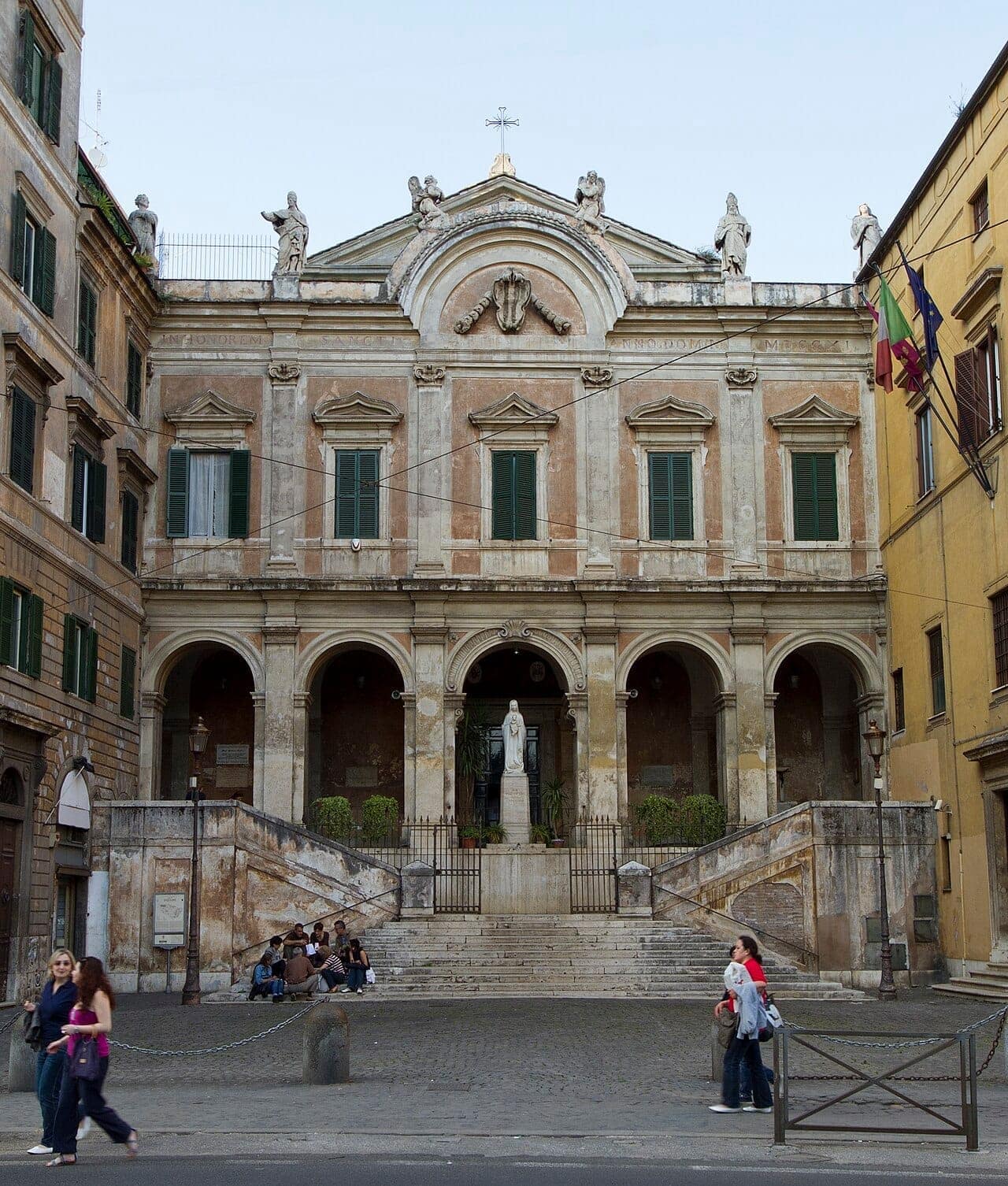
Photo by trolvag via Wikimedia Commons, licensed CC BY-SA 3.0.
Sant'Eusebio all'Esquilino is the church to choose when you want Piazza Vittorio to feel older and deeper than it first appears. Come for one of Rome's early church sites, the quieter historical layer behind the square, the staircase and altered city levels, and a stop that turns eastern Esquilino into more than a practical extension after Santa Maria Maggiore.
Quick summary
- Best visit length
- 10-20 minutes quick, 25-35 minutes if the Esquilino walk is the point
- Do not miss
- Raised approach, medieval bell tower traces, Mengs ceiling, old church continuity, animal-blessing tradition
- Best route use
- Best as a calmer eastward continuation from Santa Maria Maggiore toward Piazza Vittorio
- Best next move
- Santa Bibiana for a smaller Bernini-linked follow-on, or San Martino ai Monti if the route bends back toward stronger interiors
Plan your visit
Approach Sant'Eusebio slowly enough for the district to change around you. The church becomes more interesting once you notice how modern Piazza Vittorio sits around an older sacred site rather than replacing it completely.
Why this church matters
Sant'Eusebio matters because it preserves one of the older church memories on the Esquiline while sitting inside a district many visitors read too quickly as modern or practical. Turismo Roma notes a first historical mention in 474, later records in the acts of the Council of Pope Symmachus, and Gregory IX's rebuilding in 1238. That continuity is the church's main strength.
It also matters because it keeps alive a more local Rome: old titular identity, monastic phases, printing history, and the annual blessing of animals now associated with the church. None of that makes it a headline monument, but together it gives Piazza Vittorio a sacred depth that the average visitor would otherwise miss entirely.
What to look for
The raised approach and layered site
The steps are not incidental. They show how the level of the neighborhood changed around the church, which helps the building feel older than the square enclosing it.
The surviving medieval and early layers
Look for the bell tower and the long continuity behind the present facade. This is the part that makes the church more than a quiet local parish.
Anton Raphael Mengs's ceiling
Many visitors miss this because the church looks restrained at first glance. Once you look up, the interior becomes more specific and memorable.
The animal-blessing tradition
This is the kind of local ritual memory that helps the church stay alive in the mind after the visit. It is not the biggest visual feature, but it gives the site a human Roman identity.
Why visit
Choose Sant'Eusebio when the day needs one more layer rather than one more spectacle. It is useful for visitors who already care about Santa Maria Maggiore, Piazza Vittorio, or Esquilino as a lived district and want the route to gain depth instead of simply ending at the first famous stop.
How long to spend
Common mistake: expecting a major landmark and then writing it off. The church earns its place through depth, not display.
Build your day
Start here for a route that matches the day you actually want. Choose the onward line that fits your direction and attention level.
Best next moves
Nearby & Related Churches
Use these next stops to keep the route coherent on the ground rather than doubling back across Rome for one isolated interior.