
Centro Storico
Sant'Andrea della Valle
Last updated: June 2026
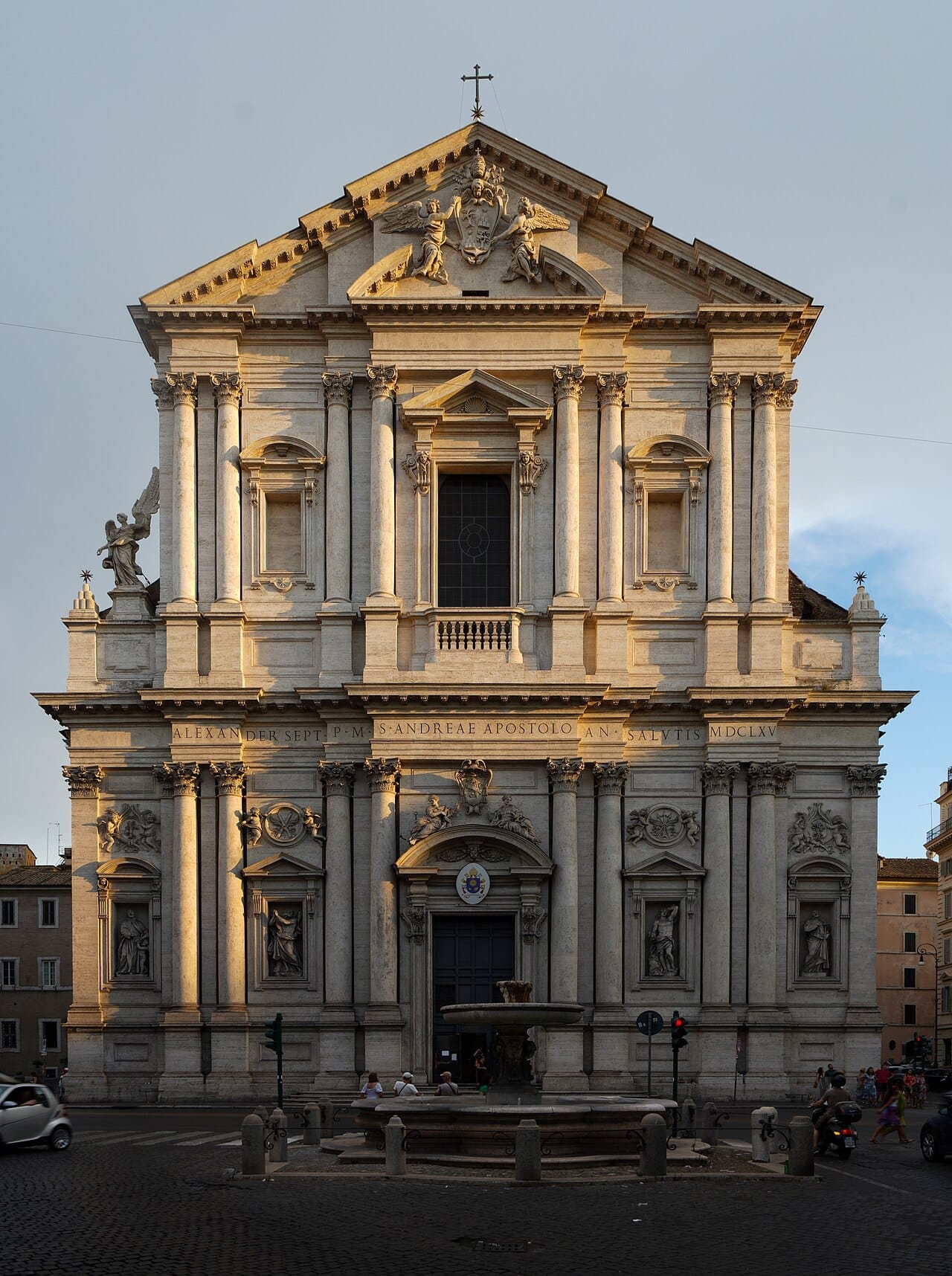
Photo by WikiRomaWiki via Wikimedia Commons, licensed CC BY-SA 4.0.
Sant'Andrea della Valle is the central Rome church you notice when the smaller stops start to blur together and you want one interior with real Baroque scale.
Quick summary
- Best visit length
- A focused visit of around 20-30 minutes is enough for the scale, dome, and route context. / Give it 30-40 minutes if you want the dome, nave, and route position to register instead of passing through quickly.
- Do not miss
- Great dome interior, Lanfranco dome fresco and Domenichino apse work, Tosca connection
- Best route use
- Navona, Campo de' Fiori, and west-central Baroque routes
- Best next move
- Il Gesù for the most natural nearby continuation, or Santa Maria in Vallicella if you want the day to continue west toward Chiesa Nuova
Plan your visit
Use Sant'Andrea della Valle when the walk from Navona toward Campo de' Fiori needs one big interior pause, not another quick chapel glance.
Why this church matters
What lingers here is not only the size but the jump in mood: one moment you are in a busy central corridor, the next you are standing under a dome that finally makes the Counter-Reformation city feel monumental.
The sudden jump in scale after smaller churches nearby. Looking up into the dome and realizing that the interior volume is the point. That is often when the central route suddenly makes sense.
What to look for
Great dome interior
The volume overhead and the sense of one of the center's biggest church interiors. It is one of the church's main reasons to visit. Rushed central itineraries can turn it into a pass-through rather than a look-up stop.
Lanfranco dome fresco and Domenichino apse work
That the major painted surfaces matter here, not just the architecture. These give the church specific art-historical anchors. Visitors who do not look deliberately can remember only "large Baroque church."
Tosca connection
The overlap between sacred space and Rome's operatic imagination. It gives the church a cultural memory point beyond church history. This layer is invisible unless surfaced for the visitor.
Why visit
Choose it when the day needs one large Baroque interior to reset your eye and slow your pace.
How long to spend
walking past because Corso Vittorio feels like a through-route rather than a church destination.
Build your day
Start here for a route that matches the day you actually want. Choose the onward line that fits your direction and attention level.
Best next moves
Nearby & Related Churches
Use these next stops to keep the route coherent on the ground rather than doubling back across Rome for one isolated interior.