
Centro Storico
Santa Maria in Vallicella
Last updated: June 2026
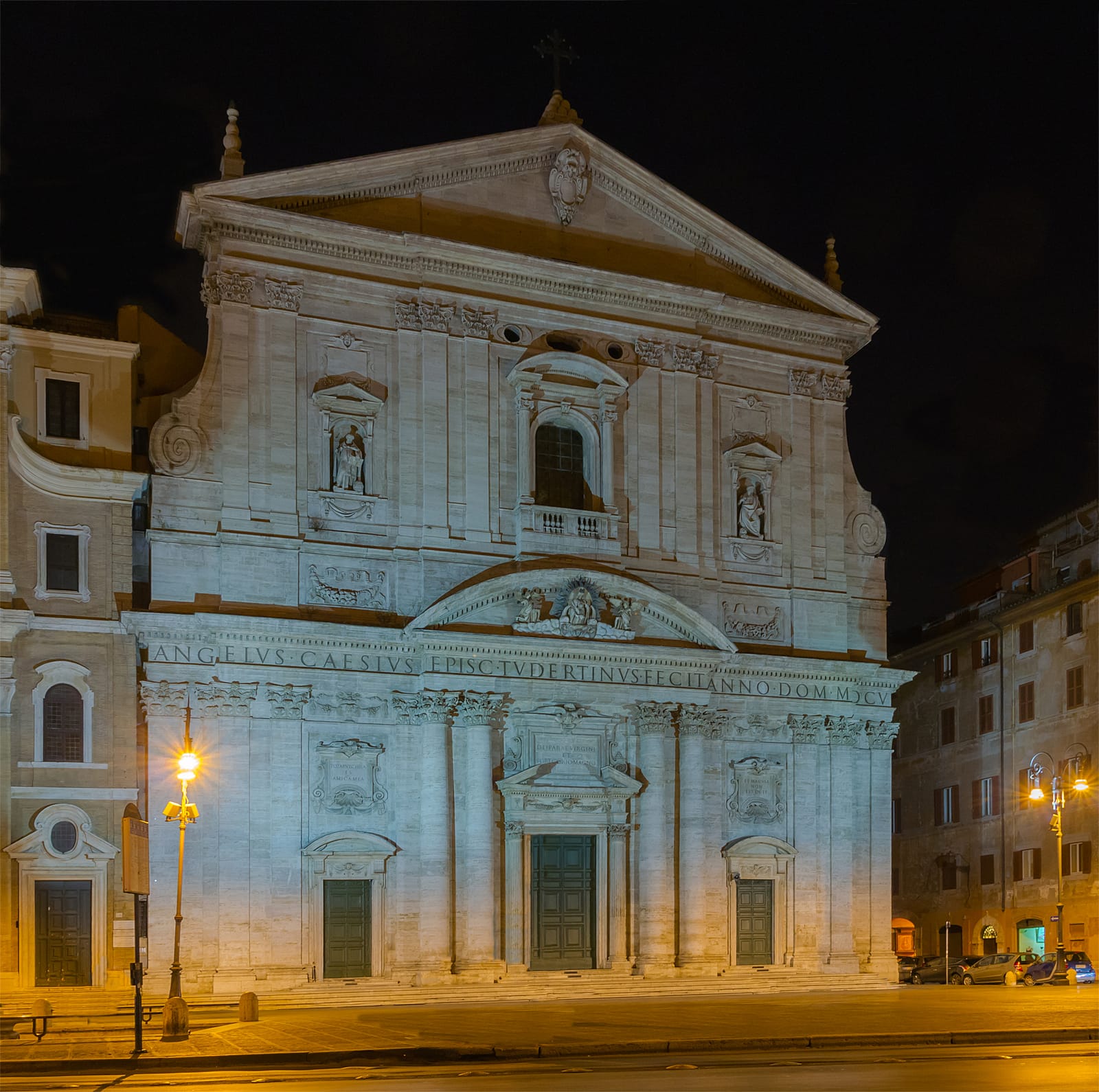
Photo by Jebulon via Wikimedia Commons, released under CC0.
Santa Maria in Vallicella is the church that gives Saint Philip Neri's Rome a real interior, not just a historical name.
Quick summary
- Best visit length
- Allow 20-30 minutes if you want this to work as a real Baroque anchor rather than a pass-through stop. / Allow 35-45 minutes if you want this to land as a full Baroque interior rather than a connector near the Oratory.
- Do not miss
- Saint Philip Neri association, Oratorian identity, Rubens and Baroque art program
- Best route use
- Navona, Campo de' Fiori, and Corso Vittorio routes
- Best next move
- San Giovanni dei Fiorentini for the most natural nearby continuation, or San Luigi dei Francesi if the day should bend in a calmer direction
Plan your visit
Use it when the route is already bending west from Navona or the Pantheon side and you want one church that feels spiritually inhabited as well as artistically rich.
Why this church matters
What lingers is the feeling of a lived religious home: Philip Neri, the Oratorians, and a church that never feels like only a museum interior.
The sense that this is a lived spiritual center, not just a museum interior. Philip Neri as the person who gives the church emotional coherence. That is often when visitors realise they are in a lived spiritual center, not just a rich interior.
What to look for
Saint Philip Neri association
The site as a place of memory tied to a specific Roman saint. It is the church's emotional and spiritual center. Without framing, visitors can treat Philip Neri as just another historical name.
Oratorian identity
That this is the home church of a movement, not just a decorative interior. It gives the church a clear role in Catholic reform history. This matters even if the visual focus first goes to the art.
Rubens and Baroque art program
The richness of the altarpiece and interior decoration. They provide the visual payoff that makes lingering worthwhile. Some visitors know the name Chiesa Nuova but not why the art inside matters.
Why visit
Choose it when you want one central church where devotion and Baroque richness reinforce each other instead of competing.
How long to spend
treating it as optional filler on the way to Campo de' Fiori.
Build your day
Start here for a route that matches the day you actually want. Choose the onward line that fits your direction and attention level.
Best next moves
Nearby & Related Churches
Use these next stops to keep the route coherent on the ground rather than doubling back across Rome for one isolated interior.