
Esquilino & Monti
San Martino ai Monti
Last updated: June 2026
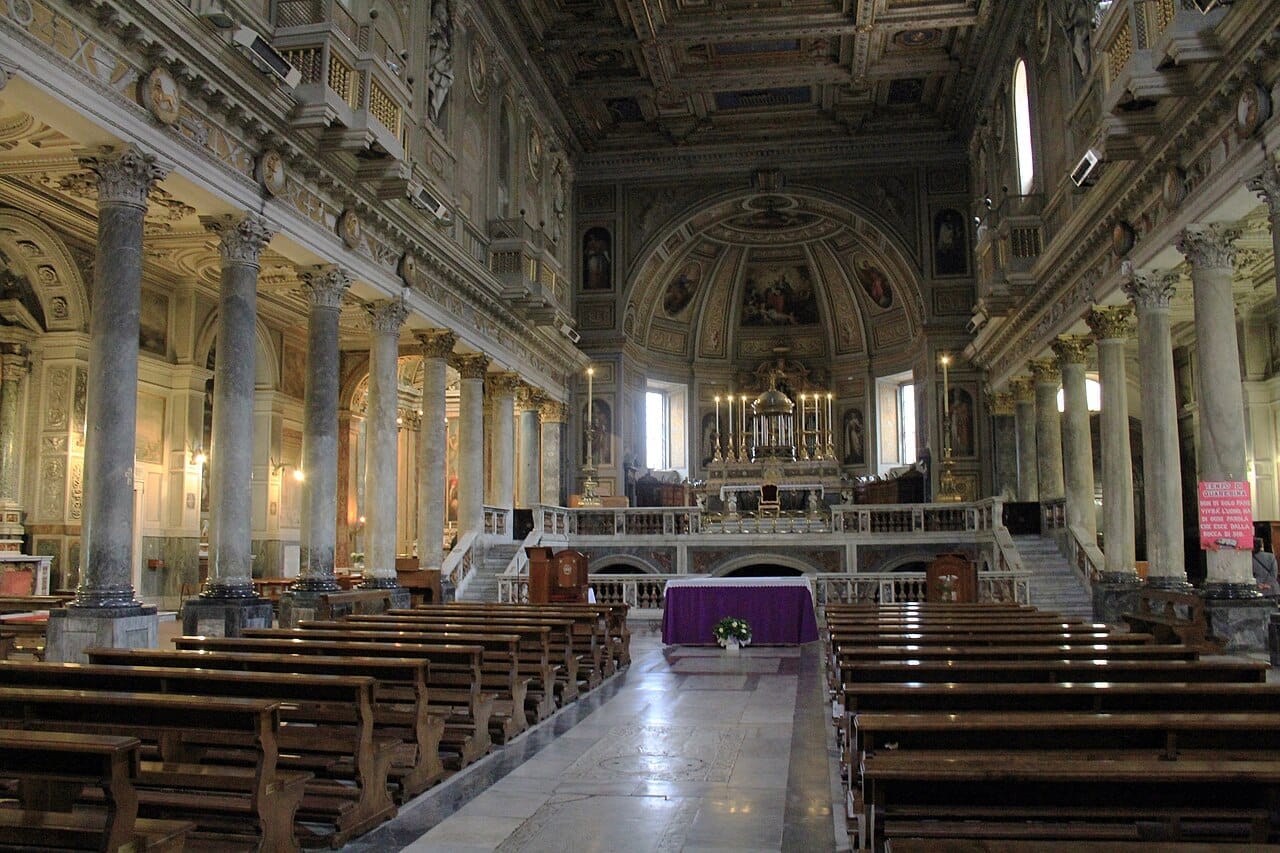
Photo by Karelj via Wikimedia Commons, public domain.
San Martino ai Monti is the church that makes the walk between Santa Maria Maggiore and San Clemente feel layered rather than linear.
Quick summary
- Best visit length
- Plan around 15-25 minutes, longer if you are using it to deepen a Santa Maria Maggiore or Monti route. / 30-45 minutes if you read the route notes, compare features, and slow down inside.
- Do not miss
- Titulus Equitii heritage, Relics beneath the high altar, 6th-century Marian mosaic
- Best route use
- Monti, Santa Maria Maggiore, San Clemente, and early-Christian days
- Best next move
- Santa Maria Maggiore for the most natural nearby continuation, or San Clemente if the day should bend in a calmer direction
Plan your visit
Use it when you want Monti to deepen into early Christian continuity, relic memory, and one stop that feels older than its exterior first suggests.
Why this church matters
What stays with people is that the church feels fuller than expected: not a headline basilica, but not remotely just a connector either.
The feeling that the church contains more history than the outside first suggests. The strong route logic when it is added between bigger headline churches. That is often when visitors realise the route needed this church.
What to look for
Titulus Equitii heritage
The sense of a foundation that reaches back far earlier than the visible shell suggests. It roots the church in early Christian Rome rather than later neighborhood identity alone. That historical depth can remain abstract unless it is named clearly.
Relics beneath the high altar
The church's dedication and relic seriousness, not just its route usefulness. They give the church a direct devotional reason to matter. Visitors may not realize this is part of the visit's core identity.
6th-century Marian mosaic
A named early-Christian artwork rather than generic old-church atmosphere. This is one of the clearest specific things to remember. People can leave remembering only the route position if the mosaic is not highlighted.
Why visit
Choose it when you want the route between bigger churches to gain depth instead of becoming a gap.
How long to spend
marching straight to San Clemente and missing the church that gives the Monti side more texture.
Build your day
Start here for a route that matches the day you actually want. Choose the onward line that fits your direction and attention level.
Best next moves
Nearby & Related Churches
Use these next stops to keep the route coherent on the ground rather than doubling back across Rome for one isolated interior.