
Vatican & Prati
San Giovanni dei Fiorentini
Last updated: June 2026
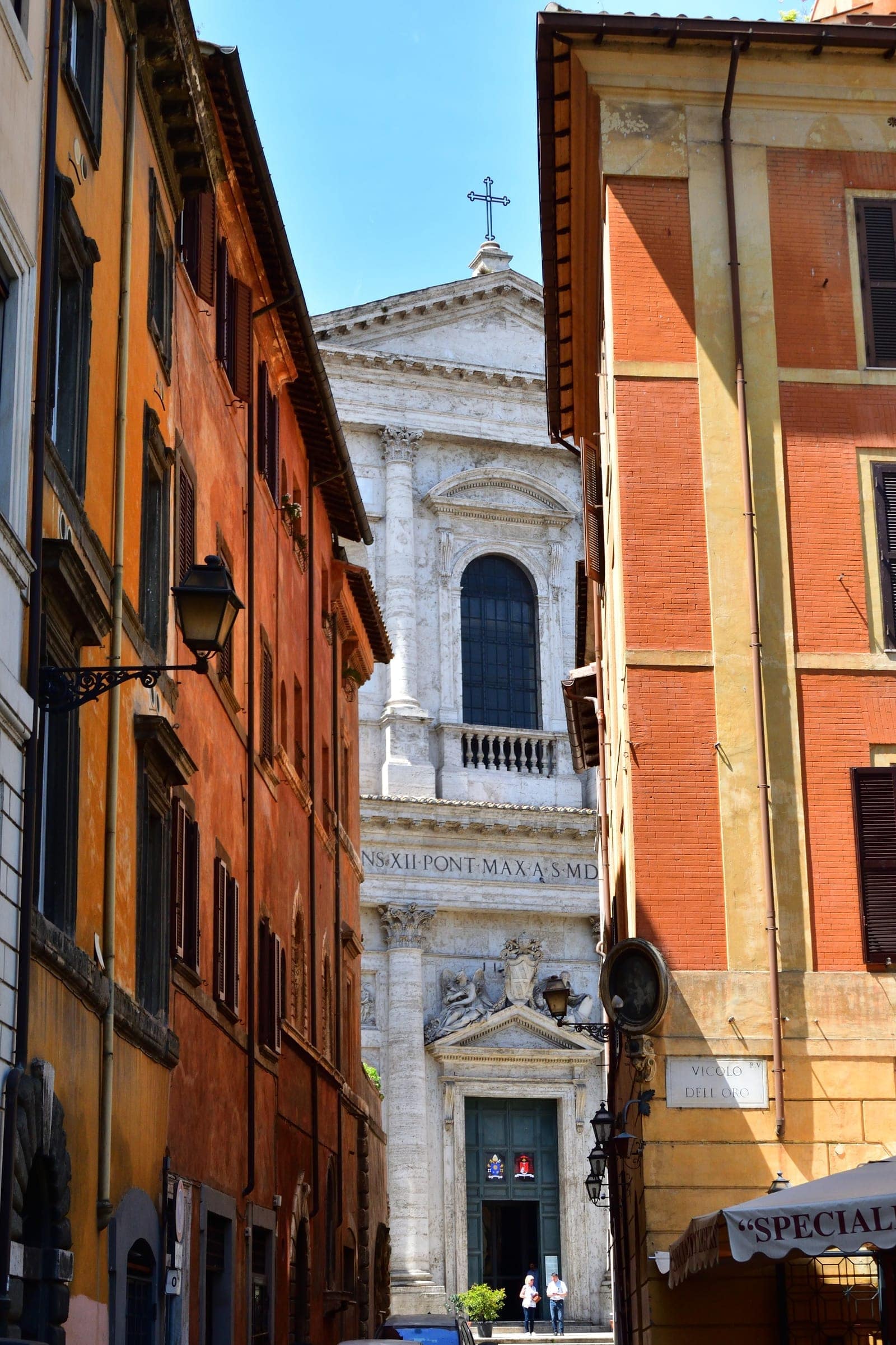
Photo by Rabax63 via Wikimedia Commons, licensed CC BY-SA 4.0.
San Giovanni dei Fiorentini is the church that makes the Vatican-to-center walk feel like part of Rome rather than a transfer corridor.
Quick summary
- Best visit length
- 15–20 minutes for the nave, facade context, and route reset. / 30–45 minutes if you are comparing it with Via Giulia, the river crossing, and nearby west-central churches.
- Do not miss
- Florentine national church identity, Architects and artists linked to the project, Tombs of Maderno and Borromini, Saint Philip Neri connection
- Best route use
- Via Giulia, Vatican-to-center, and river-edge routes
- Best next move
- Santa Maria in Traspontina for the most natural nearby continuation, or St Peter's Basilica if the day should bend in a calmer direction
Plan your visit
Use it when Via Giulia and the river edge are part of the day, especially if you want one church that belongs to that crossing.
Why this church matters
What sticks is the sense that this church belongs to a community, a river route, and a chain of major architects all at once.
The sense that this church belongs to a community identity, not just a street. The architecture-history layer created by Maderno and Borromini. That is often the moment the river crossing stops feeling like transit.
What to look for
Florentine national church identity
The sense that this is Florence-in-Rome rather than a generic basilica. It is the church's clearest differentiator. Without framing, the title can feel like a minor detail rather than the organizing idea.
Architects and artists linked to the project
The unusually rich design lineage behind the building. They give the church real architecture-historical weight. Visitors may not realize how many major names are connected to the site.
Tombs of Maderno and Borromini
The human connection to builders who shaped Rome. These create a strong memory point for architecture lovers. Many visitors pass through without noticing the tombs.
Saint Philip Neri connection
The early pastoral role before the church's later fame. It adds devotional depth beyond design history. This is easy to miss because it is not visually dominant.
Why visit
Choose it when you want the walk away from St Peter's to gain identity instead of thinning out.
How long to spend
treating the bridge-and-river stretch as dead space between headline stops.
Build your day
Start here for a route that matches the day you actually want. Choose the onward line that fits your direction and attention level.
Best next moves
Nearby & Related Churches
Use these next stops to keep the route coherent on the ground rather than doubling back across Rome for one isolated interior.