
Centro Storico
Sant'Agnese in Agone
Last updated: June 2026
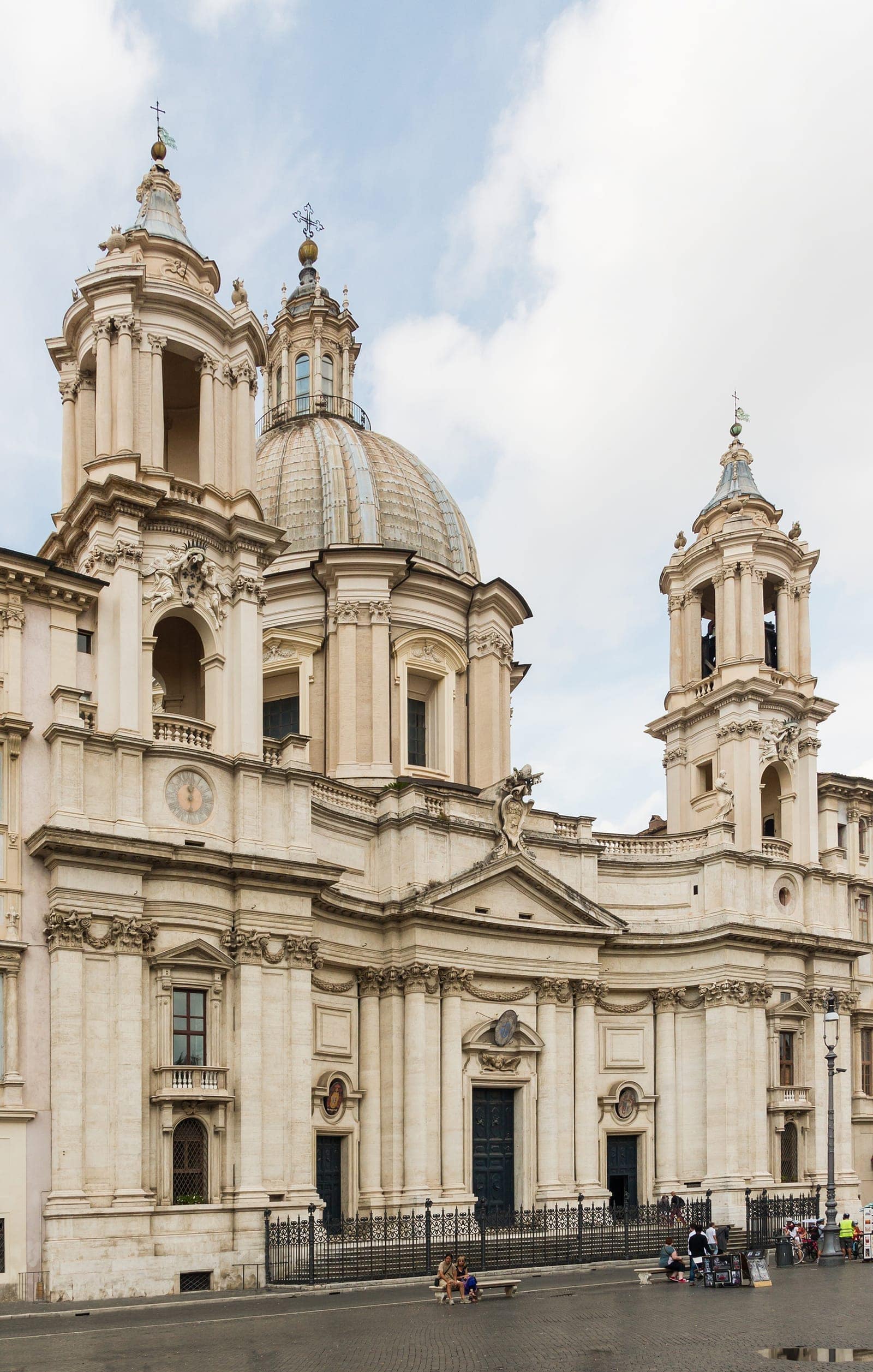
Photo by Jebulon via Wikimedia Commons, released under CC0.
Sant'Agnese in Agone is the stop that turns Piazza Navona from a beautiful square into a place with sacred and historical gravity.
Quick summary
- Best visit length
- A short stop of around 10-20 minutes is usually enough unless you want to slow down inside Piazza Navona. / Give it 25-35 minutes if you want the church to feel like more than a Piazza Navona interruption.
- Do not miss
- Piazza Navona setting, Saint Agnes martyr tradition, Pope Innocent X tomb
- Best route use
- Piazza Navona, Pantheon-side, and central Baroque walks
- Best next move
- San Luigi dei Francesi for the most natural nearby continuation, or Sant'Andrea della Valle if the day should bend in a calmer direction
Plan your visit
Use it when you want the square to make sense as more than urban theater, especially if the day already includes nearby painting or Baroque interiors.
Why this church matters
Visitors often remember the transition from the noisy square into a church that suddenly makes the Pamphilj version of Rome feel serious.
Walking out of the square noise into a church that suddenly reframes Piazza Navona. The relationship between church facade and urban stage. That is often when Piazza Navona stops feeling like scenery and starts feeling like place.
What to look for
Piazza Navona setting
How the facade and dome belong to the urban theater around them. The church is inseparable from the square. Visitors can treat the church as scenery unless the setting is understood as part of the visit.
Saint Agnes martyr tradition
The tradition linking the saint to the ancient stadium site. This gives the church its core sacred identity. Without guidance, the saint connection can remain abstract.
Pope Innocent X tomb
The family and patronage story inside the church, not only outside in the piazza. It gives the church a direct Pamphilj and papal-history detail. Many visitors never realize the pope of the square is also present inside the church.
Why visit
Choose it when you want Piazza Navona to register as a real church destination, not only a backdrop.
How long to spend
admiring the square and never stepping into the church that explains it.
Build your day
Start here for a route that matches the day you actually want. Choose the onward line that fits your direction and attention level.
Best next moves
Nearby & Related Churches
Use these next stops to keep the route coherent on the ground rather than doubling back across Rome for one isolated interior.