
Quick summary
- Best for
- Evening planning, west-bank landings, hill routes, and calmer final walks
- Time needed
- 60–120 minutes depending on which evening track you choose
- Core churches
- 5
- Optional additions
- 1
- Walking distance
- Choose one evening track rather than trying to combine all of them
Before you start
Best for visitors who want one late-day route with atmosphere, pacing, and a clear finish rather than a general list of good churches.
Route summary
Choose this guide when the question is no longer what are the most important churches, but what kind of church walk fits the evening. Use San Bartolomeo all'Isola when the crossing itself matters, Santa Maria in Trastevere when the route should land in the neighborhood, San Pietro in Montorio and Sant'Onofrio when the climb is the point, or Santa Sabina when you want calm hilltop space instead of another dense district.
Why choose this route
Rome changes character in the last part of the day. Streets that felt crowded in mid-afternoon start to open; bridges matter more; hills feel different; piazzas become places to arrive rather than simply pass through. A sunset church guide should respond to that change, not ignore it.
- San Bartolomeo all'Isola gives the crossing real meaning.
- Santa Maria in Trastevere gives the west-bank landing a true destination.
- San Pietro in Montorio and Sant'Onofrio al Gianicolo turn the climb into part of the reward.
- Santa Sabina gives the Aventine its calm evening answer.
How to use this guide
Treat this as an evening chooser, not as a sequence you are meant to complete from top to bottom. First decide what kind of final walk you want, then let the churches support that decision.
- Choose the river track if the day is moving from the center into Trastevere.
- Choose the Janiculum track if the climb, the setting, and the hilltop mood matter more than district density.
- Choose the Aventine track if you want quiet, air, and a slower close above Circus Maximus.
- Add Santa Cecilia only when the Trastevere landing still wants one quieter continuation after the main arrival.
Best 60–120 minute versions
This page should help the visitor choose one evening track, not combine all of them.
- River landing version: San Bartolomeo all'Isola -> Santa Maria in Trastevere. Optional: Santa Cecilia in Trastevere.
- Janiculum version: San Pietro in Montorio -> Sant'Onofrio al Gianicolo.
- Aventine calm version: Santa Sabina.
- If the day is already tired, choose one strong evening answer and stop there.
How long to spend
Use these timings to choose the right scale for the hour you have left.
- San Bartolomeo all'Isola: 10–15 minutes.
- Santa Maria in Trastevere: 20–30 minutes.
- Santa Cecilia in Trastevere: 15–25 minutes.
- San Pietro in Montorio: 15–25 minutes.
- Sant'Onofrio al Gianicolo: 15–25 minutes.
- Santa Sabina: 20–30 minutes.
What to do next
The route should end once the evening track has done its job. From there, choose one next direction only if the night still wants structure.
- Use the Trastevere route when the question changes from evening mood to district sequence.
- Use the Vatican to Trastevere walk when the whole river corridor, not only the sunset landing, is the real route idea.
- Stop there if the hilltop answer was enough. Both the Janiculum and the Aventine versions work best when they end decisively.
- The best sunset route is usually the one that still feels shaped when the light drops, not the one that kept adding churches until the evening lost its meaning.
Core route and optional additions
Stop 1
Crossing track
San Bartolomeo all'Isola
A Tiber Island church that gives river-crossing routes a real sacred stop instead of leaving the island as a simple bridge between neighborhoods.
Start here when the route needs the river crossing itself to matter. San Bartolomeo turns Tiber Island from dead walking into a real pause, which is exactly what an evening route needs. During daylight pressure, the island can feel like a connector. At sunset, it becomes the moment where the walk changes character.
Stop 2
Shared landing anchor
Santa Maria in Trastevere
The essential Trastevere anchor, rewarding not just for its fame but for the way mosaics, square, and neighborhood atmosphere reinforce one another.
Continue here when the west-bank landing itself is the point. Santa Maria in Trastevere is already district-owned elsewhere, but in this guide it earns its place differently. Here it is the place where the route arrives: mosaics, piazza, light, and neighborhood movement all reinforce the feeling that the evening has reached a real destination.
Stop 3
Optional quieter continuation
Santa Cecilia in Trastevere
A Trastevere church that offers quieter sacred atmosphere than the district's main square, especially useful once you want the neighborhood to feel deeper than its postcard image.
Add Santa Cecilia only when the evening still wants a more inward second act after the landing. It works because it changes the mood again, not because the page should try to complete every Trastevere church. Use it if you want the piazza energy to give way to something slower and more devotional before the night closes.
Stop 4
Janiculum climb
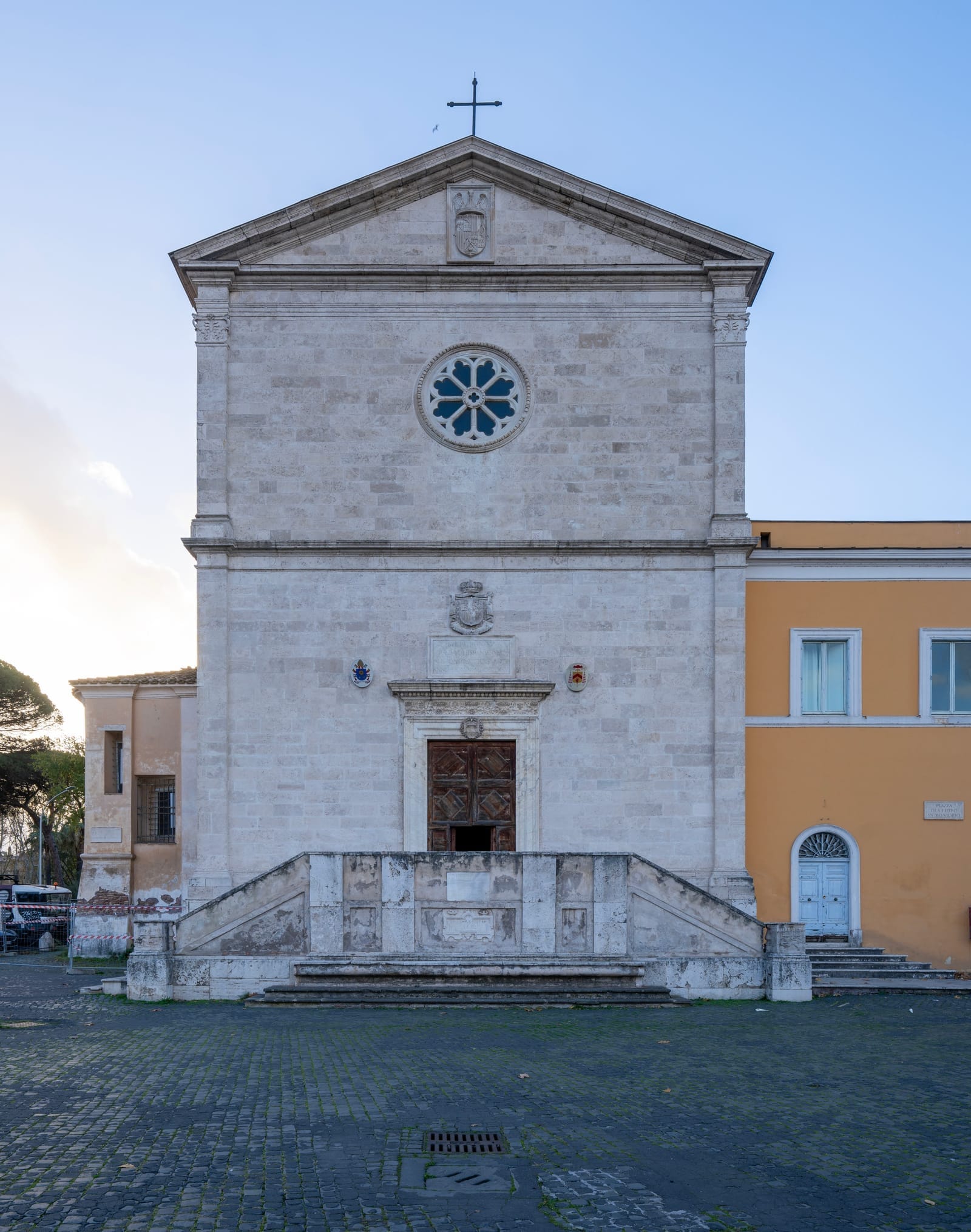
San Pietro in Montorio
A Janiculum church with Renaissance architecture value, Sebastiano del Piombo paintings, and access to Bramante's Tempietto in the friary cloister. It works best for visitors who want janiculum routes while keeping the surrounding walk coherent.
Start here when the hill itself is part of the reason for walking. San Pietro in Montorio gives the Janiculum route a real architectural and historical anchor, so the climb feels chosen rather than improvised. The point is not simply to get a view. The point is to let the route gather weight as it rises.
Stop 5
Reflective hill finish
Sant'Onofrio al Gianicolo
A quiet Janiculum church with a 15th-century cloister, Tasso associations, and enough hilltop atmosphere to justify the climb on a west-Rome route.
Continue here when the Janiculum walk should become quieter and more reflective. Sant'Onofrio gives the hill route the calmer, more withdrawn close that San Pietro alone does not provide. In daylight it can look like a specialist detour. Late in the day it often becomes the reason the climb feels worth it.
Stop 6
Calm hilltop track
Santa Sabina
A calm Aventine basilica with early-Christian clarity, famous carved wooden doors, and one of Rome's best contrasts to decorative central churches. It works best for visitors who want aventine routes while keeping the surrounding walk coherent.
Choose Santa Sabina when the evening should end with space rather than movement. The Aventine gives the city one of its clearest calm hilltop moods, and Santa Sabina fits it perfectly: restrained interior, early-Christian clarity, and enough quiet to feel different from the more theatrical central routes. Sometimes the best sunset route is not a landing or a climb. It is simply one calm church in the right setting at the right hour.
Choose a related route
Use one of these if you want a tighter route or a clearer next step.